
Best Online Casino Payment Methods UK 2026: Speed, Fees & Bonus Eligibility Compared
 Available in GB

Choosing how to fund a UK casino account shapes everything that follows. Withdrawal speed, bonus eligibility, fees, limits—these practical details determine whether depositing feels seamless or turns into an obstacle course. The UK market operates under tight UKGC regulation, which bans some methods outright and shapes how the rest work in practice.
This guide breaks down 14 payment options available at UK-licensed casinos in 2026. Not a promotional rundown—a functional comparison showing which methods deliver on speed, which qualify for bonuses, and where the catches hide.
Payment Methods at UK Online Casinos in 2026
UK casino payments fall into four categories, each with distinct trade-offs. Debit cards remain the universal default—accepted everywhere, instant deposits, qualify for bonuses. E-wallets like PayPal and Skrill promise fast withdrawals but frequently exclude players from welcome offers. Open Banking via Trustly delivers the fastest cashouts at 0–2 hours, though operator pending periods still add a day. Prepaid options like Paysafecard and mobile payments via Boku offer spending control but lock you into deposit-only workflows.
Regulatory context matters. Credit cards have been banned at UKGC-licensed casinos since 14 April 2020 under the Licence Conditions and Codes of Practice (LCCP)—the aim was preventing gambling with borrowed money. More recently, the 10x wagering cap introduced on 19 January 2026 fundamentally changed bonus economics. Where a £50 bonus once required £1,500–£3,250 of play at 30x–65x, it now clears at £500. Payment method choice directly affects whether you see that bonus at all.
The UK payment landscape differs sharply from other markets. Credit cards are banned, and e-wallet bonus exclusions run higher than in unregulated markets—operators cite anti-money laundering concerns and historical abuse via multiple accounts.
The table below compares all 14 methods on the factors that matter in practice.
| Method | Category | Deposit Speed | Withdrawal Speed | Min Deposit | Fees | Bonus Eligibility | Best For |
|---|---|---|---|---|---|---|---|
| Visa Debit | Card | Instant | 1–3 days | £1–£10 | None | Yes | Universal acceptance |
| Mastercard Debit | Card | Instant | 1–3 days | £1–£10 | None | Yes | Universal acceptance |
| PayPal | E-wallet | Instant | 12–24 hours | £5–£10 | None | Rarely (~20%) | Fast withdrawals, card details kept private |
| Apple Pay | Mobile wallet | Instant | 1–3 days | £10 | None | Yes | iOS convenience |
| Google Pay | Mobile wallet | Instant | 1–5 days | Varies | None | Yes | Android convenience |
| Trustly | Open Banking | Instant | 0–2 hours | £10–£20 | None | Yes | Fastest withdrawals |
| Skrill | E-wallet | Instant | 12–24 hours | £5–£10 | Wallet-to-bank fees | Rarely | Fast withdrawals |
| Neteller | E-wallet | Instant | 12–24 hours | £5–£10 | Wallet-to-bank fees | Rarely | Fast withdrawals |
| MuchBetter | E-wallet | Instant | 24–48 hours | Varies | Varies | Varies | Mobile-first users |
| MiFinity | E-wallet | Instant | 24–48 hours | Varies | Varies | Varies | Multi-currency |
| Payz (ecoPayz) | E-wallet | Instant | 24–48 hours | Varies | Tiered fees | Varies | Alternative e-wallet |
| AstroPay | Prepaid/E-wallet | Instant | 24–48 hours | Varies | None typical | Varies | Prepaid-style budgeting |
| Paysafecard | Prepaid voucher | Instant | Deposit-only | £25+ | None | Yes | Cash budgeting |
| Boku | Mobile payment | Instant | Deposit-only | £5–£10 | 30p per transaction | Yes | Spending control (£30 cap) |
What are the main categories of payment methods available at UK casinos?
There are four. Debit cards offer universal acceptance, instant deposits and 1–3 day withdrawals. E-wallets such as PayPal, Skrill and Neteller pay out faster but often exclude bonuses. Open Banking through Trustly pays out in 0–2 hours. Prepaid and mobile options (Paysafecard, Boku) are deposit-only, with built-in spending limits.
Debit Cards and Bank Transfers
This category splits into card-based and account-based rails. Visa and Mastercard debit cards work at 100% of UKGC casinos—instant deposits, withdrawals in 1–3 working days, minimum deposits from £1 upward. Traditional bank transfers (Faster Payments, BACS) remain available as a fallback but take 3–7 days for cashouts. The innovation sits with Open Banking: Trustly bypasses cards entirely, linking your bank account directly to the casino for instant deposits and withdrawals that clear in hours rather than days.
E-Wallets
PayPal leads in trust and adoption but appears at only 40 UK-licensed casinos—and around 80% of those exclude it from welcome bonuses. Skrill and Neteller (both Paysafe Group) offer similar speed with wider casino acceptance, suffering the same bonus exclusion pattern. MuchBetter, MiFinity, Payz (the rebranded ecoPayz), and AstroPay occupy niche roles: mobile-first design, multi-currency support, declining UK availability, or prepaid-style flexibility respectively. All promise 12–48 hour withdrawals once the casino approves the request.
Prepaid Vouchers
Paysafecard dominates. Buy a voucher at any newsagent or online, enter the 16-digit PIN at the casino cashier, and the deposit lands instantly with no bank details shared. The limitation is structural: prepaid vouchers are deposit-only. Winnings exit via bank transfer (3–7 days) or a linked card. Testing in September 2026 found only one UK casino (DAZN Bet) paying back to Paysafecard; the rest route cashouts elsewhere.
Mobile Payments
Boku charges deposits to your phone bill or deducts from prepay credit. Instant funding, built-in spending control via a £30 per-transaction hard cap, and deposit-only operation. Monthly limits run £240–£300 depending on carrier. Withdrawals require a separate method. The 30p transaction fee and low caps make this a niche choice—useful for casual sessions or players deliberately capping their exposure, impractical for anything larger.
Debit Cards: The Universal Default
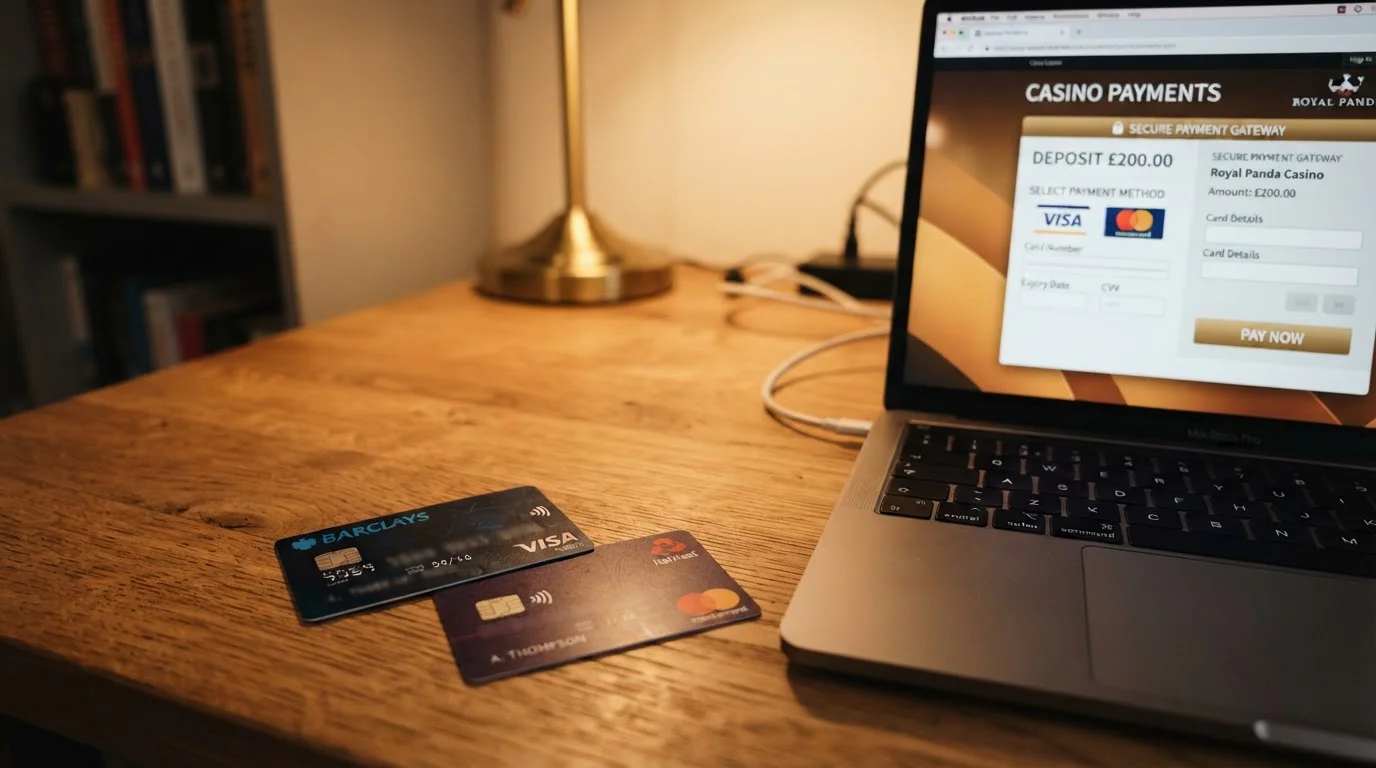
Visa and Mastercard debit cards anchor the UK casino payment ecosystem. Every UKGC-licensed operator accepts them. Minimum deposits start at £1–£10 depending on the site. Deposits clear instantly; withdrawals take 1–3 working days under standard processing, or 15 minutes to an hour at operators offering Visa Direct or Fast Funds. No fees from the payment networks—your bank may charge foreign exchange costs on non-GBP transactions, but domestic GBP deposits and withdrawals at UK casinos are free.
Debit cards qualify for welcome bonuses at virtually every casino. That matters more in 2026 than it did a year earlier. The 10x wagering cap introduced in January 2026 transformed bonus maths: a £50 deposit bonus now clears at £500 of play instead of £1,500–£3,250 under the old 30x–65x regime. If you fund via a method excluded from bonuses, you forfeit that value entirely.
Visa Debit
Visa operates the largest payment network globally. In the UK market, that translates to acceptance at 100% of UKGC-licensed casinos. Your existing bank card works without separate registration—enter the number, CVV, expiry, confirm. Deposit lands in seconds. Withdrawals return to the same card, processed in 1–3 working days for standard transactions. Testing in 2026 recorded Visa withdrawals clearing in one hour at Casumo using Visa Direct; most operators still settle in the 1–3 day window.
Security sits at bank level. Card issuers apply 3D Secure verification (the redirect to your banking app or SMS code) on most casino deposits, reducing fraud risk. The casino sees only tokenised card data, not your full number. If a card is compromised, liability protections under UK banking rules apply.
The credit card ban remains absolute. Visa credit cards have been refused at UKGC casinos since 14 April 2020. Only debit works. Attempting to fund a casino account with credit triggers an instant decline—no warning, no partial acceptance. This applies even when using the credit card through an e-wallet; UKGC rules block credit-funded gambling at every layer.
Mastercard Debit
Mastercard debit functions identically to Visa in practice. Universal acceptance, instant deposits, 1–3 day withdrawals, no consumer fees. The same 3D Secure verification applies. The same credit card ban holds—Mastercard credit has been blocked since April 2020, debit works everywhere.
One operational note: Maestro, Mastercard’s legacy debit brand, is being phased out globally. Some UK casinos still list it, but most Maestro cards issued in recent years actually run on the main Mastercard Debit network. If your card shows a Maestro logo, it likely still works; if it doesn’t, your bank has probably migrated you to standard Mastercard Debit without issuing a new card.
Testing in September 2026 found Mastercard withdrawal speeds in line with Visa: standard payouts landed 2–5 days after the request once pending time was included (LuckyMate, DAZN Bet, SpinYoo), Fast Funds implementations cutting that to under a day at select operators. The bottleneck is rarely the card network—it’s the casino’s pending period (typically 24–48 hours) before they even send the payment to Mastercard for processing.
Do UK casinos charge fees for debit card payments?
No. Debit card deposits and withdrawals at UKGC-licensed casinos are free for UK players using GBP accounts. Visa and Mastercard charge no consumer fees, and UK rules bar surcharges on consumer card payments. Your bank may add foreign exchange fees only if you deposit in a currency other than sterling.
How Debit Card Deposits and Withdrawals Work
Deposits are near-instant. You enter card details at the casino cashier, authenticate via 3D Secure (SMS code, banking app prompt, or similar), and funds appear in your casino balance within seconds. The transaction shows on your bank statement as a debit to the casino’s merchant name—usually the operator’s legal entity, not the brand name you see on the site.
Your identity and age are verified (KYC, Know Your Customer) before you can deposit or play, and the casino may ask for extra documents at your first cash-out, such as proof of payment method (a photo of your card with the middle digits obscured). Once any checks are complete, withdrawal requests are processed in 24–48 hours, then sent to your card. Standard Visa/Mastercard processing adds 1–3 working days. Visa Direct and Mastercard Fast Funds can cut that to under an hour at participating casinos, though adoption remains patchy across the UK market.
One practical limitation: you can only withdraw to the card you deposited with. If you funded your account with multiple cards, the casino splits your withdrawal proportionally across them, up to the amount deposited on each. If the card has expired or been cancelled, withdrawals default to bank transfer—add 3–7 days.
E-Wallets: Fast Withdrawals with Trade-Offs
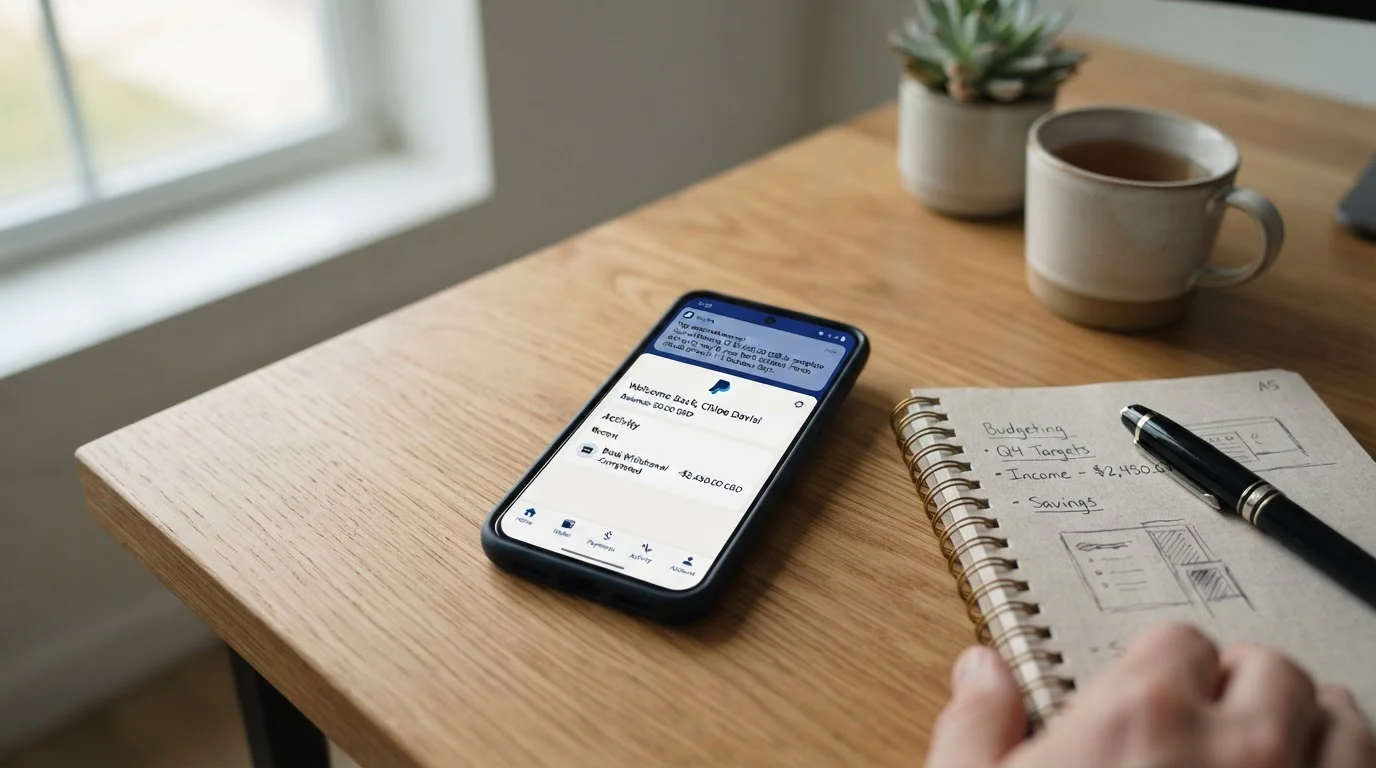
E-wallets create a security layer between your bank and the casino. Fund the wallet from your bank account or card, deposit to the casino from the wallet, withdraw back to the wallet, then move funds to your bank when needed. The casino never sees your bank details. Deposits are instant. Withdrawals typically clear in 12–24 hours, faster than cards but slower than Trustly.
The trade-off is bonus eligibility. Around 80% of UK casinos accepting PayPal exclude it from welcome bonuses. Skrill and Neteller suffer the same treatment. Operators cite two reasons: anti-money laundering protocols and historical abuse where players opened multiple casino accounts under different identities, all funded from the same e-wallet. Whether those justifications hold scrutiny is debatable—what matters in practice is that e-wallet users forfeit the bonus more often than not.
That exclusion hits harder under the 10x wagering cap. A £50 bonus that clears at £500 of play is genuinely valuable. Choosing an e-wallet to save a day on withdrawal time but losing a £50 bonus you’d have cleared anyway is poor maths. Check the terms before funding.
Why are e-wallets like PayPal often excluded from casino bonuses?
Operators cite anti-money laundering compliance and abuse prevention: one e-wallet can fund several casino accounts, which makes multi-identity bonus abuse easier, and e-wallet flows attract heavier AML scrutiny. Whether that justifies blanket exclusions is debatable, but around 80% of UK casinos offering PayPal exclude it, and Skrill and Neteller fare similarly.
PayPal
PayPal holds FCA e-money institution authorisation and gambling approval in the UK, but acceptance among UKGC casinos is selective. Roughly 40 operators take it—far from universal. Those that do list minimum deposits at £5–£10, instant funding, and withdrawals that typically land in 12–24 hours post-approval. Test withdrawals in 2026 recorded PayPal cashouts as fast as 35 minutes at Casumo, under two hours at Grosvenor, under three hours at PokerStars (whose infrastructure was rebuilt in late 2025 specifically to speed PayPal processing).
The security advantage is real. The casino receives funds from PayPal, not from your bank account directly. Your card and bank details stay with PayPal. If the casino suffers a data breach, your financial information isn’t in the leak. For players uncomfortable sharing card numbers with gambling operators, that separation provides tangible security.
The bonus exclusion rate runs around 80%. Check the terms. Some casinos allow PayPal for the bonus; most don’t. The ones that do rarely advertise it—you find out by reading the small print or asking support. Assume exclusion unless stated otherwise.
PayPal charges no consumer fees for deposits or withdrawals to your PayPal balance. Moving money from your PayPal balance to your bank account is also free within the UK. If you’re funding PayPal with a credit card (outside the casino context), PayPal may charge fees, but that’s unrelated to the casino transaction.
Skrill
Skrill Limited operates under FCA e-money authorisation as part of Paysafe Group. Casino acceptance is wider than PayPal—most UKGC-licensed operators list it—but bonus exclusion follows the same pattern. Expect to be locked out of welcome offers at the majority of sites.
Deposits are instant, minimum £5–£10 depending on operator. Withdrawals clear in 12–24 hours; testing recorded 45 minutes at Ladbrokes in 2026. The speed advantage over cards is real but modest—a day faster, not a week. Whether that day justifies forfeiting a £50–£100 bonus depends on your priorities.
Fees appear when moving money out of Skrill. Deposits to the casino are free. Withdrawals from the casino back to your Skrill balance are free. But transferring from your Skrill balance to your bank account incurs fees that vary by country and account tier. UK users typically pay a small percentage; VIP account holders get reduced rates. Factor those into your effective cost.
Skrill and Neteller are the same company—both owned by Paysafe Group. Functionally they’re near-identical, with slight interface differences and separate account systems. Some players prefer one over the other for reasons that amount to brand loyalty. For practical purposes, pick whichever you already have or whichever your casino offers.
Neteller
Neteller is Skrill’s sibling, also under Paysafe Group and FCA authorisation. Instant deposits, 12–24 hour withdrawals, £5–£10 minimums, same bonus exclusion problem as Skrill. Withdrawal-to-bank fees apply per Neteller’s tiered pricing. In testing, withdrawal speeds matched Skrill’s: 24-hour range typical, sub-hour performance possible at select operators.
The reason to use Neteller instead of Skrill (or vice versa) is usually historical—you already have an account, your casino of choice accepts one but not the other, or you’ve hit a limit on one wallet and need an alternative. There’s no performance advantage. Both are fast, both are widely accepted, both will likely exclude you from bonuses.
One operational note: if you’re funding a Neteller account with a UK debit card, that card must be in your own name and match your Neteller account details. Paysafe Group applies strict KYC. Third-party funding triggers account restrictions quickly.
MuchBetter
MuchBetter positions itself as the mobile-first e-wallet for gaming. FSM Innovations Ltd operates it under FCA e-money authorisation. The app uses biometric authentication—fingerprint or face unlock—for one-tap deposits. Gamification features like loyalty rewards and a tiered level system aim to differentiate it from generic wallets.
Acceptance at UKGC casinos is thinner than PayPal, Skrill, or Neteller. Testing four UK-licensed casinos in September 2026 found zero offering MuchBetter at the cashier. Where it does appear at UK-licensed casinos, withdrawal times run 24–48 hours.
MuchBetter withdrawal fees vary by destination. Moving funds from the wallet to your bank incurs charges; check the in-app fee schedule before committing. The mobile-first design is either an advantage (if you prefer managing finances via phone) or irrelevant (if you access casinos from desktop). Bonus eligibility is inconsistent—some casinos treat it like other e-wallets and exclude it, others allow it.
If your casino offers MuchBetter and you value mobile convenience, it works. If your casino doesn’t list it, you’re routing funds through a different method anyway. The practical UK market penetration in 2026 doesn’t justify opening an account specifically for casino payments.
MiFinity
MiFinity holds FCA e-money institution status and offers multi-currency support, which theoretically benefits players depositing in currencies other than GBP. Availability at UK casinos declined through 2026—more operators hide it behind alternative wallets in the cashier or drop it entirely.
Instant deposits, 24–48 hour withdrawals where accepted. Videoslots is one of the few UK-licensed casinos still featuring MiFinity prominently. Elsewhere, you’re more likely to find it absent than present. The friction comes from the operator side, not from MiFinity’s regulatory standing—the wallet itself operates legally, but casinos aren’t prioritising it.
MiFinity’s tiered fee structure (different account levels with different cost profiles) adds complexity most UK players funding in GBP don’t need. If your casino still offers it and you’re already a user, it functions. As a first choice for new UK-only players in 2026, it’s a non-starter compared to PayPal, Skrill, or direct debit cards.
ecoPayz (Payz)
ecoPayz rebranded to Payz on 11 May 2023. Three years later, the old name still clings to UK casino cashier pages and forum threads. FCA authorisation remains active under reference 900011. The company is PSI-Pay Ltd.
Instant deposits, 24–48 hour withdrawals, tiered account structure (Silver, Gold, Platinum, VIP) with different fee schedules at each level. Multi-currency support. Withdrawal-to-bank fees apply. The rebrand has caused more confusion than clarity—some casinos list “ecoPayz,” some “Payz,” some both as separate options that route to the same backend.
Payz occupies the same niche as MiFinity: an alternative when PayPal, Skrill, or Neteller aren’t available or have been restricted on your account. It’s not a first choice. If your casino offers it, it works. If you’re shopping for a new e-wallet to open in 2026, start with PayPal (widest trust, despite limited casino acceptance) or Skrill/Neteller (wider casino acceptance, despite bonus exclusion).
AstroPay
AstroPay LLP holds FCA payment institution authorisation. It functions as a prepaid card or e-wallet hybrid depending on how you access it. A handful of well-known casinos serving UK players accept it, including LeoVegas, Betfred and Paddy Power, usually for deposits only.
For UK players, AstroPay is peripheral: acceptance at UKGC-licensed casinos is sparse. Its wider footprint sits with casinos licensed outside the UK, which offer none of the UK protections and are not part of GAMSTOP, so it is only worth holding if a UK-licensed casino you already use lists it.
Where it does appear at UK casinos, deposits are instant, no fees typical from AstroPay’s side (casinos may add their own charges), and withdrawals back to the AstroPay wallet run 24–48 hours. Bonus eligibility varies by operator.
Mobile Wallets: Apple Pay and Google Pay
Apple Pay and Google Pay tokenise your existing debit card. The casino never sees your card number—Apple or Google generate a one-time token for each transaction, authenticated via Face ID, Touch ID, fingerprint, or device passcode. Deposits are instant. Withdrawals return to the underlying debit card (not to Apple Pay or Google Pay directly), taking the standard 1–3 working days for card processing.
Both methods qualify for bonuses wherever card deposits qualify, since they’re functioning as tokenised card payments under the hood. Minimum deposits vary by operator; £10 is typical for Apple Pay. No fees from Apple or Google; your card issuer’s standard terms apply.
Can I use Apple Pay or Google Pay at UK casinos?
Yes, wherever a UKGC-licensed casino lists them. Apple Pay works on iPhone, iPad and Mac, Google Pay on Android and Chrome. Both are tokenised debit card payments, since credit cards remain banned, with instant biometric-approved deposits and withdrawals to the underlying card in 1–3 working days. Check the cashier first.
Apple Pay
Apple Pay requires an iPhone, iPad, or Mac, and a Visa or Mastercard debit card added to your Apple Wallet. At the casino cashier, select Apple Pay, authenticate via Face ID or Touch ID, and the deposit lands instantly. The casino receives a tokenised payment—your actual card number stays with Apple.
Testing in 2026 confirmed Apple Pay acceptance at BoyleSports, William Hill, HighBet, Betway, and 888 Casino among UK-licensed operators. Availability is growing but not universal. If your casino doesn’t list it, you’re entering card details manually instead.
Withdrawals route to the card linked to Apple Pay, not to Apple Pay itself. The casino processes the withdrawal to your debit card; Apple Pay merely facilitated the deposit. Expect 1–3 working days for the cashout, standard for card withdrawals.
Apple charges no consumer fees for Apple Pay transactions. Your card issuer’s standard terms apply—if your bank charges foreign exchange fees on non-GBP transactions, those still apply, but domestic GBP deposits at UK casinos are free.
The advantage is convenience, not speed. Apple Pay deposits are instant, but so are manual card deposits. Apple Pay withdrawals take 1–3 days, identical to manual card withdrawals. You save typing your card number; you don’t save time on cashouts. For iOS users who prefer biometric authentication over entering CVVs, it’s a quality-of-life improvement. For everyone else, it’s optional.
Google Pay
Google Pay operates identically to Apple Pay but for Android devices and Chrome browser. Link your Visa or Mastercard debit card to Google Pay, select it at the casino cashier, authenticate, deposit lands instantly. The casino sees a tokenised payment, not your card details.
Withdrawals return to the underlying debit card (not to Google Pay directly). Our testing recorded 1–5 working days depending on the bank, broadly in line with standard card withdrawal timing. Because Google Pay deposits are treated as card deposits, they usually qualify for the same bonuses, all of which now carry wagering of no more than 10x.
Google charges no consumer fees. Your bank’s standard debit card terms apply. If you’re depositing in GBP at a UK-licensed casino from a UK bank account, the transaction is free from all parties.
Adoption among UK casinos is growing but incomplete. Check the cashier. If Google Pay appears, it works as described. If it doesn’t, manual card entry remains the fallback. The speed and fee profile are identical either way—Google Pay is about convenience, not performance advantage.
Trustly and Open Banking: The Fastest Withdrawal Method

Trustly Group AB operates under FCA payment institution authorisation and PSD2 (Payment Services Directive 2) in the UK and EU. The service uses Open Banking infrastructure to link your bank account directly to the casino. No card number, no separate e-wallet registration, no stored credentials. You authenticate each transaction via your bank’s own login (the redirect to your banking app or online banking portal). Deposits are instant. Withdrawals clear in 0–2 hours once the casino releases them—the fastest method available at UK casinos.
Acceptance is narrower than debit cards. In October 2026, SpinYoo and DAZN Bet were among the UK-licensed casinos listing Trustly by name. Testing recorded a Trustly withdrawal clearing in 50 minutes at Betway, and payouts are typically processed within an hour at UKGC-licensed casinos once released. The method works, but it’s not ubiquitous.
What is Open Banking and how does Trustly work at UK casinos?
Open Banking lets authorised providers move money from your bank account with your consent, without a card. Trustly, an independent Swedish payments company, redirects you to your bank’s login; you approve, and funds go straight to the casino. Withdrawals reverse the flow in 0–2 hours once released, and every payment needs fresh bank authentication.
Trustly (Open Banking)
Trustly is FCA-authorised under PSD2. When you deposit, the casino redirects you to Trustly, which presents a list of UK banks (Lloyds, Barclays, HSBC, NatWest, Santander, and others). Select your bank, authenticate via online banking, confirm the amount. Deposit lands instantly. The casino receives GBP from Trustly; your bank debits your account. No card involved.
Withdrawals are where Trustly shines. Once the casino approves your withdrawal request (typically 24–48 hours), Trustly processes the return to your bank in 0–2 hours. Testing at Betway recorded 50 minutes. Other reports cite withdrawals under one hour at UKGC casinos. This is genuinely faster than any other method—PayPal and e-wallets run 12–24 hours, cards 1–3 days, bank transfers 3–7 days.
The catch is casino-side pending periods. Trustly’s 0–2 hour processing starts after the casino releases the withdrawal. Most UKGC operators hold withdrawal requests for 24–48 hours before processing them, regardless of payment method. Trustly can’t compress that pending period. In practice, your “instant” Trustly withdrawal still takes a day because the casino sits on it for 24 hours before sending it to Trustly.
That said, 24 hours + 1 hour (Trustly processing) is still faster than 24 hours + 24 hours (e-wallet) or 24 hours + 3 days (card). If speed is the priority, Trustly wins. Just don’t expect funds in your bank account two hours after clicking “withdraw”—the casino’s internal process dominates the timeline.
No fees at most UKGC casinos. Minimum deposits typically £10–£20, higher than cards or e-wallets. Bonus eligibility is standard—Trustly qualifies where bank transfers qualify, which is almost everywhere. You’re not forfeiting welcome offers by using Trustly.
Traditional Bank Transfer
Faster Payments, BACS, or CHAPS—traditional bank-to-bank transfer remains available at most UKGC casinos as a fallback. You initiate a transfer from your online banking, manually entering the casino’s bank details (sort code, account number, reference). Faster Payments usually arrive within seconds or minutes, though the casino still has to match the reference before crediting you; BACS takes 1–3 days. Withdrawals route back via the same rails in 3–7 working days.
This is the slowest method. It’s also universally available and requires no separate account. If every other option has failed—cards declined, e-wallets restricted, Trustly not offered—bank transfer still works.
Fees are rare for domestic GBP transfers. Your bank may charge for CHAPS (same-day transfer, rarely needed for casino deposits). Faster Payments and BACS are free at most UK banks. Minimum deposit varies by casino; expect higher minimums than cards (£20–£50 not uncommon).
The manual process is a feature for some players and a bug for others. You must copy the casino’s bank details correctly; mistype the sort code and your deposit lands elsewhere. There’s no instant confirmation—you wait for the transfer to clear, then contact support if it doesn’t appear. For players who value that friction as a deliberate barrier slowing impulsive deposits, it’s useful. For everyone else, it’s obsolete.
Prepaid Options
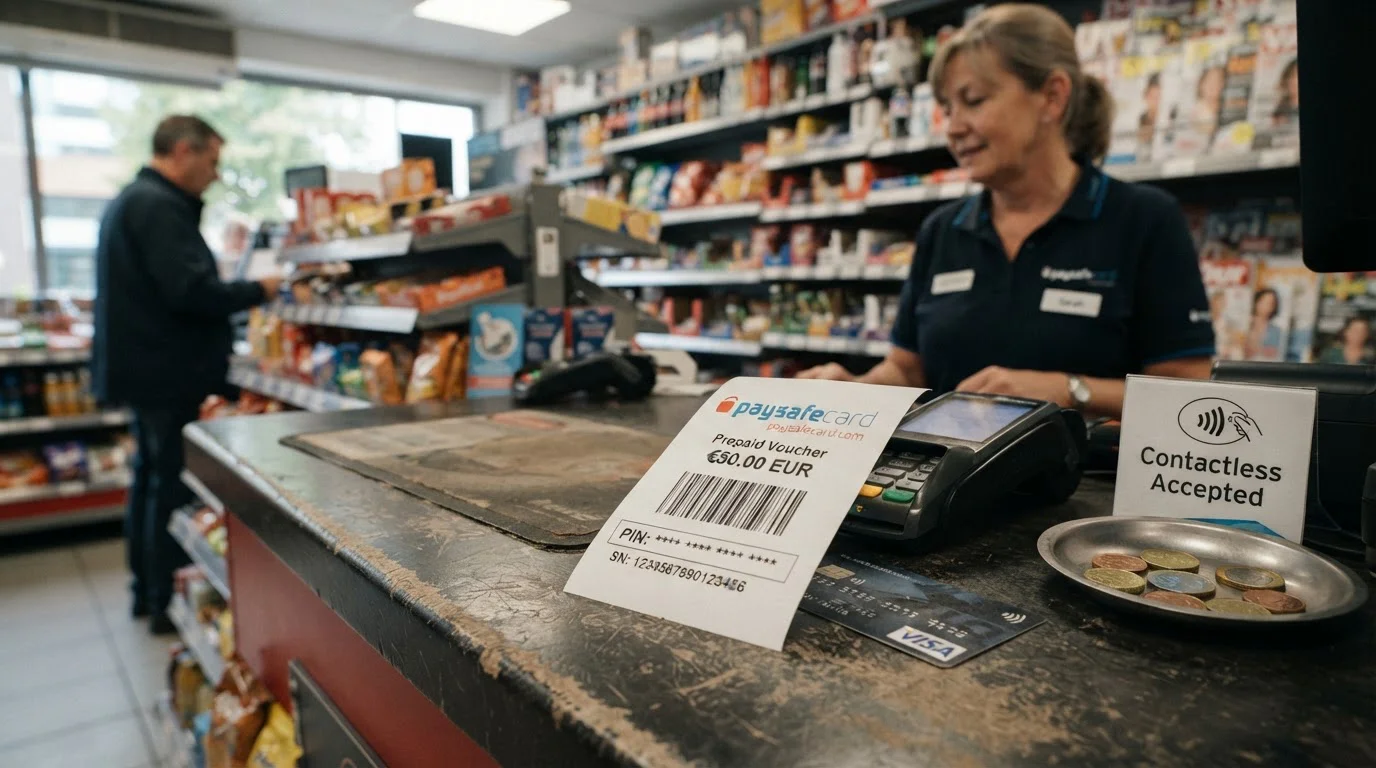
Prepaid vouchers offer a cash-like way to deposit: no bank details or card number shared with the casino, though your casino account is still verified in your name. You buy a voucher with cash or card, receive a 16-digit PIN, enter it at the casino cashier, funds appear instantly. The trade-off is deposit-only operation—prepaid vouchers cannot receive withdrawals. Winnings exit via bank transfer, card, or e-wallet, adding 3–7 days to your cashout timeline.
Paysafecard
Paysafecard is part of Paysafe Group, FCA-regulated, accepted at UKGC-licensed casinos. Purchase vouchers at newsagents, supermarkets, petrol stations, or online at paysafecard.com. Denominations vary; £25 minimum is typical at casinos. Deposit by entering the 16-digit PIN at the cashier—instant funding, no card details required.
The casino never sees your bank information. For players who budget in cash and want a hard limit on what they can deposit, Paysafecard delivers. It is not a way to gamble anonymously: UK-licensed casinos verify your identity and age before you play.
Withdrawals are the limitation. Paysafecard is deposit-only. When you cash out, the casino asks for an alternative method—bank transfer (3–7 days), debit card (1–3 days), or e-wallet (12–24 hours). Testing in September 2026 covered three UKGC casinos: SpinYoo ranked first for speed, paid via bank transfer. DAZN Bet uniquely paid winnings back to Paysafecard (rare among UK casinos). LuckyMate paid via Mastercard.
Registered Paysafecard accounts support higher limits and allow topping up PINs. Unregistered vouchers cap at lower denominations and can’t be combined. If you deposit £25 via voucher and win £500, that £500 exits via your chosen alternative method—Paysafecard has no reverse rail.
Bonus eligibility is standard. Paysafecard qualifies for welcome offers where prepaid methods qualify, which is most UK casinos. You’re not excluded the way e-wallet users are.
Can I withdraw casino winnings to Paysafecard?
Rarely. A Paysafecard voucher is not an account, so it is structurally deposit-only, and most UK casinos pay winnings by bank transfer, debit card or e-wallet instead. Our September 2026 testing found one exception, DAZN Bet, which paid back to Paysafecard. Elsewhere, set up an alternative cash-out method in your own name.
When Prepaid Makes Sense
Prepaid vouchers serve two use cases. First, strict spending control—you can only deposit what you’ve physically purchased, eliminating the risk of chasing losses beyond your session budget. Second, players who simply prefer to budget in cash rather than through a card. One thing they should never be used for is getting around a gambling block you have placed on your bank account or card. That block is a safer-gambling tool, and if you set one, the reasons for it still apply.
The cost is slower withdrawals and the inconvenience of purchasing vouchers in advance. If those trade-offs align with your priorities, prepaid works. If speed and convenience matter more, debit cards or e-wallets are better tools.
Mobile Phone Bill Payments (Boku)
Boku Inc. (listed on London’s AIM market) operates mobile payment infrastructure for UK casinos. Deposits charge to your phone bill (postpay) or deduct from prepay credit (pay-as-you-go). The casino cashier lists Boku or “Pay by Mobile” as an option; select it, enter your mobile number, confirm via SMS, deposit lands instantly. Your mobile carrier bills you in the next statement or deducts the amount from your balance immediately.
Hard cap: £30 per transaction. Daily caps run £40–£80 depending on carrier. Monthly caps reach £240–£300. These limits are enforced by mobile operators and Boku, not the casino—you cannot deposit more even if the casino allows higher amounts. The 30p transaction fee is standard (though the two casinos operated by Betable Limited, IvyCasino and Oreels, charged no pay-by-mobile fee in 2026 testing).
What is the maximum deposit with Boku pay-by-mobile?
£30 per transaction, enforced by Boku and UK mobile carriers. Daily limits typically sit at £40–£80 depending on your network, and monthly limits at £240–£300. These are hard caps, so you cannot deposit more even if the casino allows it. Casual players rarely notice them; bigger sessions need another method.
Boku
Boku integrates with EE, Vodafone, O2, Three, and other UK carriers. Deposits are instant. Minimum £5–£10, maximum £30 per transaction. The charge appears on your next phone bill (postpay) or deducts from your balance immediately (prepay). No card details, no bank login—just your mobile number and SMS confirmation.
Withdrawals cannot route back to your phone bill. You provide a debit card, bank account, or e-wallet for cashouts. The withdrawal timeline depends on that method—bank transfer takes 3–7 days, card 1–3 days, e-wallet 12–24 hours. Boku handles deposits only.
The 30p transaction fee applies at most casinos. Testing confirmed that Betable Limited’s two UKGC-licensed casinos, IvyCasino and Oreels, charge nothing for pay-by-mobile deposits. Elsewhere, every £10 deposit costs £10.30.
Bonus eligibility is standard. Boku qualifies where mobile payments qualify, which is most UK casinos. The low caps limit bonus value in practice—a single £30 deposit can unlock at most a £30 matched bonus (£300 of play at 10x wagering), and you can’t deposit £100 in one go to claim a larger offer.
How Pay-by-Mobile Works
At the casino cashier, select Pay by Mobile or Boku. Enter your UK mobile number. The casino redirects to Boku, which sends an SMS with a confirmation link. Click it, confirm the deposit amount (up to £30), and the transaction completes. Funds appear in your casino balance instantly. Your mobile carrier bills you or deducts from prepay.
The charge shows on your phone bill or prepay statement as a Boku transaction, often without the casino’s name, so keep your own record of what you spend; small charges on a phone bill are easy to lose track of.
KYC verification still applies. Even though you’re funding via phone, UKGC rules require your age and identity to be verified before you can deposit or play, and the casino may ask for further documents when you withdraw. The mobile payment doesn’t bypass that.
Limitations of Phone Bill Deposits
The £30 cap is either a feature or a fatal limitation depending on your play style. For players deliberately capping exposure, it’s built-in discipline—you physically cannot deposit more than £240–£300 per month, preventing runaway losses. For players wanting to fund a weekend session or claim a £100 welcome bonus, it’s unusable.
Deposit-only operation means slow cashouts. You’re exiting via bank transfer (3–7 days) unless you’ve also linked a card or e-wallet. The 30p fee per transaction adds up—ten £10 deposits cost £3 in fees, trivial in absolute terms but irritating as a friction cost.
Mobile payments work for casual, low-stakes play where the convenience of instant funding without card details outweighs the caps and fees. For anything else, debit cards or e-wallets perform better.
Speed Comparison: Which Method Is Fastest?

Speed splits into deposit speed and withdrawal speed. Every method except traditional bank transfer deposits instantly. Cards, e-wallets, Trustly, Paysafecard, Boku—all land in seconds. The competition is on withdrawals, where differences run from under an hour to a week.
Trustly leads: 0–2 hours once the casino releases the payment. Testing in 2026 recorded 50 minutes at Betway. PayPal follows at 12–24 hours, with sub-hour performance possible (35 minutes at Casumo, under two hours at Grosvenor, under three hours at PokerStars). Skrill and Neteller match PayPal’s range (45 minutes at Ladbrokes for Skrill). Other e-wallets (MuchBetter, MiFinity, Payz, AstroPay) run 24–48 hours.
Debit cards settle in 1–3 working days standard, or 15 minutes to one hour with Visa Direct / Mastercard Fast Funds where offered (tested at Casumo for Visa). Apple Pay and Google Pay route to the underlying card, same timeline. Traditional bank transfer is slowest: 3–7 working days. Paysafecard and Boku are deposit-only, so withdrawal speed depends on your chosen alternative method.
How long do casino withdrawals take in the UK?
After the casino approves a request, Trustly pays in 0–2 hours, PayPal, Skrill and Neteller in 12–24 hours, debit cards in 1–3 working days (under an hour with Visa Direct or Fast Funds) and bank transfer in 3–7 days. Add the casino’s 24–48 hour pending period, which delays every method equally.
Fastest for Deposits
Instant means instant. Cards, e-wallets, Trustly, Paysafecard, Boku—all clear in seconds. A Faster Payments bank transfer is near-instant too, though a manual transfer may wait until the casino matches the reference. BACS bank transfer takes 1–3 days, but nobody uses BACS for casino deposits anymore.
The “fastest” deposit method is whichever one you have ready. If your card is already on file, that’s instant. If you’re opening a new e-wallet account, you add onboarding time. If you’re buying a Paysafecard voucher at a shop, you add travel time. Operationally, they’re all instant once you initiate the transaction.
Fastest for Withdrawals
Trustly at 0–2 hours beats everything else. PayPal, Skrill, Neteller at 12–24 hours (sub-hour possible) are next. Cards at 1–3 days lag behind e-wallets but beat bank transfers at 3–7 days.
Casino pending periods dominate the actual timeline. UKGC operators typically hold withdrawal requests for 24–48 hours before processing them, regardless of payment method. Trustly’s 0–2 hour processing starts after that pending period ends. So does PayPal’s 12–24 hours. So do card withdrawals’ 1–3 days.
In practice, a Trustly withdrawal lands in your bank in 24–26 hours from request (24-hour pending + 0–2 hour processing). A PayPal withdrawal lands in 36–48 hours (24-hour pending + 12–24 hour processing). A card withdrawal lands in 2–4 days (24-hour pending + 1–3 days card processing). The pending period dwarfs the payment method’s contribution to total time.
What “Instant” Actually Means
“Instant withdrawal” in casino marketing means the payment method processes quickly—it does not mean funds reach your account instantly. Trustly at 0–2 hours is technically instant. But the casino’s 24–48 hour pending period precedes it. PayPal at 12–24 hours is fast, not instant.
Extra checks can add days. Your identity is verified before you deposit, but at the first withdrawal a casino may still ask for proof of payment method or, for larger sums, source of funds. Uploading takes minutes; the casino’s review can take 24–48 hours, so add up to two days if you are asked.
Pending periods can be shortened at some casinos if you contact support and request manual review, but there’s no guarantee. The advertised speed of a payment method—Trustly’s “0–2 hours,” PayPal’s “24 hours”—is the best-case scenario after pending and KYC are already cleared.
Testing provides reality checks. PayPal cleared in 35 minutes at Casumo—true instant performance. Trustly cleared in 50 minutes at Betway. These are edge cases, not norms. Expect Trustly in 1–2 hours post-approval, PayPal in 12–24 hours, cards in 1–3 days. Anything faster is a bonus, not the baseline.
Fees, Limits, and Bonus Eligibility
UK casinos rarely charge deposit fees—competition keeps pricing at zero for most methods. Debit cards, Trustly, PayPal, Paysafecard—all free. Boku charges 30p per transaction (waived at Betable Limited’s two casinos). Skrill, Neteller, MiFinity, and Payz charge fees when you move money from the wallet to your bank, not at the deposit stage.
Minimum deposits vary by operator and method. Cards start at £1–£10. E-wallets typically £5–£10. Trustly £10–£20. Paysafecard £25+. Boku £5–£10 with a £30 per-transaction cap. Higher minimums at Trustly and Paysafecard reflect operational costs; lower minimums at cards and e-wallets reflect scale and automation.
Bonus eligibility splits cleanly: debit cards, Trustly, Apple Pay, Google Pay, Paysafecard, Boku qualify almost everywhere. PayPal, Skrill, Neteller are excluded at roughly 80% of casinos offering them. MuchBetter, MiFinity, Payz, AstroPay vary by operator—check terms before depositing.
Which Methods Have Fees
Consumer-facing fees are minimal. Debit cards charge nothing for GBP deposits and withdrawals at UK casinos (foreign exchange fees apply on non-GBP transactions). PayPal charges no fees for deposits, withdrawals to PayPal balance, or transfers from PayPal balance to UK bank accounts. Trustly is free at most UKGC casinos. Paysafecard charges nothing at point of deposit.
Boku charges 30p per transaction at most casinos; IvyCasino and Oreels waive it. Skrill, Neteller, MiFinity, and Payz charge fees when withdrawing from the wallet to your bank. Those fees vary by account tier and destination country; check the wallet provider’s fee schedule.
Apple Pay and Google Pay charge no consumer fees; your underlying card’s terms apply. Traditional bank transfer is free for Faster Payments and BACS at most UK banks; CHAPS may incur charges (£20–£30 typical, rarely needed for casino deposits).
Minimum and Maximum Deposit Limits
Typical minimums and maximums by method:
| Method | Typical Minimum Deposit | Per-Deposit Maximum Set By |
|---|---|---|
| Debit cards | £1–£10 | The casino |
| PayPal, Skrill, Neteller | £5–£10 | The casino |
| Apple Pay, Google Pay | £10 typical | The casino |
| Trustly | £10–£20 | The casino and your bank |
| Paysafecard | £25+ | Voucher value (or registered account) |
| Boku | £5–£10 | Provider cap of £30 per transaction |
Maximums are set by the casino, not the payment method. Cards, e-wallets, and Trustly can handle deposits in the thousands; casinos impose limits (often £5,000–£10,000 per transaction) for risk management. Boku is capped at £30 by the provider. Paysafecard vouchers cap at lower amounts per PIN unless you use a registered account to combine multiple vouchers.
Which Methods Qualify for Bonuses
Debit cards (Visa, Mastercard) qualify almost universally. Trustly qualifies where bank transfers qualify, which is nearly everywhere. Apple Pay and Google Pay qualify wherever card payments qualify. Paysafecard qualifies at most casinos. Boku qualifies where mobile payments are accepted for bonuses.
PayPal is excluded at roughly 80% of UK casinos offering it. Skrill and Neteller suffer the same pattern. Operator bonus terms show e-wallet exclusions as standard practice at UKGC-licensed operators. Around 20% of casinos allow PayPal, Skrill, or Neteller for bonuses—check the specific operator’s terms.
MuchBetter, MiFinity, Payz, and AstroPay are inconsistent. Some casinos exclude them, others don’t. The smaller e-wallet market share means fewer blanket policies; it’s operator-by-operator.
Which casino payment methods qualify for welcome bonuses in the UK?
Debit cards qualify at virtually all UK casinos, and Trustly, Apple Pay, Google Pay, Paysafecard and Boku usually do too. PayPal, Skrill and Neteller are excluded at about 80% of casinos accepting them, while MuchBetter, MiFinity, Payz and AstroPay vary by operator. Always read the bonus terms before depositing.
UK Regulations Shaping Casino Payments

UK casino payments operate under UKGC oversight, which imposes stricter rules than most jurisdictions. Credit cards have been banned since 14 April 2020 under the LCCP—the rationale was preventing gambling with borrowed money and reducing harm from credit-funded play. The ban covers all UKGC-licensed operators (casinos, sports betting, bingo, poker) and applies online and on-premises.
The 10x wagering cap took effect on 19 January 2026 through new LCCP social responsibility provisions. All bonus wagering requirements at UKGC-licensed casinos are capped at ten times the bonus amount. The change was designed to make bonuses more achievable and transparent, reducing the “sticky bonus” trap where wagering requirements were functionally unattainable for most players.
Cross-product bonuses mixing sport, casino, bingo, and lottery into a single hybrid offer are now banned under the same code. Operators must separate promotions by vertical.
Credit Card Ban (April 2020)
The LCCP prohibits all UKGC-licensed operators from accepting credit cards for gambling. The ban took effect 14 April 2020. Visa credit, Mastercard credit, American Express credit—all blocked. Only debit cards work.
The rationale cited by the Gambling Commission: preventing customers from gambling with money they don’t have, reducing the risk of gambling-related harm associated with debt accumulation. Evaluation research published by NatCen in 2026 found the ban added friction for problem gamblers who previously used credit to chase losses, though the extent of harm reduction remains debated.
Attempts to circumvent the ban fail. Funding an e-wallet with a credit card, then depositing to a casino from the e-wallet, is blocked—UKGC rules require operators to trace the funding source and refuse credit-derived deposits. Using a credit card issued abroad to fund a UK-licensed casino is similarly refused by the casino’s compliance systems.
Are credit cards banned at UK online casinos?
Yes. Since 14 April 2020 the UKGC’s licence conditions have barred every licensed operator, online and on-premises, from accepting Visa, Mastercard or American Express credit cards for gambling. Only debit cards work, and operators must also refuse credit cards routed through e-wallets, so there is no legitimate workaround.
10x Wagering Cap (January 2026)
The new rules, effective 19 January 2026, cap all bonus wagering requirements at 10x the bonus amount. A £50 bonus requires a maximum £500 of play to convert to withdrawable cash. The previous regime allowed 30x–65x, which translated to £1,500–£3,250 for the same £50 bonus.
The change is structural. Welcome bonuses, reload bonuses, free spins winnings—any promotional offer—now caps at 10x. Operators cannot circumvent this by offering “VIP bonuses” with higher requirements; the cap is universal across all UKGC-licensed casinos.
Bonus value has risen sharply for players whose deposit method qualifies. That makes payment method choice more consequential. Funding via PayPal and forfeiting a £50 bonus that would have cleared at £500 of play (achievable for many recreational players) is now a costlier decision than when the same bonus required £1,500 or more and was effectively unattainable.
No-wagering bonuses (rare in the UK market) became more competitive. If a casino offers £20 with no wagering versus a competitor offering £50 at 10x (£500 play-through), the gap is narrower than when the £50 required £1,500 play-through.
UKGC Licensing and Payment Security
Every legitimate UK online casino holds a UKGC remote casino operating licence, visible in the Public Register at gamblingcommission.gov.uk. As of 18 September 2026, 139 businesses held active licences covering 1,065 active domains and 361 white-label brands.
UKGC licensing affects payment security through KYC requirements, disclosure of how customer funds are protected, and dispute resolution. Operators must verify your age and identity before you can deposit or play, and may request proof of payment method later. They must tell you whether your balance is not protected, given medium protection or given high protection if the business fails; the UKGC does not require full segregation, and the FSCS does not cover casino balances. Unresolved complaints go from the operator to an approved alternative dispute resolution provider such as IBAS, free of charge to players.
If a casino lacks a UKGC licence, none of these protections apply. Your payment details are handled under whatever jurisdiction the casino operates in (often Curaçao, or nowhere at all), your funds carry no UK protection rating, and disputes have no formal resolution pathway.
Check the licence before depositing. The register is public, searchable by operator name or domain. If the site isn’t listed, it’s not UKGC-licensed, regardless of what its marketing claims.
Choosing the Right Payment Method for You
No single method wins on every dimension. Debit cards offer universal acceptance and bonus eligibility but slower withdrawals. E-wallets deliver faster cashouts but often exclude you from promotions. Trustly is fastest but available at fewer casinos. Paysafecard maximises spending control but locks you into deposit-only operation. The “best” method depends on which trade-offs align with your priorities.
Which payment method should I choose for a UK online casino?
Match it to your priority. For speed, use Trustly or PayPal and Skrill. For bonuses and universal acceptance, use a debit card. For cash budgeting, Paysafecard; for tight limits, Boku’s £30 cap. If several priorities matter, a debit card balances acceptance, bonus eligibility and 1–3 day withdrawals best.
Priority: Speed
Trustly wins. 0–2 hours withdrawal processing once the casino releases payment. Tested at 50 minutes at Betway. Available at SpinYoo, DAZN Bet, and a handful of other UK-licensed casinos. If your casino offers Trustly, use it for withdrawals.
If Trustly isn’t available, PayPal or Skrill. Both run 12–24 hours typical, sub-hour possible at select casinos (PayPal at 35 minutes at Casumo, Skrill at 45 minutes at Ladbrokes). Check bonus eligibility before depositing—you’ll likely forfeit the welcome offer.
If you want bonus qualification without giving up too much speed, Apple Pay or Google Pay offer a middle ground: instant deposits, bonus eligibility where cards qualify, and withdrawals to the underlying card in 1–3 days, or faster at casinos using Visa Direct or Fast Funds.
Priority: Bonus Eligibility
Debit cards. Visa and Mastercard qualify at virtually every UK casino. Minimum £1–£10, instant deposits, 1–3 day withdrawals. The 10x wagering cap makes bonuses genuinely clearable in 2026—a £50 bonus at £500 play-through is achievable for recreational players, not just high rollers grinding volume.
Trustly also qualifies where bank transfers qualify, which is most casinos. If your casino offers Trustly and you want both bonus eligibility and fast withdrawals, it’s the optimal choice.
Avoid PayPal, Skrill, Neteller for welcome bonuses. Around 80% exclusion rate. If you’re depositing for the first time and claiming the welcome offer, use a debit card. Save the e-wallet for subsequent deposits after the bonus is cleared.
Priority: Keeping Card Details Private
Paysafecard. Buy a voucher, enter the 16-digit PIN at the casino, no bank or card details shared. The casino sees a deposit from Paysafecard, not your personal account.
The cost is deposit-only operation. Withdrawals exit via bank transfer (3–7 days), card (1–3 days), or e-wallet (12–24 hours). You must provide an alternative method and complete KYC, as with any UK-licensed casino.
E-wallets (PayPal, Skrill) offer similar protection: the casino sees payment from the e-wallet provider, not your bank or card. Neither route is anonymous—your casino account is always verified in your name—but both keep card numbers away from the casino.
Priority: Low Limits and Control
Boku. £30 per-transaction cap enforced by the provider. Daily caps at £40–£80, monthly caps at £240–£300. You physically cannot deposit beyond those limits—useful for players deliberately restricting exposure.
Paysafecard offers control via the prepaid model: you can only deposit what you’ve purchased in advance. If you buy a £50 voucher, you can deposit £50 and no more until you physically purchase another voucher. The friction of leaving your house or logging in to paysafecard.com to buy more acts as a natural brake on chasing losses.
Debit cards offer no built-in control—your entire bank balance is accessible. If discipline is the priority, Boku or Paysafecard force limits at the payment layer rather than relying on willpower.
Casino Deposit Methods UK 2026 – Compare Payment Options
Content created by the «Cashier Atlas» team