
Click2Pay Casinos UK 2026: What Happened and Which Payment Methods Work Now
 Available in GB

If you are looking for a UK casino that accepts Click2Pay today, you will hit a dead end. The e-wallet shut down in October 2014, over a decade ago, yet outdated casino pages still list it as if it works.
What you actually need is straightforward: understand what happened, and find which payment methods at UKGC-licensed casinos deliver what Click2Pay once offered. Privacy. Speed. No card details floating around casino databases.
You’ll learn exactly when and why Click2Pay disappeared, which e-wallet and payment alternatives work at UK-licensed casinos right now, how they compare on deposit speed and withdrawal times, and which one comes closest to Click2Pay’s original appeal. Every method mentioned works at UKGC-licensed operators.
No credit cards, because they’ve been banned at UK casinos since April 2020. Just the current payment landscape for players who remember when Click2Pay was the go-to option and need a working replacement.
Click2Pay Is No Longer Available – What Happened?

Click2Pay closed its doors on 1 October 2014. The e-wallet, operated by Wirecard AG and launched in 2003, served online gambling transactions across 20+ countries at its peak. By the time it shut down, 103 casinos accepted it for deposits and 70 for withdrawals. Then Wirecard pulled the plug, and the service vanished overnight.
The shutdown happened without much public explanation. Wirecard, the German payment processor behind Click2Pay, faced mounting regulatory scrutiny across European markets. E-wallet services operating in gambling were under pressure to tighten anti-money-laundering controls, verify funding sources, and comply with evolving financial regulations. Click2Pay’s business model depended on keeping transaction volumes high while fees stayed competitive. When compliance costs climbed and margins tightened, Wirecard chose to exit rather than rebuild the infrastructure.
This wasn’t unique to Click2Pay. Multiple gambling-focused e-wallets from that era either shut down or pivoted away from casino transactions as regulations hardened. The UK’s Gambling Commission tightened payment processing rules in the mid-2010s, and the EU’s Payment Services Directive pushed all e-money providers towards stricter identity verification. Services that couldn’t or wouldn’t adapt left the market. Click2Pay was one of them.
What made it popular in the first place? Privacy and simplicity. Players loaded funds from a bank account or debit card into their Click2Pay account, received a Personal Account Number, then used that PAN to deposit at casinos without sharing card details. The casino saw only the Click2Pay transaction, not the user’s bank or card information. Deposits were instant. Withdrawals took longer, as casinos had to process them first, but the e-wallet itself cleared funds quickly once approved.
That value proposition didn’t die with Click2Pay. The need for secure, private, fast casino payments remained. Other e-wallets stepped in to fill the gap, and entirely new payment rails emerged. PayPal, Skrill, and Neteller took over the e-wallet space. Debit cards became the universal fallback after credit cards were banned. Open banking providers like Trustly introduced direct bank-to-casino transfers. Mobile wallets like Apple Pay and Google Pay brought biometric security to the table.
So the service is gone, but the function it served is alive and better-distributed across a wider range of options. The rest of this guide maps those options in detail, showing which one best matches what you’re looking for.
What happened to Click2Pay and why can’t I use it anymore?
Click2Pay shut down in October 2014 after Wirecard AG, the payment processor operating it, exited the gambling e-wallet market. Tightening financial regulations and rising compliance costs made the service unsustainable. No UK casino has accepted Click2Pay since then. Modern e-wallets like PayPal, Skrill, and Neteller now serve the same function Click2Pay once did.
Best Alternative Payment Methods to Replace Click2Pay at UK Casinos

Six payment methods dominate the UK casino landscape in 2026: PayPal, Skrill, Neteller, Visa and Mastercard debit cards, Apple Pay and Google Pay, and Trustly-style open banking transfers. Each solves a slightly different problem. The table below summarises their key characteristics.
| Method | Deposit Speed | Withdrawal Time | Fees | Acceptance at UK Casinos | Key Feature |
|---|---|---|---|---|---|
| PayPal | Instant | Under 24 hours (can be under 1 hour) | None at most sites | ~40 UKGC casinos | Household brand, privacy layer |
| Skrill | Instant | Under 24 hours (can be under 1 hour) | ~1% deposit fee at some | Broad UK acceptance | Gambling-focused, VIP tiers |
| Neteller | Instant | Under 24 hours | ~1% deposit fee at some | Broad UK acceptance | 25+ years in gambling, Net+ card |
| Visa/Mastercard Debit | Instant | 1–5 working days | None | All 140+ UKGC casinos | Universal acceptance, no extra account |
| Apple Pay / Google Pay | Instant | To underlying card, 1–5 days | None | Growing availability | Biometric security, mobile-only |
| Trustly / Open Banking | Instant | Same-day (can be under 1 hour) | None | Growing acceptance | Direct bank transfer, no middleman |
The closest functional match to Click2Pay’s original appeal splits across two contenders. PayPal wins on brand trust and privacy—it’s the e-wallet high-street shoppers already own, and it keeps card details hidden from casinos just as Click2Pay did. Skrill and Neteller win on gambling-specific design and broader casino acceptance. They were built for this market, they work at more UK casinos than PayPal, and their VIP programmes reward regular players with fee reductions and cashback.
Debit cards sit in a different category. They’re not e-wallets—there’s no privacy layer, and the casino sees your card details. But they work everywhere. Every UKGC-licensed casino accepts Visa and Mastercard debit, whereas PayPal only appears at about 40 sites. If convenience and universal acceptance matter more than privacy, debit cards are the default.
Open banking is the dark horse. Trustly and Pay by Bank are newer than e-wallets, but they deliver on Click2Pay’s speed promise: instant deposits, same-day withdrawals, no separate account to fund. The casino never sees your card number because there is no card—it’s a direct bank instruction. For many players it is the cleanest way to fund a UK casino, and the withdrawal speeds back that up. The catch is acceptance. Not all casinos support open banking yet, though the number is growing.
Mobile wallets like Apple Pay and Google Pay solve a different problem. They’re not designed to replace e-wallets; they tokenise your existing debit card for mobile convenience. Deposits are instant and secured by Face ID or fingerprint. Withdrawals go back to the underlying card, so they’re as slow as regular card withdrawals. They’re deposit-only in most implementations, making them half a solution rather than a full Click2Pay replacement.
The breakdown below details each option’s specifics: who runs it, which casinos accept it, what the fees are, and who it suits.
PayPal – The Closest Click2Pay Replacement
PayPal Holdings Inc. operates the e-wallet from San Jose, California. It’s been around since 1998, was owned by eBay for 13 years, and spun off as an independent company in 2015. The UK arm operates under an e-money licence from the Financial Conduct Authority. Around 400 million accounts exist globally, and PayPal is the most recognised payment brand on the British high street after Visa and Mastercard.
Approximately 40 UKGC-licensed casinos accept PayPal in 2026. That’s not universal—there are 140+ licensed operators in total—but it’s the widest e-wallet reach after Skrill and Neteller. Deposits are instant. Withdrawals are typically processed within 24 hours once the casino approves them, and at fast operators such as Casumo approved PayPal payouts can land in under an hour. That beats debit cards by days and matches Skrill on speed.
No fees in most cases. PayPal doesn’t charge UK users for sending money to a casino, and most UKGC casinos don’t add a surcharge for PayPal deposits. The casino’s minimum deposit is usually £5 to £10. Withdrawals are free, though the casino may impose its own processing fee regardless of method. Setting up a PayPal account requires an email address, a linked bank account or debit card, and identity verification.
What distinguishes PayPal from the competition is trust. It’s the e-wallet people already own for Amazon returns and eBay purchases. That familiarity translates to comfort when depositing at a casino. The privacy layer mirrors what Click2Pay offered: the casino sees a PayPal transaction, not your card or bank details. Your financial information stays with PayPal, which operates under FCA oversight and maintains buyer/seller protection policies in many contexts, though gambling transactions fall outside those protections.
The trade-off is limited acceptance. Roughly three-quarters of UK casinos don’t take PayPal, either because PayPal’s merchant fees are higher than card processing costs, or because the casino’s payment processor doesn’t support it. If you’re committed to using PayPal, you’ll need to check whether your preferred casino accepts it before signing up. The casinos that do take it tend to be larger operators with diversified payment stacks: Betway, Casumo, Ladbrokes, and similar brands.
Who should pick PayPal? Anyone who already uses it for online shopping and values the privacy advantage over universal acceptance. If you want Click2Pay’s “casino never sees my card” setup and you’re willing to limit your casino choice to the 40-odd sites that support it, PayPal is the natural successor.
Which payment method is most similar to Click2Pay at UK online casinos in 2026?
PayPal is the closest match on privacy and trust, keeping card details hidden from the casino as Click2Pay did. Skrill and Neteller match its gambling focus and appear at more UK casinos. Debit cards are quicker to set up but lack the privacy layer, while Trustly offers card-free bank payments.
Skrill – Built for Online Gambling
Skrill Limited operates the e-wallet from London as a wholly owned subsidiary of Paysafe Group, which bought it in 2015. The service launched in 2001 as Moneybookers, rebranded to Skrill in 2013, and has been a fixture in online gambling for over two decades. It’s regulated by the FCA under an e-money licence and was designed from the start to serve gambling transactions, unlike PayPal’s broader consumer focus.
Broader UK casino acceptance than PayPal. Skrill appears at more UKGC-licensed casinos because gambling operators were its original customer base. Skrill does not publish a casino count, but it appears in more UK cashiers than PayPal. Deposits are instant. Withdrawals are typically under 24 hours, and fast operators such as Ladbrokes can pay out in under an hour. That matches PayPal’s speed profile.
Fee structure: Skrill charges around 1% on deposits at some casinos, though this varies by operator. Some UKGC sites absorb the fee; others pass it to the player. Withdrawing from your Skrill account to your UK bank account may also incur a fee, though Skrill VIP members get fee reductions. Minimum deposits at casinos usually sit at £10 to £20. Setting up a Skrill account requires email registration, bank account or card linking, and identity verification under KYC rules.
What distinguishes Skrill is its gambling-first design. The VIP programme rewards frequent users with lower fees, cashback, and dedicated support. Multi-currency support is better than PayPal’s, which matters if you play at international casinos outside the UK. Skrill integrates with Paysafecard and Neteller under the same Paysafe ownership, so users who want flexibility across the group’s products have a unified ecosystem.
The service has a less polished reputation than PayPal among mainstream consumers, but that’s irrelevant if you’re only using it for casino deposits. What matters is that it works at more UK casinos, moves money just as fast, and charges fees that are either negligible or waived entirely at many operators.
Who should pick Skrill? Players who want the widest choice of UKGC-licensed casinos and don’t mind a 1% deposit fee at some sites. If you value acceptance over brand recognition and you’re willing to set up a gambling-specific e-wallet account, Skrill delivers on speed, reach, and reliability.
Are e-wallets like PayPal and Skrill safe to use at UK-licensed casinos?
Yes. PayPal and Skrill are authorised by the Financial Conduct Authority as e-money institutions, which must safeguard customer funds separately from company assets. At UKGC-licensed casinos, e-wallet deposits are as safe as debit card payments, and the casino never sees your card details, a privacy layer cards lack.
Neteller – Trusted E-Wallet Alternative
Neteller is Paysafe Group’s other major e-wallet, founded in 1999 and part of the group since 2011, when Optimal Payments (renamed Paysafe in 2015) bought it. It operates under an FCA e-money licence from its Isle of Man headquarters. Like Skrill, it was built for online gambling and predates most competitors in the space. The two services are sister brands under the same ownership, with nearly identical feature sets and slight branding differences.
Very similar acceptance to Skrill at UK casinos. Neteller appears at many of the same UKGC-licensed operators because both services are integrated through the same Paysafe payment gateway. Deposits are instant. Withdrawals typically clear within 24 hours. In practice its payout speed mirrors Skrill’s.
Fee structure matches Skrill: around 1% deposit fees at some casinos, withdrawal fees from Neteller to your bank unless you’re a VIP member. Minimum casino deposits usually £10 to £20. Setting up requires email, bank account or card linking, and identity verification. The Net+ Mastercard is available as a physical prepaid card linked to your Neteller balance, letting you withdraw cash from ATMs or make purchases anywhere Mastercard is accepted.
What distinguishes Neteller from Skrill is mostly historical and cosmetic. Neteller has deeper roots in the poker community from the 2000s boom, while Skrill gained traction in sports betting and casino play. In 2026, the functional differences are minimal. Both are Paysafe products, both work at the same casinos, both charge similar fees, and both offer VIP programmes with tiered benefits.
The Net+ card is Neteller’s slight edge if you want a physical payment card tied to your e-wallet balance. Skrill offers an equivalent card, but Neteller marketed its version more aggressively. Beyond that, the choice between Skrill and Neteller is arbitrary. Many UK players pick whichever one they signed up for first and stick with it.
Who should pick Neteller? Anyone who wants a gambling-focused e-wallet with 25+ years of operational history and broad UK casino acceptance. If you’re deciding between Skrill and Neteller, flip a coin—they’re functionally identical. If you want the prepaid card option for ATM access, Neteller’s Net+ Mastercard is worth noting, though Skrill’s card does the same job.
Do I need a separate account to use PayPal, Skrill or Neteller at casinos?
Yes. All three require you to open an account, link a bank account or debit card and complete identity verification before depositing, which takes 10–20 minutes. After that, casino deposits are instant, and the casino sees only the e-wallet transaction, never your bank or card details.
Debit Cards (Visa/Mastercard) – Universal Acceptance
Visa Inc. and Mastercard Inc. operate the two dominant global card payment networks. UK banks issue debit cards under these brands, and the cards process transactions through the networks’ infrastructure. This isn’t an e-wallet—it’s a direct payment from your bank account to the casino via the card rails. Visa and Mastercard themselves don’t issue cards; UK banks like HSBC, Barclays, Lloyds, and NatWest do.
Universal acceptance at all UKGC-licensed casinos. Every one of the 140+ operators licensed by the Gambling Commission accepts Visa and Mastercard debit. That’s the key differentiator: e-wallets work at some casinos, debit cards work at all of them. Deposits are instant. Withdrawals take 1 to 5 working days, depending on the casino’s processing speed and your bank’s clearing times. That’s slower than e-wallets, which typically clear within 24 hours.
No fees in most cases. Card networks don’t charge UK users for domestic GBP transactions at UKGC casinos. Some casinos may impose their own deposit or withdrawal fees, but this is rare and applies equally to all payment methods. Minimum deposits range from £1 to £10, usually lower than e-wallet minimums because card processing costs are cheaper for operators. No separate account needed—if you have a UK bank account, you have a debit card.
Credit cards have been banned for UK gambling since 14 April 2020, through a change to the UKGC’s licence conditions. The ban aimed to prevent problem gambling fuelled by borrowed money. Only debit cards work at licensed casinos now. If your card is a credit card, it will be declined at the deposit screen. Prepaid debit cards work, as long as they’re Visa or Mastercard branded and issued by a UK bank or authorised provider.
What distinguishes debit cards is simplicity and reach. No e-wallet account to fund. No verification delays. No worrying about whether a casino accepts your preferred payment method. You enter your card number, the casino processes it through 3D Secure authentication, and the deposit clears. The trade-off is privacy. The casino sees your card details, though they’re protected by PCI-DSS compliance and encryption. If that matters to you, an e-wallet is a better fit. If universal acceptance matters more, debit cards are the default.
Withdrawal speeds are the weak point. Where PayPal and Skrill return winnings in hours, debit cards take days. The casino still has to approve the withdrawal first, but once approved, the funds take 1 to 5 working days to reach your bank account. Some casinos process debit card withdrawals faster than others—Betway, Casumo, and Ladbrokes are known for quicker turnarounds—but the card network itself adds latency that e-wallets don’t face.
Who should pick debit cards? Anyone who values universal acceptance and doesn’t want the hassle of setting up a separate e-wallet account. If you’re new to online casinos, don’t care about the privacy layer, and just want a payment method that works everywhere, debit cards are the straightforward choice. They’re slower on withdrawals than e-wallets, but they’re faster to get started with.
Apple Pay & Google Pay – Mobile Wallet Options
Apple Pay is operated by Apple Inc., launched in the UK in 2015, one year after its US debut. Google Pay is operated by Google LLC, part of Alphabet Inc., and launched in 2018 as a rebrand of Android Pay. Neither company is a financial institution—they provide tokenisation technology that wraps your existing debit or credit card for contactless mobile payments. Apple Pay requires an iPhone, iPad, or Apple Watch. Google Pay requires an Android device. Both are mobile-only.
Growing but not universal acceptance at UK casinos in 2026. Apple and Google do not publish casino counts, and availability is expanding rather than widespread. Deposits are instant where supported. Withdrawals don’t go to the mobile wallet—they return to the underlying card you linked, which means 1 to 5 working days for debit cards. In practice, Apple Pay and Google Pay function as deposit-only methods at most UK casinos.
No fees from Apple or Google. Casinos typically don’t charge extra for mobile wallet deposits, treating them the same as direct card payments. Minimum deposits vary by casino, usually £5 to £10. Setting up Apple Pay or Google Pay requires linking a debit or credit card to your Apple or Google account. For UK casino use, the linked card must be a debit card, since credit cards are banned. Once linked, deposits are authorised via Face ID, Touch ID, or fingerprint on Android.
What distinguishes mobile wallets is biometric security and speed. Face ID or fingerprint authentication is faster than typing a card number and completing 3D Secure, and the tokenisation layer means the casino never sees your actual card number. Instead, the casino receives a one-time token tied to your payment, which provides a privacy advantage similar to e-wallets without requiring a separate account.
The limitation is platform lock-in and withdrawal handling. Apple Pay only works on Apple devices, Google Pay only on Android. If you switch phones or use multiple devices, you’re constrained. More importantly, withdrawals don’t land in the mobile wallet—they go back to your linked debit card, which defeats the speed advantage e-wallets offer. You’re depositing via Apple Pay but withdrawing via Visa, with all the latency that entails.
Who should pick Apple Pay or Google Pay? Mobile-first players who want biometric security and already have their card linked to their phone. If you’re playing on a casino app or mobile browser and value convenience over withdrawal speed, mobile wallets deliver on the deposit side. Just understand that withdrawals will take as long as regular debit card payouts, and acceptance isn’t universal yet.
Trustly & Open Banking – Direct Bank Transfers
Trustly Group AB is a Swedish financial technology company founded in 2008 and headquartered in Stockholm. Trustly provides open banking payments, which means it facilitates direct bank-to-merchant transfers by letting users log in to their online banking within Trustly’s interface. It operates across Europe including the UK and holds a payment institution licence from the Financial Conduct Authority. Open banking in the UK is supervised by the FCA, with technical standards set by Open Banking Limited (formerly the Open Banking Implementation Entity).
Growing acceptance at UK casinos, not yet universal. Trustly isn’t as widespread as debit cards or Skrill, but it’s expanding rapidly in 2026. At operators such as Betway, approved Trustly withdrawals can land in under an hour. Deposits are instant—you select your bank, log in to online banking, authorise the payment, and funds arrive immediately. Withdrawals are same-day in most cases, sometimes within an hour.
No fees in most implementations. Trustly doesn’t charge users for payments, and most UKGC casinos that support it don’t add surcharges. Minimum deposits typically £10 to £20. No separate account needed—Trustly accesses your existing bank account via online banking credentials. You don’t fund an e-wallet or store money with Trustly; it’s a payment instruction, not a balance.
What distinguishes Trustly is the absence of middlemen. You’re not loading an e-wallet, you’re not entering a card number, you’re logging in to your bank and telling it to send money to the casino. The casino never sees your card details because there is no card. Your bank sees the transaction as a standard online transfer. That makes it cleaner than e-wallets on privacy, faster than debit cards on withdrawals, and simpler than mobile wallets on setup.
The catch is acceptance and familiarity. Trustly is less known in the UK than PayPal or Skrill, even though it’s been operating for 18 years. Players see “Pay by Bank” or “Trustly” at the cashier and aren’t always sure what it is. Casinos that support it tend to be newer or more tech-forward operators willing to integrate open banking rails. Older casinos stick with cards and e-wallets because their payment infrastructure is already built around those methods.
Withdrawal support is Trustly’s killer feature. Most open banking providers are deposit-only, but Trustly handles both directions. When you withdraw, the casino sends the money back to your bank account via Trustly, and it typically lands the same day. That matches the fastest e-wallets on speed and beats debit cards by days. At operators such as Betway, approved Trustly payouts can arrive in under an hour, putting it alongside PayPal as one of the quickest payout methods at UK casinos.
Who should pick Trustly? Players who want the fastest withdrawals and don’t want to set up a separate e-wallet account. If your casino supports it, Trustly delivers instant deposits, same-day withdrawals, bank-level security, and complete privacy from the casino. The trade-off is limited acceptance—check whether your casino offers it before assuming it’s an option.
What is open banking and how does Trustly work for casino payments?
Open banking lets you authorise payments straight from your bank account without card details. Trustly connects your bank to the casino: you log in to online banking through its interface, approve the payment and the funds move instantly. Withdrawals return to the same account, often the same day.
Top UK Casinos That Accept These Payment Methods (2026)
Eight UKGC-licensed operators stand out in 2026 for payment method diversity, withdrawal speed, and reliable cashiers. The table below summarises their key characteristics.
| Casino | UKGC Licence | Payment Methods | Withdrawal Speed | Min Deposit | Standout Feature |
|---|---|---|---|---|---|
| Betway | Yes (check register) | PayPal, Skrill, Trustly, Visa/Mastercard debit | PayPal under 4 hours, Trustly under 1 hour | £10 | Fast Trustly payouts |
| Casumo | Yes (check register) | PayPal, Skrill, Neteller, Visa/Mastercard debit | PayPal under 1 hour, Visa around 1 hour | £10 | Fast PayPal payouts |
| Ladbrokes | Yes (check register) | PayPal, Skrill, Trustly, Visa/Mastercard debit | PayPal under 5 hours, Skrill under 1 hour | £5 | Long-established UK brand |
| Betfred Casino | Yes (check register) | Skrill, Neteller, Visa/Mastercard debit | E-wallet typical under 24 hours | £5 | Wide game library, low minimum |
| SlotsMagic | Yes (check register) | Skrill, Neteller, Visa/Mastercard debit, Trustly | E-wallet under 24 hours typical | £10 | Game depth plus Trustly |
| 888 Casino | Yes (account 39028) | Visa/Mastercard debit, limited e-wallet | Card 1–3 days typical | £10 | Major brand, 25+ years operating |
| Sky Vegas | Yes (check register) | PayPal, Skrill, Visa/Mastercard debit | E-wallet under 24 hours typical | £5 | Sky-backed, household name |
| Paddy Power Games | Yes (check register) | PayPal, Skrill, Neteller, Visa/Mastercard debit | E-wallet under 24 hours typical | £10 | Flutter Entertainment ownership |
All eight hold active UKGC Remote Casino licences, which you can verify at gamblingcommission.gov.uk by searching each operator’s name or domain. Licensing is binary: either an operator has a current UKGC licence and is legal to serve UK players, or it doesn’t and isn’t. Licences can be suspended or revoked, so always check the register directly before signing up.
The withdrawal speeds in the table are best-case times with no pending compliance checks. Your age and identity are verified before you can deposit, but your first withdrawal may still take longer if the casino asks you to prove that the payment method is yours or requests proof of address. Subsequent withdrawals are faster once those checks are done.
Payment method availability changes. Casinos add and drop payment processors based on cost, compliance overhead, and player demand. The methods listed above reflect the casinos’ cashiers in mid-2026. If you’re signing up to a casino specifically to use PayPal or Trustly, check the cashier page before depositing to confirm it’s still supported.
Betway
Betway, part of the NYSE-listed Super Group, is licensed by the UK Gambling Commission for its UK-facing operation (check the number on the public register). The brand launched in 2006 and has been a fixture in UK sports betting and casino markets for two decades. It’s known for fast payouts, particularly via e-wallets and open banking.
Approved PayPal withdrawals at Betway typically clear in under four hours, and Trustly withdrawals can land in under an hour—among the fastest in the UK market. Minimum deposit is £10 across all payment methods. The casino accepts PayPal, Skrill, Trustly, and Visa/Mastercard debit. Neteller was not listed in the cashier as of mid-2026, though this may change.
Game library spans 500+ slots, live dealer tables from Evolution Gaming and Pragmatic Play Live, and a smaller selection of table games. The welcome offer is capped at 10x wagering under the UKGC rules that took effect in January 2026. The casino is integrated with GAMSTOP, and all UK-facing promotions comply with the affordability check thresholds rolled out across 2025 and 2026.
Who suits Betway? Players prioritising withdrawal speed, particularly if you use Trustly or PayPal. Trustly payouts that can land in under an hour and a sub-four-hour PayPal window beat most competitors. The £10 minimum is mid-range, and the game selection is strong enough for most tastes without being overwhelming.
Casumo
Casumo operates from Malta and is licensed by the UK Gambling Commission for British players (check the number on the public register). The brand launched in 2012 and built its reputation on a gamified loyalty system and fast payouts. It is among the quickest UK casinos for e-wallet withdrawals.
Approved PayPal withdrawals at Casumo can clear in well under an hour, and Visa debit withdrawals in around an hour where fast-funds processing is supported. Minimum deposit £10. Payment methods include PayPal, Skrill, Neteller, and Visa/Mastercard debit. Apple Pay and Google Pay were not listed as of mid-2026.
Game library exceeds 2,000 titles, with slots from NetEnt, Play’n GO, Pragmatic Play, and others, plus live casino from Evolution. The loyalty programme awards points for gameplay, which unlock trophies and bonuses. Welcome offers comply with the 10x wagering cap. The casino is GAMSTOP-integrated and subject to UK affordability checks.
Who suits Casumo? Players who want very fast PayPal withdrawals and a deep game library. The gamified loyalty system appeals if you like progression mechanics beyond raw bankroll growth. The £10 minimum is standard for e-wallet casinos.
Ladbrokes
Ladbrokes Coral Group, owned by Entain plc, operates one of the oldest gambling brands in the UK. The Ladbrokes name dates to 1886, and the online casino launched in the early 2000s. It is licensed by the UK Gambling Commission (check the number on the public register). It’s a legacy brand with modern payment infrastructure, including e-wallets and open banking.
Approved Skrill withdrawals at Ladbrokes can land in under an hour, and PayPal typically within five hours. Minimum deposit £5, among the lowest in the table. Payment methods include PayPal, Skrill, Trustly, and Visa/Mastercard debit. Neteller is not prominently listed, though support may enable it on request.
Game library is broad but not cutting-edge, with a focus on established providers like IGT, NetEnt, and Playtech. Live casino includes Evolution tables and Playtech’s branded roulette. The brand’s strength is trust—Ladbrokes has operated legally in the UK longer than most competitors have existed. Welcome offers comply with 2026 UKGC rules.
Who suits Ladbrokes? Players who value brand longevity and low deposit minimums. The £5 entry point is half what Betway and Casumo charge, and sub-hour Skrill withdrawals are competitive. The game library won’t impress slot enthusiasts hunting for the latest releases, but it covers the standards.
Betfred Casino
Betfred, founded by Fred and Peter Done in 1967, started as a betting shop chain and expanded online in the 2000s. It is licensed by the UK Gambling Commission (check the number on the public register). It’s a UK-owned brand with a focus on sports betting, but the casino side has grown steadily. Payment options lean towards e-wallets and debit cards.
E-wallet withdrawals typically clear within 24 hours. Minimum deposit £5. Accepts Skrill, Neteller, and Visa/Mastercard debit. PayPal is not listed. Trustly is not listed as a standard option, so check the cashier.
Game library emphasises slots, with over 500 titles from NetEnt, Microgaming, and others. Live dealer games are present but less prominent than at Betway or Casumo. The brand’s identity centres on sports, so the casino feels like a secondary offering rather than the flagship product. Welcome bonuses comply with the 10x cap.
Who suits Betfred Casino? Players who already use Betfred for sports betting and want a casino account under the same brand. The £5 minimum is accessible, and the e-wallet selection covers the major gambling-focused options. If you’re looking purely for casino strength, Casumo and Betway rank higher, but Betfred is solid if you value brand familiarity.
SlotsMagic
SlotsMagic is operated by SkillOnNet Limited, a platform provider that powers multiple white-label casinos, under a UK Gambling Commission licence (check the number on the public register). The brand launched in 2014 and is known for game depth and payment choice. It accepts a wider range of e-wallets than some competitors.
Withdrawal speeds for e-wallets are typically under 24 hours. Minimum deposit £10. Payment methods include Skrill, Neteller, Visa/Mastercard debit, and Trustly. PayPal is not listed. The casino’s payment processor supports open banking, which distinguishes it from older operators still reliant on card-and-e-wallet-only stacks.
Game library exceeds 1,000 titles, with slots dominating. Providers include NetEnt, Microgaming, Yggdrasil, and others. Live casino is provided by Evolution. The loyalty programme awards comp points for wagers, redeemable for bonuses. Welcome offers comply with 2026 UKGC regulations.
Who suits SlotsMagic? Players who want Trustly as an option alongside traditional e-wallets and don’t mind the absence of PayPal. The game library is strong on slots, and the SkillOnNet platform is stable. The £10 minimum is mid-range. The brand lacks the household recognition of Ladbrokes or Betway but delivers on functionality.
888 Casino
888 Casino is run from Gibraltar by evoke plc, the London-listed group known as 888 Holdings until 2024, and holds UKGC account 39028 for UK operations. The brand launched in 1997 and is one of the oldest continuously operating online casinos.
Payment methods centre on Visa and Mastercard debit, with limited e-wallet support. 888’s help documentation states Skrill is “not available to the UK,” so assume debit cards are the primary option and verify e-wallet availability at the cashier before signing up. Withdrawals to debit cards typically take 1 to 3 working days. Minimum deposit £10.
Game library includes proprietary 888-branded slots alongside third-party titles from NetEnt, Red Tiger, and others. Live casino is powered by Evolution. The brand’s age means it has name recognition among older players, but the platform feels less modern than Casumo or Betway. Welcome bonuses comply with the 10x cap.
Who suits 888 Casino? Players who value brand longevity and don’t require e-wallet options. If you’re comfortable with debit card deposits and withdrawals, 888 is a solid choice backed by 25+ years of operation. If you need PayPal or Skrill, look elsewhere—888’s payment stack is narrower than competitors.
Sky Vegas
Sky Vegas is operated by Sky Betting & Gaming, part of Flutter Entertainment (which also owns Paddy Power and Betfair), under a UK Gambling Commission licence (check the number on the public register). The Sky brand brings household recognition from its television and broadband businesses, and Sky Vegas leverages that trust for casino operations.
E-wallet withdrawals typically clear within 24 hours. Minimum deposit £5. Payment methods include PayPal, Skrill, and Visa/Mastercard debit. Neteller is not a standard option, so check the cashier. Trustly is not listed.
Game library spans 500+ slots and live dealer tables from Evolution. The brand identity skews towards casual players rather than high rollers, with promotions targeting smaller bankrolls and frequent play sessions. The welcome offer complies with the 10x wagering cap. GAMSTOP integration and UK affordability checks apply.
Who suits Sky Vegas? Players who trust the Sky brand from other contexts and want a casino backed by a large listed company. The £5 minimum is accessible, and the PayPal option is available. The game library is mid-tier—wide enough for variety, not deep enough for serious slot enthusiasts. If brand recognition and perceived safety matter, Sky Vegas delivers.
Paddy Power Games
Paddy Power is another Flutter Entertainment brand, licensed by the UK Gambling Commission (check the number on the public register). The Paddy Power name is synonymous with Irish bookmaking and sharp marketing, and the casino division follows the same playbook. The brand launched online in 2000 and has been a UK market fixture since.
E-wallet withdrawals typically clear within 24 hours. Minimum deposit £10. Payment methods include PayPal, Skrill, Neteller, and Visa/Mastercard debit. Trustly is not listed. The payment stack is standard for a Flutter-owned property.
Game library includes slots, live casino from Evolution, and table games. The brand’s tone is irreverent, with promotions that lean into humour and cultural references. That appeals to some players and alienates others. Welcome offers comply with the 10x cap. GAMSTOP and affordability checks apply.
Who suits Paddy Power Games? Players who like the brand’s marketing style and want a casino under the Flutter umbrella. If you’re already a Paddy Power customer for sports betting, adding the casino makes sense. The £10 minimum is mid-range, and the e-wallet selection covers the major options. The game library is solid but not standout.
How do I know if an online casino is safe and properly licensed in the UK?
Search the casino’s name or domain on the UK Gambling Commission’s public register at gamblingcommission.gov.uk. An active licence covering remote casino activity means it may legally serve UK players; no licence means no UK protection. Every casino in the table above appears on the register, so confirm it yourself.
How to Deposit and Withdraw Using Alternative Payment Methods
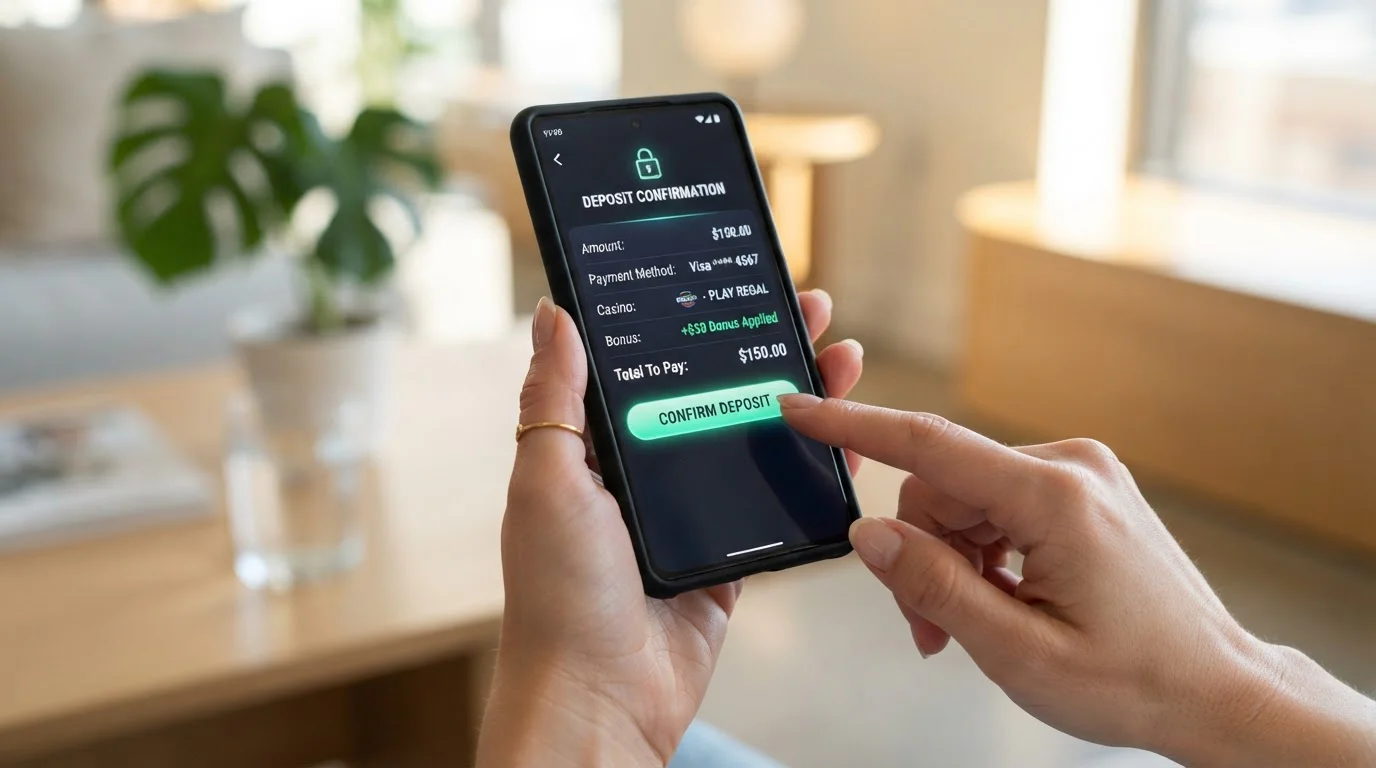
The process splits into four steps: account setup, first deposit, withdrawal, and verification. E-wallets add one extra layer compared to debit cards—you fund the e-wallet first, then use it at the casino. Open banking skips the e-wallet entirely. Mobile wallets tokenise your existing card. Each method has slight variations, but the core flow is consistent.
Setting Up Your E-Wallet Account
PayPal, Skrill, and Neteller all require account creation before you can deposit at a casino. Visit the provider’s website, enter your email, create a password, and link a funding source. For PayPal, that’s your bank account or debit card. For Skrill and Neteller, same options. The provider will ask for identity verification under KYC rules: name, address, date of birth, and sometimes a photo ID or proof of address.
Verification can take 10 minutes or several hours, depending on the provider’s queue and how you submit documents. PayPal tends to verify faster because it cross-references data from existing payment histories. Skrill and Neteller may request additional documents if your details don’t match credit reference or electoral roll records. Once verified, you load funds into the e-wallet from your linked bank account or card. That transfer is instant for debit cards, 1 to 3 working days for bank transfers.
Trustly doesn’t require account creation. When you select Trustly at a casino cashier, you’re redirected to Trustly’s interface, where you choose your bank and log in with your existing online banking credentials. Trustly doesn’t store your login details—it uses open banking APIs to authorise a one-time payment instruction. No balance, no funding step, no separate account.
Apple Pay and Google Pay require linking a debit card to your phone’s wallet app. Open the Wallet app (iPhone) or Google Pay app (Android), tap “Add card,” scan your debit card or enter details manually, and your bank will verify it via SMS or app notification. Once verified, the card is tokenised and ready to use at any merchant that accepts Apple Pay or Google Pay, including casinos.
Making Your First Deposit
Log in to the casino, navigate to the cashier or deposit page, and select your payment method. For e-wallets, enter the amount you want to deposit (usually minimum £5 to £10), confirm, and you’ll be redirected to PayPal, Skrill, or Neteller to authorise the payment. Log in to your e-wallet, approve the transaction, and you’re returned to the casino. Funds appear in your casino balance instantly.
For debit cards, enter your card number, expiry date, and CVV at the cashier. The casino will trigger 3D Secure authentication, which sends a one-time code to your phone or redirects you to your bank’s app. Approve the payment, and the deposit clears immediately. Some casinos store your card details for future deposits under PCI-DSS compliance; others require re-entry each time.
For Trustly, select “Pay by Bank” or “Trustly” at the cashier, choose your bank from the list, and log in to online banking within Trustly’s secure interface. Authorise the payment, and funds arrive instantly. No card details, no e-wallet login, just your normal banking credentials.
For Apple Pay or Google Pay, select the mobile wallet option at the cashier, confirm the amount, and authorise with Face ID, Touch ID, or fingerprint. The tokenised payment processes through your linked debit card, and the deposit clears instantly. The casino never sees your actual card number.
Withdrawing Your Winnings
Request a withdrawal from the casino’s cashier, select the same payment method you used to deposit, and enter the amount. The casino will queue the withdrawal for approval, which can take anywhere from a few minutes to 48 hours depending on the operator and whether your account is already verified.
Once approved, e-wallet withdrawals land in your PayPal, Skrill, or Neteller account within 24 hours, often faster. At the fastest operators, such as Casumo for PayPal and Betway for Trustly, best-case payouts arrive in under an hour. From your e-wallet, you transfer funds to your bank account, which takes 1 to 3 working days for bank transfers or is instant if you use the e-wallet’s prepaid card.
Debit card withdrawals go back to the card you deposited with. Once the casino approves, funds take 1 to 5 working days to reach your bank account. This is slower than e-wallets because the card networks add clearing time. Some casinos process card withdrawals faster than others, but expect 2 to 3 days as typical.
Trustly withdrawals return directly to your bank account via open banking, usually same-day. At Betway they can arrive in under an hour, and even slower Trustly withdrawals typically clear within 24 hours. No e-wallet middleman, no card network latency, just bank-to-bank transfer.
Apple Pay and Google Pay withdrawals don’t go to the wallet—they return to the underlying debit card, which means 1 to 5 working days. You deposit via Apple Pay but withdraw via Visa, effectively. This is a limitation of mobile wallets at UK casinos; they’re deposit-only in most implementations.
Verification Requirements
Every UKGC-licensed casino must verify your age and identity before you can deposit or gamble, a rule in force since May 2019. Most checks run electronically at sign-up; if they fail, or when you make your first withdrawal, the casino may ask for documents. This typically means a photo ID (passport, driving licence), proof of address (utility bill, bank statement dated within the last three months), and sometimes proof of payment method (screenshot of your e-wallet account, photo of your debit card with middle digits obscured).
Upload these documents through the casino’s account page or email them to support. Verification can take a few hours to a few days, depending on the casino’s compliance team workload. Once verified, future withdrawals are faster because the casino has your documents on file.
Casinos also run additional checks as your deposits and withdrawals grow, at levels each operator sets through its own risk assessment. This is source-of-funds verification, where the operator asks you to prove where your money came from. Bank statements, payslips, or tax returns may be requested. This is a UKGC requirement to prevent money laundering, not a tactic to delay payouts.
What’s the fastest way to withdraw winnings from a UK online casino?
Trustly and PayPal are fastest: at Betway (Trustly) and Casumo (PayPal), approved payouts can arrive in under an hour. Skrill and Neteller typically take under 24 hours, debit cards one to five days. Approval itself can take up to 48 hours, so pick a casino known for quick approvals.
Understanding UK Gambling Regulations and Payment Rules

The UK Gambling Commission regulates all legal online casino activity in Great Britain under the Gambling Act 2005. Every operator serving UK players must hold a UKGC Remote Casino licence, which is publicly searchable at gamblingcommission.gov.uk. Licensing is enforced through financial penalties, licence suspensions, and criminal prosecution for unlicensed operators caught serving the UK market.
Two major regulatory changes reshaped the UK casino payment landscape in the 2020s. The first was the credit card ban, implemented on 14 April 2020 through a change to the licence conditions. The second was the wave of 2025–2026 reforms, which introduced slot stake limits, financial risk checks and, from 19 January 2026, a 10x wagering cap on bonuses.
Why Credit Cards Are Banned at UK Casinos
The UKGC banned credit cards for gambling deposits on 14 April 2020, after evidence showed problem gamblers were using borrowed money to chase losses. The ban applies to all UKGC-licensed operators, covering online casinos, sports betting, bingo, poker, and lottery. Credit cards issued by UK or international banks are declined at the deposit screen. Debit cards and prepaid cards remain legal.
The ban also extends to e-wallets funded by credit cards. PayPal, Skrill, and Neteller must block credit-card-funded balances from gambling transactions. If you load your e-wallet with a credit card, you can’t use those funds at a UK casino. The e-wallet provider tracks funding sources and declines transactions that trace back to credit.
Why debit cards are still allowed: they draw from existing funds in your bank account, not borrowed money. The harm-reduction logic targets gambling with debt, not gambling with savings. Prepaid cards work for the same reason—they’re pre-loaded with your own money, not a line of credit.
Sites without a UKGC licence sit outside UK jurisdiction and its protections entirely, so they are not a safe workaround for the ban—see the warning later in this guide.
Why can’t I use my credit card to deposit at UK casinos?
The UK Gambling Commission banned credit card gambling from 14 April 2020 to stop people betting with borrowed money. UKGC-licensed casinos accept debit and prepaid cards instead, and credit-funded e-wallet payments are blocked where identifiable. Sites outside UK regulation are no safe workaround, offering none of the UKGC’s protections.
What UKGC Licensing Means for Your Payments
A UKGC licence imposes strict obligations on operators, many of which affect payments. Licensed casinos must tell you how well your balance is protected if the business becomes insolvent (rated not protected, medium or high); the Commission does not require ring-fenced accounts, and the FSCS does not cover casino balances. They must verify your age and identity before you can deposit or gamble. They must integrate with GAMSTOP, the UK’s self-exclusion scheme. And they must offer deposit limits, session timers, and reality checks.
Payment processing at UKGC casinos is monitored for suspicious activity under anti-money-laundering rules. Deposits and withdrawals that don’t match normal player behaviour can trigger source-of-funds checks, where the casino asks you to prove where your money came from. The levels at which these checks apply are set by each operator’s risk assessment.
UKGC licensing also governs withdrawal speed. Operators must process withdrawal requests “without undue delay,” though the Commission doesn’t define an exact timeframe. Industry practice has settled on 24 to 48 hours for approval, then the payment method’s clearing time. Reverse withdrawals, which once let players cancel a pending cashout and gamble the money, have been banned since October 2021.
What you give up at non-UKGC casinos: disclosure of how your funds are protected, mandatory identity verification, GAMSTOP integration, and access to an approved alternative dispute resolution provider such as IBAS (Independent Betting Adjudication Service). Offshore casinos handle complaints internally or through their own jurisdiction’s regulator, which may or may not prioritise UK player disputes.
2026 Regulatory Changes
19 January 2026 brought a 10x wagering cap on gambling bonuses, ending the era of 30x, 40x, and higher rollover requirements. Every UKGC-licensed operator now caps bonus wagering at 10 times the bonus amount. A £50 bonus requires no more than £500 in wagers to clear. The cap applies to all gambling promotions, including deposit bonuses, free spins winnings, cashback and sports betting offers.
The same reform banned mixed bonuses combining sports and casino components. Operators can offer a sports bonus or a casino bonus, not both in one package. The aim was to prevent casinos from using low-wagering sports offers as bait to drive players into higher-margin casino play.
Affordability checks became more aggressive in 2025 and 2026. The UKGC pushed operators to trigger financial assessments at lower thresholds, though exact figures vary by casino. Operators may ask for bank statements or payslips whenever their risk assessment calls for it. The checks are mandatory under UKGC guidance, not optional.
Payment method implications: casinos keep checking that e-wallet deposits are not funded by credit cards, in line with the 2020 ban. Some operators dropped less-common payment methods to reduce compliance overhead. The payment diversity you see in 2026 may narrow further if regulatory costs keep climbing.
Payment Method Fees, Limits and Speed Comparison
This section consolidates fee structures, deposit limits, and speed benchmarks across the six main payment types. Figures reflect operator terms in mid-2026, but fees and limits can change at individual casinos.
Fees: Most UKGC casinos don’t charge deposit fees for any payment method. Skrill and Neteller may impose their own 1% fee on deposits at some casinos, though this varies. PayPal, debit cards, Trustly, and mobile wallets are fee-free at the deposit stage. Withdrawal fees are rare but not unheard of—some casinos charge a flat fee for debit card withdrawals below a certain amount, typically £10 to £20.
E-wallet providers charge fees when you withdraw from the e-wallet to your bank account. PayPal’s UK fees are negligible for standard transfers. Skrill and Neteller charge around 1% to 2% for bank withdrawals unless you’re a VIP member. Trustly doesn’t charge users—it’s a payment instruction, not an account with stored funds.
Deposit limits: Casinos set their own minimums, usually £5 to £10 for debit cards and £10 to £20 for e-wallets. Maximums vary widely—£5,000 per transaction at some operators, £10,000 or higher at others. The casino’s cashier page lists exact limits. Your bank or e-wallet may also impose daily or monthly limits independent of the casino.
Withdrawal limits: Casinos cap withdrawals per transaction (commonly £2,000 to £5,000) and per month (£10,000 to £50,000). High rollers face withdrawal ceilings that can take weeks to clear large balances. VIP programmes may raise limits. Payment method limits also apply—debit cards often max out at £5,000 per transaction due to card network rules.
Best-case withdrawal speeds (verified accounts):
- Trustly at fast operators such as Betway: under an hour
- PayPal at fast operators such as Casumo: under an hour
- Skrill at fast operators such as Ladbrokes: under an hour
- Debit cards: 1 to 5 working days typical
- Neteller: under 24 hours typical
- Apple Pay / Google Pay: withdrawals to underlying card, 1 to 5 days
Speeds assume the casino has no pending compliance checks. First withdrawals can take longer if payment-method or address checks are outstanding. Casinos reserve the right to delay withdrawals for investigation, which can add days or weeks in edge cases.
Are there any fees for depositing or withdrawing at UK online casinos?
Most UKGC casinos charge nothing for deposits or withdrawals. Skrill and Neteller may add about 1% on deposits at some sites and 1% to 2% when you move money to your bank, unless you are a VIP. A few casinos charge for small card withdrawals, so check the terms first.
Mobile Payments and Casino Apps
Mobile casino play has overtaken desktop in the UK, and payment methods adapted accordingly. Apple Pay and Google Pay bring biometric authorisation to deposits, and most UKGC-licensed casinos now offer native apps or browser-optimised mobile sites. The cashier experience on mobile is streamlined compared to desktop, with fewer payment options visible but faster checkout flows.
Apple Pay and Google Pay work on mobile casino apps and browser sites. Select the mobile wallet at the cashier, confirm the amount, authorise with Face ID or fingerprint, and the deposit clears instantly. The casino’s app must support the wallet—not all do, even if the desktop site lists it. Check the cashier before assuming mobile wallet deposits will work.
PayPal, Skrill, and Neteller work seamlessly on mobile. The casino redirects you to the e-wallet’s app, you approve the payment, and you’re returned to the casino. No typing card numbers on a small screen. Trustly works similarly—you’re redirected to your banking app, approve the payment, and return. Debit cards require manual entry unless your browser autofills payment details.
Native casino apps vs. mobile browser: apps are faster to load and keep you logged in, but they require App Store or Google Play approval, which some casinos can’t or won’t obtain. Browser-based mobile sites work everywhere without installation but feel slower and less polished. Payment functionality is identical in both cases—the cashier works the same way.
Mobile-specific limitations: some casinos restrict certain payment methods to desktop only, particularly lesser-used options like bank transfers or niche e-wallets. The major methods (debit cards, PayPal, Skrill, Trustly) appear on both mobile and desktop. Withdrawal requests can be made from mobile, but document uploads for KYC verification are easier on desktop where you can drag files.
Which UK casinos accept Apple Pay or Google Pay?
Acceptance is growing but not universal in 2026, and no official casino count is published. Betway, 888 Casino, and several other major operators list Apple Pay and Google Pay in their cashiers. Check the deposit page on your phone before signing up. Mobile wallets are deposit-only at most casinos—withdrawals return to your linked debit card.
Unlicensed Casinos – What You Should Know
Old Click2Pay listings sometimes point to casinos licensed outside Great Britain, or not licensed at all. These sites are not a route to a Click2Pay replacement, and they are not a safe place to play. Click2Pay itself no longer exists anywhere, so no casino, licensed or not, can offer it.
Sites without a UKGC licence are not part of GAMSTOP and do not offer UK protections. There is no UKGC-approved alternative dispute resolution if a withdrawal is refused, no duty to tell you how your funds are protected, and no mandatory safer-gambling tools such as deposit limits, reality checks or time-outs. If a payout is withheld or an account is closed, there is no UK regulator to turn to.
If you have self-excluded through GAMSTOP, the exclusion exists to protect you, and it is worth keeping in place. Free, confidential support is available from GamCare and the National Gambling Helpline on 0808 8020 133, and GAMSTOP can answer questions about your registration.
For players simply looking for a modern alternative to Click2Pay, the methods covered above—PayPal, Skrill, Neteller, Trustly, debit cards and mobile wallets—all work at UKGC-licensed casinos, with faster withdrawals and stronger protections than any unlicensed site can offer.
Choosing the Right Payment Method for Your Needs
Six methods. Different trade-offs. The decision tree is simple.
If you want the widest casino choice: Debit cards. Every UKGC casino accepts them. No separate account, no compatibility worries.
If you want the fastest withdrawals: Trustly or PayPal. At the quickest operators, approved payouts can land in under an hour. Both beat debit cards by days.
If you want privacy and already own the account: PayPal. It’s the e-wallet you use for shopping, and it keeps card details out of casino databases.
If you want the widest e-wallet acceptance at casinos: Skrill or Neteller. They work at more UK casinos than PayPal because they were built for gambling from the start.
If you want no middleman at all: Trustly. Direct bank-to-casino via open banking. No e-wallet to fund, no card to enter. Instant deposits, same-day withdrawals.
If you play on mobile and want biometric security: Apple Pay or Google Pay. Face ID or fingerprint authorisation. Instant deposits. Withdrawals go to your linked card, so they’re slower.
Click2Pay’s appeal was privacy plus speed. PayPal delivers on privacy—the casino never sees your card details, and the brand is trusted. Trustly delivers on speed—same-day withdrawals, often within an hour. Skrill and Neteller split the difference—they’re fast, they’re private, and they work at more casinos than PayPal. Debit cards sacrifice privacy for universal acceptance.
Pick based on your priorities, not what sounds most futuristic. Open banking and mobile wallets are newer, but that doesn’t make them better for every use case. Debit cards are old-school, but they’re universal and dead simple. E-wallets are a middle path. None of them perfectly replicates Click2Pay because Click2Pay is gone, but each one solves part of the problem it left behind.
Casino Deposit Methods UK 2026 – Compare Payment Options
Content created by the «Cashier Atlas» team