
Online Casino No Registration UK 2026: The Truth About Instant Verification
 Available in GB

The promise sounds simple: register, deposit and play without uploading a passport scan or utility bill. Casinos marketed as “no registration” have multiplied online, and the pitch rarely changes. Instant access, zero friction, straight to the games.
Reality splits the market in two. UKGC-licensed operators cannot skip identity verification under any circumstances. The law has required age and identity checks before deposit since May 2019, full stop. What these casinos call “no verification” is instant electronic verification via credit reference agencies, electoral roll cross-checks, or open banking APIs. You still verify. You just never see the machinery.
Sites licensed offshore, typically in Curaçao or Anjouan, sometimes market themselves to UK players as “no KYC”. That label is misleading. They defer verification rather than eliminate it, asking for documents when you try to withdraw—often at the worst possible moment, and with no UK body to complain to if the payout is then refused. They also hold no UK licence and sit outside GAMSTOP.
For UK players the sensible route is clear. A UKGC-licensed casino with instant electronic verification gives you the speed that “no registration” marketing promises, along with GAMSTOP, deposit-limit tools, affordability protections and independent dispute resolution. Neither category offers anonymity, and it is not something a legitimate casino can offer.
This guide explains how instant verification actually works under the bonnet, profiles six UKGC-licensed casinos that verify you in seconds, sets out why offshore “no-KYC” sites are not a safe shortcut, and gives practical tips for getting verified quickly at a licensed site.
What “No Registration Casino” Actually Means in the UK (2026)
The term is a misnomer. Every casino serving UK customers either verifies identity immediately or defers verification until a threshold. “No registration” describes the user experience, not the legal reality.
The Regulatory Reality: UKGC Law Requires Identity Verification
The UK Gambling Commission’s age and identity verification licence condition came into force on 7 May 2019. It mandates that remote gambling operators verify customer age and identity before allowing deposits or gambling activity. The rule replaced the previous “play now, verify later” model, where operators could allow gameplay and only request documents before the first withdrawal. That loophole closed seven years ago.
Every operator holding a UKGC remote casino licence must comply. There are no exceptions, no carve-outs for “instant casinos,” and no legal basis for offering gambling to unverified UK customers. The regulator publishes the licence conditions publicly, and any site claiming to be UKGC-licensed while skipping verification is either misrepresenting its licence or violating its terms.
Electronic verification satisfies the standard. Credit reference agencies hold electoral roll data, financial records, and address histories for most UK residents. An operator submits your name, date of birth, and postcode to Experian, Equifax, or TransUnion via API. If the agency returns a strong enough match, identity is verified instantly. If the match confidence falls below the operator’s threshold, the operator requests manual document upload. Either way, verification happens before you deposit.
The misconception persists because UKGC operators market themselves as “no verification casinos” despite performing checks. From the user’s perspective, the experience feels frictionless. No document queue, no waiting, account active in seconds. The machinery runs in the background. The phrasing exploits that gap between technical compliance and perceived user experience, and it works as marketing copy because players want speed, not a regulatory lecture.
Can a UK-licensed casino legally offer gambling without verifying my identity?
No. Since 7 May 2019, UKGC licence conditions have required age and identity verification before a customer can deposit or gamble. Electronic checks via credit reference agencies or open banking satisfy the standard, but verification itself is mandatory, and a UKGC-licensed casino offering gambling without it would be breaching its licence.
Instant eKYC vs Offshore “No-KYC” Claims
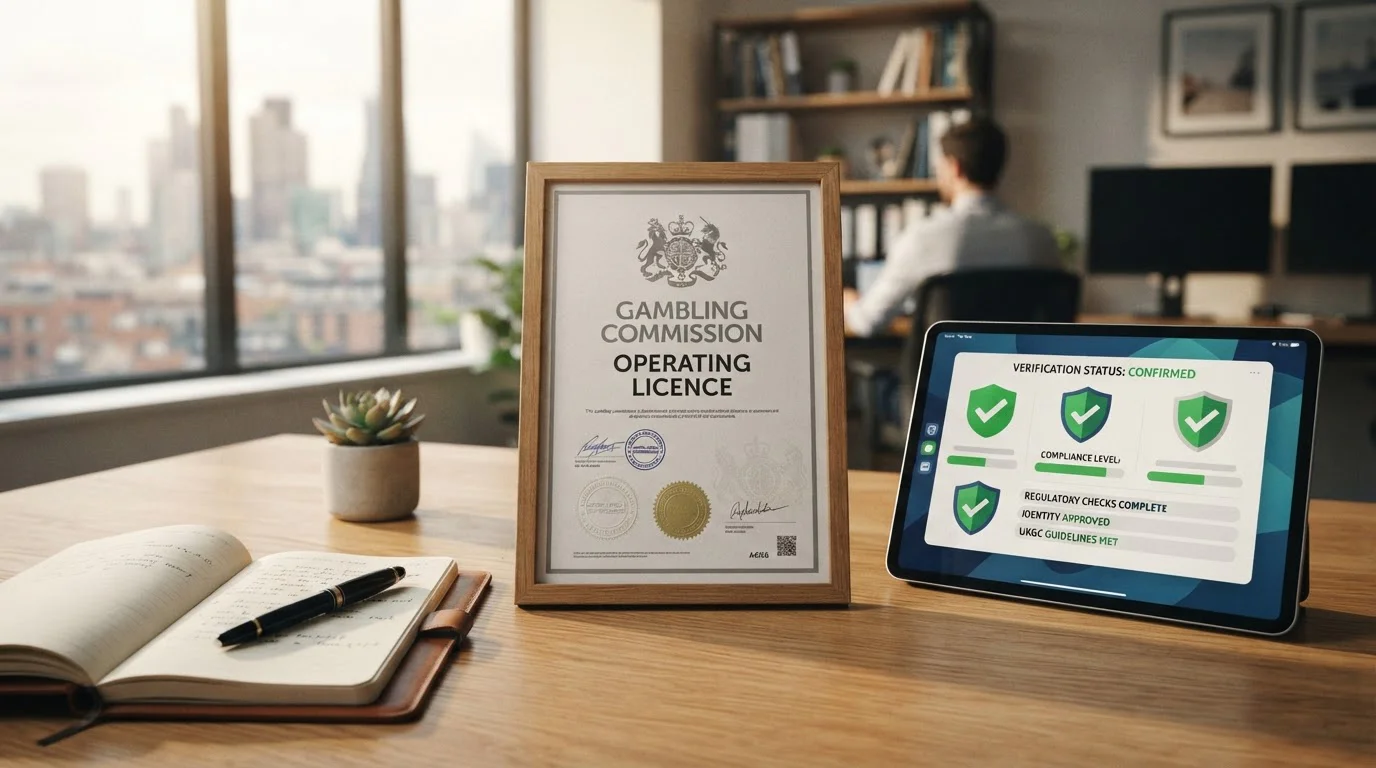
The market divides cleanly. UKGC operators verify you the moment you register, using electronic KYC systems that run checks against databases in milliseconds. Offshore operators let you register with minimal information and play without documents, then request verification when you try to withdraw or when their compliance checks are triggered.
UKGC instant-verification casinos include William Hill, 888 Casino, BoyleSports, Betfred, Betway, and HighBet. All hold active UK Gambling Commission licences. All verify identity electronically before allowing deposits. All integrate with GAMSTOP, enforce affordability checks when required, and fall under UK consumer protection frameworks. Payouts route through regulated payment processors, operators must disclose how customer funds are protected, and disputes escalate to an independent ADR service such as IBAS if the operator’s internal complaints process fails.
Offshore sites marketed as “no KYC” operate under Curaçao or Anjouan licences. None hold UKGC licences, none are part of GAMSTOP, and none are permitted to offer gambling to people in Great Britain. This guide does not list or recommend them.
The protection gap is material. UKGC operators must give you access to independent dispute resolution if a withdrawal dispute cannot be resolved internally, tell you how your balance is protected if the business fails, and provide responsible gambling tools including GAMSTOP self-exclusion, deposit limits, and reality checks. Offshore operators provide none of that. If an offshore casino freezes your account, confiscates winnings, or goes offline, your recourse is limited to emailing the Curaçao Gaming Authority and hoping for adjudication. The CGA does not publish complaint statistics, response times, or enforcement actions, and UK courts generally do not enforce offshore gambling debts.
How UKGC Instant Verification Works (Pay N Play, eKYC, Biometrics)
Instant verification is not magic. It is electronic KYC running against existing databases. Three technologies dominate the UK market: credit reference checks, Pay N Play via Trustly, and biometric verification via Jumio.
| Method | What you provide | Typical time | Most likely to fail when |
|---|---|---|---|
| Credit reference eKYC | Name, date of birth, address | Seconds | You moved recently or have a thin credit file |
| Open banking (Pay N Play) | Bank login in your banking app | Under a minute | Your bank lacks the required connection |
| Biometric (Jumio) | Photo ID plus a selfie | 1–3 minutes | The photo is blurred or the ID has expired |
| Manual document review | Uploaded ID and proof of address | 24–48 hours | Images are cropped or out of date |
Electronic KYC: Credit Reference and Electoral Roll Checks
Most UKGC casinos verify identity by querying credit reference agencies. When you register, the operator collects your name, date of birth, and address. It submits those details to Experian, Equifax, or TransUnion via API. The agency cross-references your input against electoral roll records, financial account histories, and public databases. If the data match with high confidence, the agency returns a verification token. The casino marks your account as verified and allows deposits.
The process completes in seconds for most UK residents with established credit histories and electoral roll entries. If you recently moved, changed your name, or have no UK credit footprint, the automated check may fail. The operator then requests manual document upload: a photo of your passport or driving licence, and a recent utility bill or bank statement showing your address. That fallback is still KYC, just slower.
Credit reference checks satisfy the UKGC’s verification condition because they can verify identity to the same standard as manual documents. The Commission’s guidance allows electronic methods if they are reliable, and leaves operators to set their own match thresholds. Below that threshold, manual verification kicks in.
The system is not foolproof. If someone else at your address is registered on the electoral roll with a similar name, the credit agency may flag a potential match conflict and refuse to verify automatically. If you opted out of the open electoral register for privacy reasons, your data may not appear in the commercial credit reference databases at all. In those edge cases, you upload documents manually. The casino still calls itself “no verification” because the majority of users clear the electronic check.
Pay N Play (Trustly): Bank Login Verification
Pay N Play is Trustly’s proprietary instant-verification system. It combines deposit and account creation into one transaction authenticated by your online bank login. The flow works like this: you select Trustly at the casino cashier, get redirected to your bank’s login page, enter your bank credentials, and Trustly queries your bank account data via open banking APIs. The bank confirms your account ownership, registered address, and date of birth. Trustly returns a verified identity token to the casino. The casino creates your account automatically with KYC status “verified,” processes your deposit, and redirects you to the game lobby.
No username, no password, no document upload. You “log in” each session by initiating another Trustly transaction, which re-verifies your identity via bank login. The system satisfies UKGC requirements because bank account ownership is strong identity authentication. UK banks perform their own KYC when you open an account, so verifying that you control a bank account effectively verifies your identity by proxy.
Trustly launched Pay N Play in Sweden in the mid-2010s. Adoption in the UK market has been limited: in our October 2026 checks, only a handful of UKGC casinos, SpinYoo the clearest example, used a Trustly-led sign-up flow. Each must still verify your age and identity before accepting deposits, per UKGC rules. The Trustly flow meets that requirement because the bank login step authenticates you against your bank’s KYC records.
Pay N Play declines for users whose banks do not support the required open banking connection. If your bank is not integrated with Trustly’s network, the transaction fails and you fall back to traditional registration with credit reference verification or manual document upload.
Trustly introduced Trustly ID in 2025, adding biometric authentication via facial recognition or fingerprint. The enhancement allows users to verify identity without bank login redirect, but adoption remains patchy. Most UK casinos still rely on credit reference checks as the primary instant-verification method.
Do I need to upload documents to play at a no-registration casino in the UK?
Usually no, if you have a UK credit history and appear on the electoral roll. UKGC casinos verify most users electronically within seconds via credit reference agencies. Manual document upload is only requested if automated checks fail or a large withdrawal triggers extra checks. Offshore sites still ask for documents before paying out.
Jumio Biometric Verification

Jumio is a third-party identity verification provider that combines government ID scanning, liveness detection, and facial biometrics. BoyleSports announced a partnership with Jumio in July 2026 to enhance KYC compliance across its UK and Ireland operations.
The Jumio flow works differently from credit reference checks. Instead of querying databases, Jumio asks you to photograph your government-issued ID (passport, driving licence) via webcam or smartphone camera. Its software scans the ID, extracts your name, date of birth, and photo, then asks you to take a selfie. Liveness detection confirms you are a real person holding the device, not a static photo or deepfake. Jumio compares your selfie to the ID photo using facial recognition algorithms. If the match confidence exceeds threshold, Jumio returns a verification token to the casino.
The process takes one to three minutes. It is slower than credit reference checks but faster than manual document review by a human compliance officer. BoyleSports adopted Jumio because biometric verification provides stronger identity assurance than credit reference data alone. Credit agencies confirm that someone with your name and address exists; Jumio confirms that you are physically present and match your government ID.
Jumio verification still counts as electronic KYC under UKGC rules. No documents are uploaded to the casino itself. Jumio processes the ID scan and selfie, performs the match, and sends only the verification result to the casino. Your biometric data stays with Jumio, subject to GDPR. The casino sees “verified” or “verification failed,” nothing more.
Biometric verification is not yet standard across UK casinos. Most operators stick with credit reference checks because they are cheaper, faster, and less intrusive. Jumio adoption may increase if the UKGC tightens identity-verification standards or if fraud rates climb, but as of 2026 it remains a niche solution deployed by operators seeking enhanced compliance assurance.
How does Pay N Play instant verification work?
Pay N Play uses your online bank login to verify identity. You choose Trustly at the cashier, log in to your bank, and Trustly passes your verified name, address and date of birth to the casino, which creates and verifies your account before crediting the deposit.
Best UKGC Instant-Verification Casinos for UK Players (2026)
Six operators dominate the UKGC instant-verification space. All hold active UK Gambling Commission licences. All verify identity electronically before accepting deposits. All integrate with GAMSTOP and offer same-day or next-day withdrawals for verified accounts. Game libraries range from 700 to 3,000 titles, weighted towards slots with Evolution or Playtech live dealer coverage.
The comparison table below surfaces licence numbers, verification methods, withdrawal speeds, and distinguishing features. Each operator receives a full breakdown afterwards.
| Operator | UKGC Licence | Verification Method | Withdrawal Speed | Game Count | Distinguishing Feature |
|---|---|---|---|---|---|
| William Hill | Check register | Electoral roll eKYC | 1–4 hours (PayPal) | 700+ | 90+ years UK heritage, evoke plc ownership |
| 888 Casino | Check register | Credit reference eKYC | 4–6 hours (e-wallets) | 1,500+ | eCOGRA audited, 888 Originals exclusives |
| BoyleSports | Check register | Jumio biometrics + eKYC | 3–8 hours (e-wallets) | 1,000+ | Jumio partnership (July 2026), BoyleSports Xtra retail link |
| Betfred | Check register | Electoral roll eKYC | 4–8 hours (PayPal) | 1,200+ | Large retail estate, 50+ years UK betting legacy |
| Betway | Check register | Credit reference eKYC | 2–6 hours (e-wallets) | 1,500+ | Publicly traded (NYSE: SGHC), football sponsorship history |
| HighBet | White Hat Gaming (check register) | Credit reference eKYC | 1–2 days (e-wallets) | 3,000+ | White Hat Gaming platform, newer brand (post-2020) |

William Hill: 92 Years of UK Heritage, Electoral Roll eKYC
William Hill is one of the oldest betting brands in Britain. Founded in 1934 as a retail bookmaker, the company launched online in 1998 and is licensed by the UK Gambling Commission (check the number on the public register). 888 Holdings, now evoke plc, acquired William Hill in 2022 for £2.2 billion. The brand runs a large estate of retail betting shops alongside its online casino and sportsbook.
Verification runs via electoral roll cross-checks through credit reference agencies. Most UK customers with electoral roll entries verify within seconds. The auto-verification tool is accessible from the registration confirmation email. If automated checks fail, manual document upload is requested. PayPal withdrawals process in one to four hours after verification. Debit card withdrawals take two to three working days.
The game library holds 700+ titles from NetEnt, Microgaming, Playtech, and Evolution. Slots dominate, with 30+ live dealer tables covering roulette, blackjack, and baccarat. The integrated sportsbook-casino account appeals to punters who bet on both verticals without separate registrations. Responsible gambling tools include deposit limits, reality checks, time-outs, self-exclusion, and mandatory GAMSTOP integration.
William Hill’s strength is brand trust. More than 90 years of UK presence and evoke plc’s public-company oversight signal stability. The median payout speed for PayPal sits at around 3.1 hours. First-deposit offers fluctuate based on regulatory pressure; typical structure in 2026 is bet £10, get £30 in free bets for sports. Casino welcome offers are less prominent due to UKGC scrutiny on bonus-hunting and affordability.
888 Casino: Same-Day Withdrawals, eCOGRA Audited
888 Casino launched in 1997, making it one of the first online casinos. The operator is licensed by the UK Gambling Commission (check the number on the public register), alongside Gibraltar and Malta licences. Its parent, evoke plc (formerly 888 Holdings), trades on the London Stock Exchange and also owns William Hill, acquired in 2022.
Electronic KYC runs against credit reference agencies. Instant verification succeeds for most UK customers with established credit histories. Manual document upload is requested if automated checks return low confidence, or for large withdrawals flagged by compliance. PayPal and e-wallet withdrawals process same-day, typically within four to six hours. Debit card withdrawals take two to five working days.
The game library exceeds 1,500 titles. 888 Originals are proprietary slots and table games exclusive to 888 Casino, unavailable at competitor sites. Third-party providers include NetEnt, Play’n GO, Red Tiger, and Evolution for live dealer. eCOGRA audits all games for fairness, with RTP percentages published and verified. Welcome offers vary by market; typical UK structure in 2026 is £100 match plus 100 free spins, with wagering capped at 10x under UK rules.
888’s distinguishing feature is longevity. Twenty-nine years of continuous operation, publicly traded status, and eCOGRA certification signal operational maturity. The company publishes annual reports, regulatory filings, and financial statements, providing transparency rare among offshore competitors. Same-day withdrawals are standard for verified accounts using e-wallets.
BoyleSports: Jumio Biometric Verification, Retail Integration
BoyleSports is an Irish bookmaker founded in Dundalk in the early 1980s, operating 260+ retail betting shops across Ireland and the UK. The online casino is licensed by the UK Gambling Commission (check the number on the public register) and also holds Gibraltar licences.
BoyleSports announced a partnership with Jumio in July 2026 for biometric age and identity verification. The Jumio system scans government IDs, performs liveness detection via selfie, and matches your face to the ID photo. Verification completes in one to three minutes. BoyleSports also supports standard credit reference eKYC for customers preferring not to use biometric methods. E-wallet withdrawals process in three to eight hours. Debit card withdrawals take two to five working days.
The game library exceeds 1,000 titles, primarily Playtech-powered. Exclusive Boyle-branded games are unavailable elsewhere. Live dealer coverage includes 40+ tables. BoyleSports Xtra is a loyalty programme linking online casino and sportsbook play with retail shop activity. Points earned online can be redeemed in-shop, and vice versa. The integration appeals to customers who bet both online and in physical shops.
Jumio biometric verification is BoyleSports’ differentiator. While most UK casinos rely on credit reference checks, BoyleSports invested in facial recognition technology to strengthen identity assurance. The system is faster than manual document review but more intrusive than database queries. First-deposit offers typically structure as a deposit match plus 100 free spins, with wagering capped at 10x under UK rules.
Betfred: 50+ Years UK Betting Legacy, High-Street Estate
Betfred was founded in 1967 by Fred and Peter Done. It operates well over 1,000 retail betting shops across the UK. The online casino is run by Petfre (Gibraltar) Limited, licensed by the UK Gambling Commission (check the number on the public register). Betfred remains privately held, owned by the Done family.
Electronic KYC runs via credit reference agencies. Instant verification succeeds for most customers via electoral roll and bank account cross-checks. Manual document upload is requested if automated checks fail. PayPal withdrawals process in four to eight hours. Debit card withdrawals take two to five working days.
The game library holds 1,200+ titles from Microgaming, NetEnt, IGT, Playtech, and Evolution. Slots dominate, with live dealer coverage standard. Betfred is primarily a sportsbook brand; the casino is a secondary vertical. Welcome offers emphasise sports betting. Typical structure in 2026 is bet £10, get £50 in free bets for sports. Casino welcome offers provide 200 free spins on first deposit, with wagering capped at 10x under UK rules.
Betfred’s strength is UK high-street presence. Fifty-nine years of retail betting operations and a shop on many British high streets provide brand recognition. The operator appeals to sports bettors who occasionally play casino games. Private ownership means no quarterly earnings pressure or shareholder obligations. Betfred does not disclose financial results publicly.
Betway: Publicly Traded (NYSE), Global Sports Sponsorship
Betway is part of Super Group (SGHC) Limited, publicly traded on the New York Stock Exchange under ticker SGHC. Betway Limited is the licensed entity for UK operations, licensed by the UK Gambling Commission (check the number on the public register) alongside Malta Gaming Authority and other international licences.
Electronic KYC runs via credit reference agencies. Automated checks against electoral roll and credit data verify most customers instantly. Manual document upload is requested if automated verification fails or for large withdrawals flagged by compliance. E-wallet withdrawals process in two to six hours. Debit card withdrawals take three to five working days.
The game library exceeds 1,500 titles from Microgaming, NetEnt, Pragmatic Play, and Evolution. Live dealer coverage includes 60+ tables. Betway has a long record of football sponsorship, including a West Ham United shirt deal that ran until 2024, and has backed several esports teams. Welcome offers vary by market. UK structure in 2026 typically matches a £10 first deposit, with wagering capped at 10x under UK rules. Betway focuses more on sports betting promotions than casino bonuses.
Public-company status is Betway’s differentiator. NYSE listing requires financial transparency, quarterly earnings reports, and regulatory oversight beyond UKGC obligations. Super Group publishes audited financials, providing operational visibility. Betway’s sports sponsorships increase brand recognition among football fans.
HighBet: White Hat Gaming Platform, 3,000+ Games
HighBet operates on the White Hat Gaming turnkey casino platform, which powers 50+ online casino brands. The operating company is not prominently disclosed on the site; check the footer for the UKGC account number and confirm it on the public register, where white-label brands are listed under the licence holder. HighBet is a newer brand, launched post-2020.
Electronic KYC runs via credit reference agencies. Instant verification succeeds for most UK customers. Manual document upload is requested if automated checks fail. E-wallet withdrawals process in one to two days. Debit card withdrawals take three to five working days.
The game library exceeds 3,000 titles, aggregated through White Hat Gaming’s platform. Providers include NetEnt, Microgaming, Play’n GO, Pragmatic Play, and Evolution. Slots dominate, with live dealer coverage standard. Welcome offers typically match £50 first deposit plus 50 free spins, with wagering capped at 10x under UK rules.
HighBet’s distinguishing feature is its game catalogue size. White Hat Gaming aggregates content from dozens of providers, giving HighBet access to one of the largest libraries among UK casinos. The trade-off is less heritage than William Hill or 888. Newer brands benefit from modern UX and fewer legacy technical constraints, but lack the operational track record of operators with 20+ years of continuous service.
What is the difference between a UKGC “instant verification” casino and an offshore “no KYC” casino?
UKGC casinos verify your identity electronically before you deposit, using credit reference, open banking or biometric checks, so there is no surprise document request when you win. Offshore “no KYC” sites put the checks off until you withdraw, and they offer none of the UK protections such as GAMSTOP and independent dispute resolution.
Offshore “No-KYC” Casinos: Why They Are Not a Shortcut
Sites marketed to UK players as “no KYC” or “no verification” are almost always licensed in Curaçao or Anjouan. None of them hold a UK Gambling Commission licence, none of them are part of GAMSTOP, and none of them are permitted to offer gambling to people in Great Britain.
The “no KYC” label is also misleading on its own terms. These sites do not remove identity checks; they postpone them. Registration may take only an email address, and deposits may go through without documents, but every operator reserves the right to ask for photo ID, proof of address and sometimes source of funds before paying out. In practice that request tends to arrive at the moment a player asks to withdraw a large win—exactly when the player has the least leverage.
That timing is where most disputes begin. An offshore operator can hold a withdrawal while it reviews documents, reject documents it considers unsatisfactory, or apply terms on bonus play, maximum bets or “irregular play” to void winnings. Players who were told they would never need to verify are often the least prepared for it. At a UKGC-licensed casino, by contrast, you are verified before you deposit, so identity checks cannot become a last-minute obstacle between you and money you have already won.
Withdrawal caps add another layer. Offshore sites commonly cap withdrawals at a few thousand pounds a week, so even a straightforward win can be paid out in instalments over months, with no regulator to complain to if the payments stop.

Will an offshore casino ever ask me to verify my identity?
Yes, almost always before releasing a significant withdrawal, so you cannot cash out without ever verifying. If you cannot or will not provide documents, the operator can refuse to pay, and there is no UK complaints route. At a UKGC casino you are verified before your first deposit instead.
Is it safe to use a casino that doesn’t ask for ID?
No. A site that lets UK players gamble without any identity or age check is either not licensed in Great Britain or breaking its licence terms. Age checks protect children, identity checks protect you from fraud, and both underpin tools such as self-exclusion. Skipping them signals how a site will behave later.
What You Lose by Going Offshore: Protection Trade-Offs
Every protection listed below is mandatory for UKGC-licensed operators and absent from offshore casinos.
No GAMSTOP Integration

GAMSTOP is the UK’s national self-exclusion scheme, mandatory for all UKGC-licensed operators since 31 March 2020. If you self-exclude via GAMSTOP, you are blocked from all UKGC casinos for a minimum of six months, up to five years. The block is account-wide: operators must refuse new registrations from self-excluded individuals and close existing accounts immediately upon notification.
Offshore casinos do not integrate with GAMSTOP because they hold no UKGC licences, so a UK self-exclusion does not reach them. Gambling support organisations consistently identify this as one of the biggest risks offshore sites pose: people who have chosen to self-exclude can be drawn back into gambling by sites that will not check. If you have self-excluded, the exclusion exists to protect you, and offshore sites are not a way round it. Some offshore operators offer email-based self-exclusion for a single site, but it does not carry across to sister brands and is not independently enforced.
If you are struggling to stay away, the most effective steps are to keep your GAMSTOP exclusion in place, ask your bank to switch on a gambling block, and install blocking software such as Gamban on your devices. GamCare and the National Gambling Helpline (0808 8020 133) offer free, confidential support 24 hours a day.
No UK Consumer Protections: Fund Protection, ADR, Segregation
UKGC-licensed operators must comply with licence conditions covering fund protection, dispute resolution, and fair treatment. Offshore operators are not bound by those rules.
Protection of customer funds. UKGC operators must tell customers how their account balances are protected if the business becomes insolvent, using the Gambling Commission’s rating scale from “not protected” to “high”, and many hold player balances in segregated or trust accounts. Casino balances are not covered by the Financial Services Compensation Scheme under any licence, but at a UKGC site you at least know where you stand. Offshore operators have no disclosure obligation, and if an offshore casino goes offline, your deposited funds may be lost entirely. Curaçao law does not require segregated accounts.
IBAS dispute resolution. UKGC operators must offer access to an approved Alternative Dispute Resolution provider, such as the Independent Betting Adjudication Service, if internal complaints processes fail to resolve a dispute. ADR is free for customers, and operators are expected to honour the outcome. Offshore operators provide no equivalent. If an offshore casino freezes your account, disputes a withdrawal, or confiscates winnings, your recourse is limited to emailing the Curaçao Gaming Authority or Anjouan Gaming Authority. Neither regulator publishes complaint statistics, response times, or adjudication outcomes. Resolution can take months, and enforcement is opaque.
Fund segregation. At UKGC operators that segregate customer deposits, those funds are ring-fenced from operating expenses, so they remain available for withdrawal even if the operator faces financial difficulty. Offshore operators have no such obligation. Your deposits may be used to cover operating costs, marketing spend, or debt servicing. If the operator becomes insolvent, you are an unsecured creditor with no priority claim.
Bank Transaction Blocks and Enforcement
UK banks increasingly restrict payments that look linked to offshore gambling. Several high-street banks limit or block payments to crypto exchanges, and their fraud systems may flag card payments to unlicensed gambling merchants. Customers can also switch on a gambling block in their banking app. If a payment to an offshore site is blocked, treat it as a signal to stop rather than a problem to engineer around.
The Gambling Commission also works to disrupt unlicensed operators targeting UK customers, including through payment providers and online platforms, and offshore terms frequently prohibit access from restricted countries, which gives the operator grounds to close accounts and keep balances. If an offshore casino refuses to pay out, UK courts will not compel it to, and there is no UK regulator to step in.
Will my UK bank block transactions to offshore casinos?
Possibly. Many UK banks restrict payments to crypto exchanges and flag card payments to unlicensed gambling merchants, and a gambling block in your banking app will stop them outright. If a payment is declined, do not route it another way: many e-wallets apply their own gambling restrictions, and workarounds only increase your risk.
Curaçao’s 2024 LOK Reform: The End of “True No-KYC”
On 24 December 2024, Curaçao replaced its decades-old master-licence and sublicence system with the Landsverordening op de Kansspelen (LOK), a national ordinance establishing the Curaçao Gaming Authority as the sole direct licensing body. Sublicences are being phased out, and operators have had to apply for new direct CGA licences.
The LOK introduces mandatory AML and KYC frameworks aligned with Financial Action Task Force standards. Curaçao-licensed operators must implement customer verification procedures comparable to other regulated jurisdictions. The reform ends the era of “true no-KYC Curaçao casinos.” Operators that previously allowed indefinite play without verification must now establish KYC procedures and document them.
Enforcement remains uneven. The CGA does not publish enforcement actions, complaint statistics, or licence revocation records. Operators that fail to comply risk licence suspension, but the transparency required to confirm compliance is absent, which makes it impossible for a player to know which operators comply and which do not.
The LOK reform materially changes the offshore landscape. Curaçao licences are no longer synonymous with “no-KYC gambling.” Licensing costs are considerably higher than the minimal fees under the old sublicence regime, and some smaller offshore casinos shut down or consolidated in 2025 as a result. None of this brings Curaçao-licensed sites inside UK regulation: they remain outside GAMSTOP and the UK complaints system.
What consumer protections do I lose by playing at an offshore casino instead of a UKGC-licensed site?
You lose GAMSTOP self-exclusion, access to independent dispute resolution, disclosure of how your balance is protected if the operator fails, UK rules on fair terms and safer gambling tools, and any realistic prospect of UK courts enforcing payment. Complaints go only to the offshore regulator, which publishes little about outcomes.
Are offshore no-verification casinos legal in the UK?
No. Any operator offering remote gambling to people in Great Britain needs a UK Gambling Commission licence, so offshore sites targeting UK players without one are acting unlawfully. They offer no GAMSTOP, no UK dispute resolution and no UK safer gambling protections. The safe option is a UKGC-licensed casino that verifies you instantly.
Bonuses and Free Spins at No-Registration Casinos
Bonuses at UKGC instant-verification casinos follow UK rules. Since January 2026, wagering on bonuses at licensed casinos has been capped at 10x, and offers that require you to gamble on more than one product type to unlock a bonus have been banned. No-deposit bonuses are rare because of affordability-check requirements and regulatory scrutiny of bonus-hunting. Offshore sites advertise larger headline offers—150% to 270% deposit matches and hundreds of free spins—but attach wagering of 40x to 60x, maximum cashout caps on no-deposit offers, and terms that are not subject to UK fairness rules.
Verification affects bonus winnings too. At a UKGC casino you are already verified, so cleared bonus winnings can be withdrawn without a fresh identity hurdle, subject to the operator’s normal checks. Offshore sites allow bonus play without verification but require KYC before withdrawing bonus winnings. If you clear a £100 bonus with 40x wagering (£4,000 wagered) and convert it to £500 withdrawable cash, the offshore casino requests documents before processing the payout, and may review your bonus play at the same time.
Wagering requirements define how many times you must wager the bonus amount before bonus funds convert to withdrawable cash. A £10 bonus with 10x wagering requires £100 wagered. Not all games contribute equally. Slots contribute 100%, table games contribute 10% to 20%, live dealer contributes 10% or is excluded entirely. Check the bonus terms per operator. Offshore casinos impose stricter game restrictions and lower contribution percentages than UKGC operators.
The direction of travel at UKGC casinos is towards simpler, fairer bonuses: lower wagering, clearer terms and less pressure to keep playing. That is a feature, not a drawback. A smaller bonus you can realistically clear is worth more than a headline figure you never will.
Slots and Games at No-Verification Casinos
Game libraries at UKGC instant-verification casinos range from around 700 titles at the smaller operators to 3,000+ at HighBet. Slots dominate, accounting for 70% to 85% of total catalogues. Live dealer coverage is standard, with Evolution and Playtech providing 30 to 60+ tables covering roulette, blackjack, baccarat, and poker variants.
UKGC casinos source games from tier-one providers: NetEnt, Microgaming, Playtech, Pragmatic Play, Play’n GO, Red Tiger, and Evolution. Game RTPs are tested by approved testing houses, with percentages published per UKGC transparency requirements, and UK rules on spin speed, autoplay and stake limits for online slots apply. Offshore casinos aggregate many of the same providers alongside smaller studios with less rigorous testing, and the UK game-design safeguards do not apply there.
Demo mode access varies. Many UKGC operators let you browse the lobby before you register, though free-play demos now generally sit behind age verification, because UK rules require age checks before customers can access free-to-play versions of gambling games.
Large offshore aggregators advertise 7,000 to 9,000+ titles. Larger libraries do not necessarily indicate better quality. Those catalogues include hundreds of low-quality slots from minor studios, inflating total counts without adding substantive variety.
Provably Fair Games: Blockchain Verification
Provably fair games use cryptographic hashes to allow players to verify that game outcomes were not manipulated. The system works by publishing a seed value before the game round begins. The seed is hashed and displayed to the player. The game outcome is derived from the seed. After the round completes, the casino reveals the original unhashed seed. The player can hash the revealed seed themselves and compare it to the pre-published hash. If the hashes match, the outcome was determined by the original seed, not manipulated after the fact.
Some crypto casinos offer provably fair games, primarily in-house titles like dice, crash, and plinko. Third-party slots from NetEnt or Pragmatic Play are not provably fair in this sense because those providers use certified RNG systems tested by independent labs rather than blockchain verification. Provably fair games are niche, and most players never verify seeds manually. More importantly, a provably fair game proves only that a single round was not altered; it says nothing about whether the operator will pay you, which is where the real risk at an unregulated site lies.

How to Get Verified in Seconds at a UK Casino
Instant verification works best when the details you enter match the records that credit reference agencies already hold. A few simple steps make the difference between an account that is live in seconds and one that waits for a compliance team.
Register on the electoral roll at your current address if you have not already. It is one of the main data sources credit reference agencies use to confirm that you live where you say you do, and it costs nothing. If you have moved recently, update your address with your bank and other accounts too; automated checks are most likely to fail in the first few months after a move.
Enter your details exactly as they appear on your bank account and official documents. Use your full legal name rather than a nickname, the same spelling and format for your address, and your correct date of birth. Small mismatches, such as “Flat 2” versus “2/”, or a missing middle name, can be enough to push a check below the confidence threshold and trigger a document request.
Use a payment method in your own name. UK casinos must make sure the person depositing is the account holder, so a card or bank account belonging to a partner or family member will cause problems at the first withdrawal, even if it works for deposits.
Have your documents ready anyway. Even with a perfect electronic match, a casino may ask for ID or proof of address later, for example after a large win or a change in your play. A clear photo of your passport or driving licence and a recent bank statement or utility bill, saved somewhere secure, means you can respond in minutes.
If the casino offers it, open banking or biometric verification can be quicker than a traditional document review. Bank-based checks confirm your identity through your own banking app, and biometric checks compare a selfie with your photo ID in a minute or two.
What to Do If Instant Verification Fails
A failed electronic check is not an accusation and it does not mean you have done anything wrong. It usually means the data did not line up cleanly—a recent move, a name change, a thin UK credit file or an opt-out from the open electoral register.
The casino will ask you to upload documents instead. Read the request carefully, because operators specify exactly what they will accept: typically photo ID plus a proof of address dated within the last three months. Upload clear, uncropped images in good light, with all four corners of each document visible. Blurry or partial images are the most common reason for a second rejection.
Most UK operators review manual uploads within 24 to 48 hours, often faster during business hours. If you have heard nothing after that, contact support and ask where your verification stands. Avoid opening a second account at the same casino to get round a delay; operators treat duplicate accounts as a serious breach of their terms.
If verification keeps failing and you believe the casino is being unreasonable, use its formal complaints process and, if necessary, escalate to its ADR provider. That route exists only because the operator is UK-licensed.
Your Data and Privacy at UK-Licensed Casinos
Wanting privacy is reasonable; the legitimate way to get it is through data protection law, not by avoiding verification. UK-licensed casinos are bound by UK GDPR and the Data Protection Act 2018, and they are supervised by the Information Commissioner’s Office as well as the Gambling Commission.
That gives you real rights. Operators must tell you what data they collect and why, keep it secure, and hold it only for as long as they need to. You can ask for a copy of the personal data a casino holds about you through a subject access request, ask for inaccurate data to be corrected, and opt out of marketing at any time. If you are unhappy with how a casino handles your data, you can complain to the ICO.
Biometric providers process ID scans and selfies on the casino’s behalf and pass back a result rather than your images.
Gambling transactions will appear in your own bank or e-wallet history, as any spending does. That is a useful record if you are keeping an eye on how much you spend, and it is one more reason to use a UK-licensed site where deposit limits and spending reminders are built in.
Does an instant identity check affect my credit score?
No. Electronic identity checks for gambling accounts are recorded as identity searches rather than credit applications, so lenders do not take them into account when you apply for credit. They leave a note that a check took place and simply confirm that your name, address and date of birth match existing records.
Red Flags: Spotting an Unlicensed “No Verification” Site
Some sites make the “no verification” claim in a way that should put you on alert straight away. The clearest warning sign is the absence of a UK Gambling Commission licence number in the footer, or a licence number that does not match an entry on the Commission’s public register. A Curaçao, Anjouan or other overseas licence on its own means the site is not licensed for Great Britain.
Be wary of sites that promise you will “never” need to verify, that advertise themselves as being outside GAMSTOP, or that encourage you to use a VPN, a crypto wallet or a third-party payment route to get around blocks. Those features exist to sidestep UK protections, and the same lack of oversight will apply when you try to withdraw.
Unrealistic bonuses, withdrawal terms that are hard to find, and no clear operating company or registered address are further signs to walk away. A licensed operator has to name the company behind the site and make its terms easy to find.
How to Choose a Fast-Verification Casino
For UK players, the real choice is not between protection and privacy. It is between UKGC-licensed casinos that verify you quickly and those that make you wait. Offshore “no-KYC” sites are not part of that choice: they postpone the same checks, remove the UK safety net, and leave you exposed when you try to withdraw.
Start with the verification method. Casinos that use credit reference eKYC verify most UK residents in seconds; those offering open banking or biometric checks give you a quick fallback if the database check fails. If you have recently moved or have a thin credit file, a casino with a fast biometric or bank-based option may suit you better.
Next, look at payout speed for verified accounts. E-wallet withdrawals clear in two to six hours at most of the UKGC casinos in this guide, and same-day payouts are standard once your account is verified. Because you were checked at registration, there is no last-minute document request standing between you and your winnings.
Check the safer gambling tools. Every UKGC casino must offer deposit limits, reality checks, time-outs and self-exclusion, and must integrate with GAMSTOP, but some make them easier to find and use than others. Set a deposit limit before your first deposit.
Finally, confirm the licence. Look for the Gambling Commission licence number in the footer and check it against the public register. If the site is not on the register, it is not a UK casino, however quickly it claims to let you play.
If gambling ever stops feeling like entertainment, use the tools: set or lower your limits, take a break, or self-exclude through GAMSTOP. GamCare and the National Gambling Helpline (0808 8020 133) are free, confidential and open 24 hours a day.

Casino Deposit Methods UK 2026 – Compare Payment Options
Content created by the «Cashier Atlas» team