
Casino Sites That Accept Credit Card in the UK: The Honest 2026 Rundown
 Available in GB
Ask any UK-licensed casino to take your credit card and you hit a wall almost immediately. Not a technical one. A legal one. Since April 2020, no casino holding a UK Gambling Commission licence has been allowed to touch your credit card, which means every familiar high-street name — bet365, William Hill, Sky Bet — slammed that door shut years ago and never reopened it.
So the sites that still say yes to a Visa or Mastercard credit card are, without exception, licensed somewhere else. Curaçao, usually. Anjouan, sometimes. The Comoros, occasionally. That single fact shapes everything else about them: the bonuses, the fees your bank quietly adds, the way your winnings come back to you, and the protections you give up. This guide explains why the ban exists, what card gambling offshore actually costs and risks, and which payment methods let you play at a properly licensed UK site instead.
Why UKGC-Licensed Casinos Don’t Accept Credit Cards
The ban landed on 14 April 2020. From that date forward, every operator licensed by the UK Gambling Commission — the only regulator with jurisdiction over casinos serving British residents — lost the right to process credit card deposits or withdrawals. The stated reason: reducing gambling-related financial harm. The Commission’s research had linked credit card gambling to problem behaviour, specifically the cycle of borrowing to chase losses. The Commission introduced the prohibition through a change to its Licence Conditions and Codes of Practice, which bind every licensed operator directly.
No sunset clause, no phased rollout, no operator exemptions. The ban applies to all UKGC-licensed sites, from the biggest bookmaker to the smallest bingo room, and covers every credit instrument the networks issue: Visa, Mastercard, American Express, Diners Club. Debit cards were carved out — they draw from money you already have, not a line of credit — but anything funded by borrowed capital was off the table.
That decision left every UK remote casino licensee with a payment gap and UK players with a straightforward set of options at UKGC sites: debit cards, e-wallets, or bank transfer. Sites that still take credit cards from British players sit outside the UK licensing system altogether, and the rest of this guide explains why that is a poor trade.
Why did the UKGC ban credit cards?
The regulator cited two findings. Around 22 percent of credit card gamblers showed problem gambling indicators, against 8 percent of debit users, and credit users were likelier to report debt spirals and missed payments. The ban was framed as harm minimisation rather than a moral stance, and it binds every UK-licensed operator.
Who Still Takes Credit Cards from UK Players?
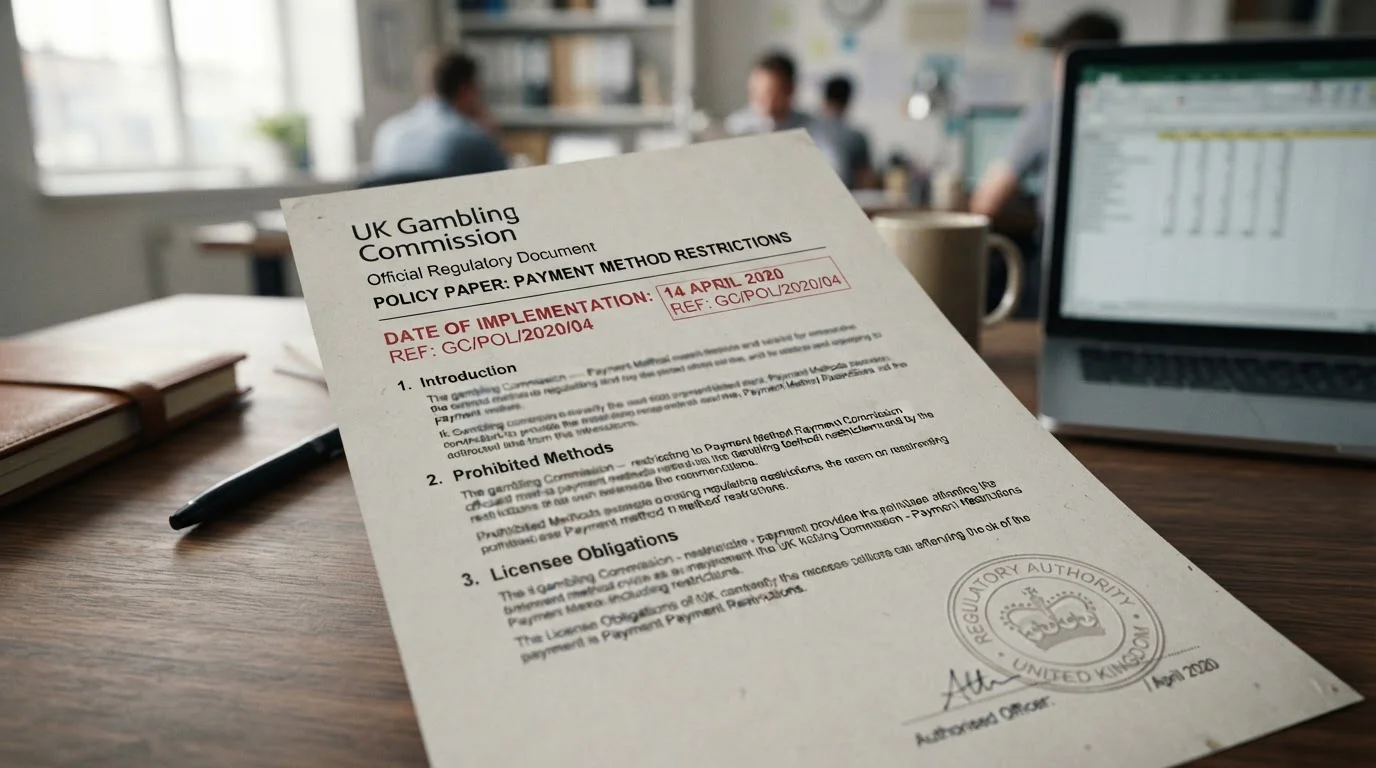
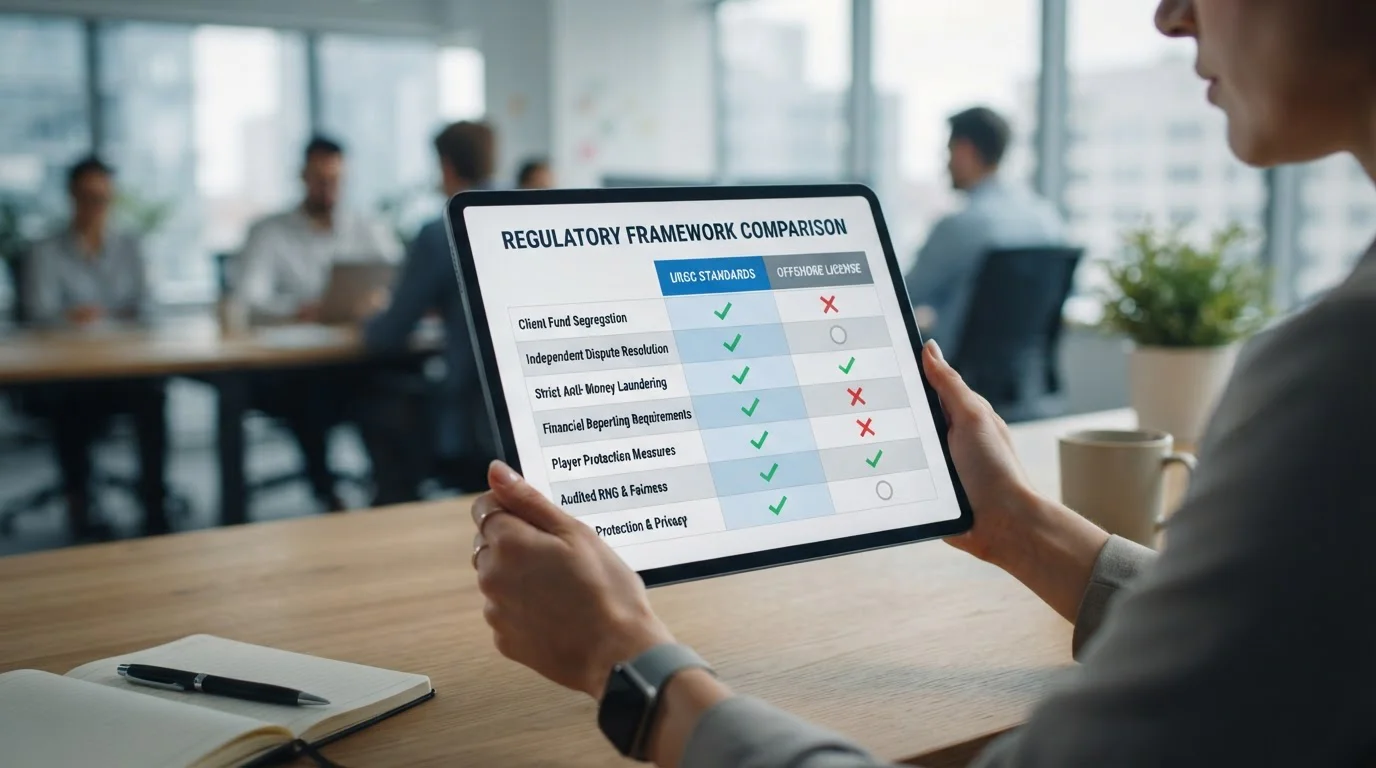
No UKGC-licensed casino does, and none legally can. The only sites still processing credit card deposits from British cardholders hold licences issued outside UK jurisdiction — Curaçao, Anjouan, the Comoros — and they are not a workaround to the ban. They are simply outside the system the ban protects. They are not part of GAMSTOP, they answer to lighter-touch regulators, and they do not offer UKGC complaints handling, independent dispute resolution or the mandatory safer gambling tools that licensed sites must provide.
For that reason this guide does not list or rank offshore credit card casinos. What it does do is show you what those sites typically look like, so you can recognise one and understand what you would be giving up.
| What You See | What It Usually Means |
|---|---|
| Licence number from Curaçao, Anjouan or the Comoros in the footer | Not licensed by the UK Gambling Commission; no UK regulatory oversight |
| Visa, Mastercard and sometimes Amex credit cards in the cashier | The site is not bound by the UK credit card ban |
| Headline bonuses of 200–450 percent | Wagering of 35x to 100x and strict maximum-bet rules in the terms |
| Withdrawals only by e-wallet, crypto or bank transfer | Card networks will not pay gambling winnings to a credit card |
| Weekly withdrawal caps of €7,500 or less | Large wins can take weeks to receive in full |
| No mention of GAMSTOP | UK self-exclusion does not apply on that site |
The operator behind the brand
Offshore casinos are frequently run as families of brands. One operating company can run half a dozen sites from the same back office, with the same terms, the same payment processors and the same support team. That matters when something goes wrong: a complaint about one brand ends up with the same people who run the others, and a self-exclusion at one brand usually does nothing at its sister sites. The company name and registration number in the footer tell you more than the logo does.
Licences that are hard to verify
Some offshore sites quote licence numbers that do not match the issuing authority’s register, list two or three jurisdictions at once, or describe themselves as “complying with UKGC guidelines” without holding a UKGC licence. None of that is a substitute for an entry on the Gambling Commission’s public register. If the operator’s name and licence number are not on that register, the site is not licensed to offer gambling to people in Great Britain, whatever the footer says.
Terms that restrict UK players
It is common for offshore operators to accept UK registrations while their own terms list the United Kingdom as a restricted territory. If a dispute arises, the operator can rely on that clause to void winnings or close the account. That is a risk you carry from the moment you deposit, and there is no UK body you can complain to about it.
Are credit card casinos safe?
Not in the UK sense. At an offshore site, getting paid depends on the operator’s goodwill and its own reading of its terms, with no independent body to make it pay. Audits are lighter, balance protection goes undisclosed and dispute routes are thin — the very safeguards a UK licence provides.
What Happens When You Use a Credit Card at an Offshore Casino
On the surface the payment looks like any e-commerce checkout. You enter a card number, expiry and CVV, the site passes the transaction to a payment processor — the middleman between the casino and the card networks — and your bank either approves or declines it in seconds. What happens behind that screen is where the cost and the risk sit.
Three things shape the outcome: how the transaction is coded, whether your bank blocks it, and how the processor treats it. Understanding them explains why card gambling is expensive, and why a declined payment is often your bank’s safeguards doing exactly what they are meant to do.
Why card payments to offshore sites are often declined
Declines are common. Many UK issuers refuse gambling transactions on credit cards outright, others decline payments to merchants they flag as high-risk, and some processors decline anything that looks unusual for your account. A declined gambling payment usually leaves no pending charge in your banking app, because it was stopped before authorisation. Retrying with the same card will normally fail for the same reason, and repeated attempts can lead your bank to freeze the card for suspected fraud.
What Is MCC 7995 and Why It Matters
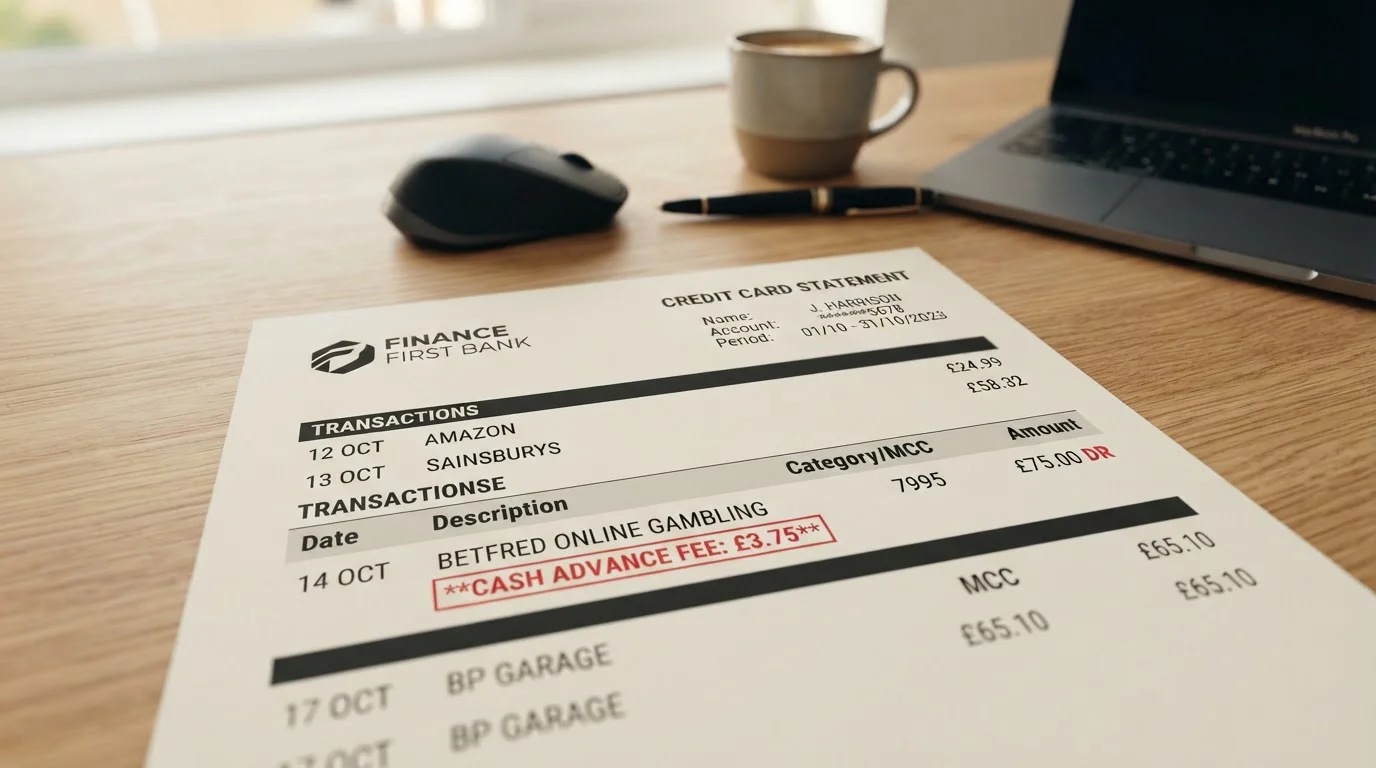
MCC stands for Merchant Category Code, the four-digit tag payment processors assign to every business when they set up card acceptance. Visa and Mastercard use MCC codes to route transactions, assess fees, and apply card issuer policies. MCC 7995 is the global gambling code. When a casino transaction carries that tag, your bank knows instantly that the purchase is a gambling deposit, not groceries or petrol.
That knowledge changes how the transaction is handled. Most UK card issuers treat MCC 7995 transactions as cash advances, not standard purchases. A cash advance skips the grace period you normally get on credit card spending — interest starts accruing from day one — and triggers a separate fee, typically 3 to 5 percent of the transaction amount with a £3 to £5 minimum. So a £100 deposit costs you £103 to £105 before you place a single bet, and if you do not pay the balance in full by your next statement, you are paying interest on borrowed gambling money at rates that often exceed 20 percent APR.
Some offshore processors disguise gambling payments with generic merchant descriptors, so the transaction is not coded as gambling. That is a breach of card network rules, not a favour to you. It can lead to the payment being reversed, your card being frozen, or the charge being disputed later, and it means your bank’s gambling block and spending controls cannot do their job. If a casino payment shows on your statement under an unrelated name, treat it as a warning sign about the site.
Bank Blocking: Which UK Banks Decline Gambling Transactions
Several major UK banks block gambling transactions by default or offer opt-in blocking tools that customers can activate. Nationwide, for example, publicly states it blocks credit card transactions it identifies as gambling-related, following the UKGC prohibition as interpreted for its own risk policies. Barclays, HSBC, Lloyds, NatWest, and Santander all offer gambling block features in their mobile banking apps, and once activated, those blocks stop any MCC 7995 transaction cold.
The block works at the issuer level, not the casino or processor level, which means it is invisible to the merchant. The casino submits the charge, the processor forwards it to your bank, your bank sees MCC 7995 and refuses authorisation, and the processor reports the decline back to the casino. You see “transaction failed.” The casino sees the same message. Neither side knows whether you hit your credit limit, got flagged for fraud, or ran into a gambling block unless you call your bank and ask.
| Bank | Blocks Gambling by Default | Opt-In Block Available | Removal Wait Time |
|---|---|---|---|
| Barclays | No | Yes | 48 hours |
| HSBC | No | Yes | 48 hours |
| Lloyds | No | Yes | 48 hours |
| NatWest | No | Yes | 48 hours |
| Santander | No | Yes | 48–72 hours |
| Nationwide | Yes (credit cards) | N/A | N/A |
| RBS | No | Yes | 48 hours |
| Chase | No | Yes | Cannot be bypassed for 48 hours |
| Monzo | No | Yes (via app) | Instant on, 48 hours off |
| Starling | No | Yes (via app) | Instant on, 48 hours off |
Removal wait times are deliberate friction designed to make impulsive unblocking harder. If you turn off a gambling block today, you cannot use your card for gambling until the wait period elapses. That delay is not negotiable, even if you call the bank. The policy treats all gambling blocks identically, and it exists to protect you at exactly the moment you might want to remove it.
If Your Card Payment Is Declined
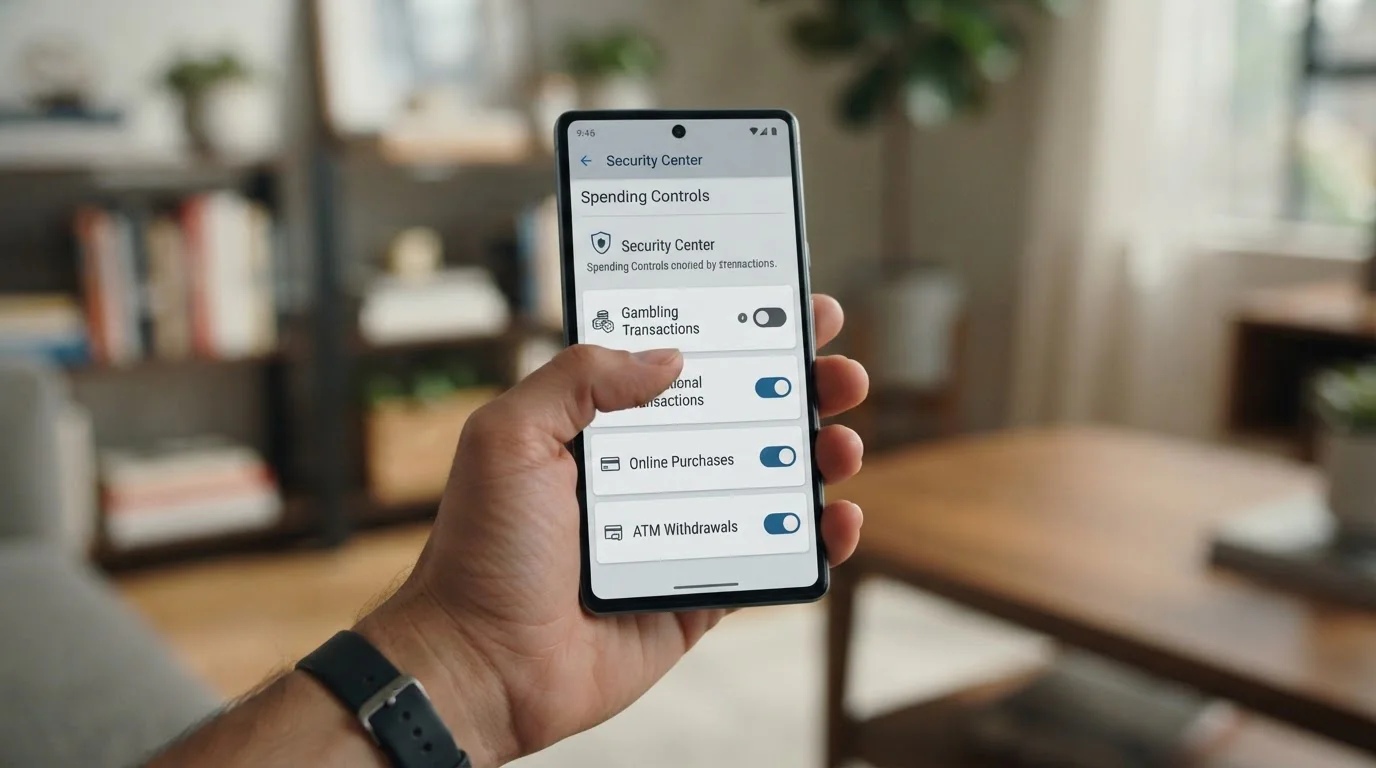
When a card payment to a casino fails, the most common causes are an issuer gambling block, a card limit, or the bank’s fraud systems. Check your banking app: if no pending transaction appears, your bank stopped the payment before authorisation. Look under “spending controls” or “card controls” to see whether a gambling block is active.
If it is, the block is working as intended. Many people switch these blocks on during a calmer moment precisely so that they hold firm later. Do not try to get around a decline by switching devices, splitting the amount into smaller payments or asking the casino to try a different processor — those are the patterns fraud systems are built to catch, and they undermine protections that exist for your benefit.
If you simply want to play at a UK-licensed casino and your credit card was declined, the answer is to use a debit card, an e-wallet funded from your current account, or a bank transfer. All of them work at UKGC sites, and none of them involve borrowing money to gamble.
What fees will I pay when using a credit card?
Usually three. Issuers charge a 3 to 5 percent cash-advance fee because gambling is coded MCC 7995, interest runs from day one with no grace period, and euro or dollar processing adds 1.5 to 3.5 percent in conversion costs. Together, a £100 deposit can cost roughly £104 to £109 before you place a bet.
Will my bank block gambling transactions on my credit card?
Possibly. Nationwide blocks gambling on its credit cards by default, and Barclays, HSBC, Lloyds, NatWest, Santander, RBS and Chase offer opt-in blocks in their apps that stop MCC 7995 payments at the issuer. Switching a block off usually means a 48–72 hour wait, so a forgotten block often explains a decline.
Withdrawing Your Winnings: Why Credit Cards Don’t Work for Payouts
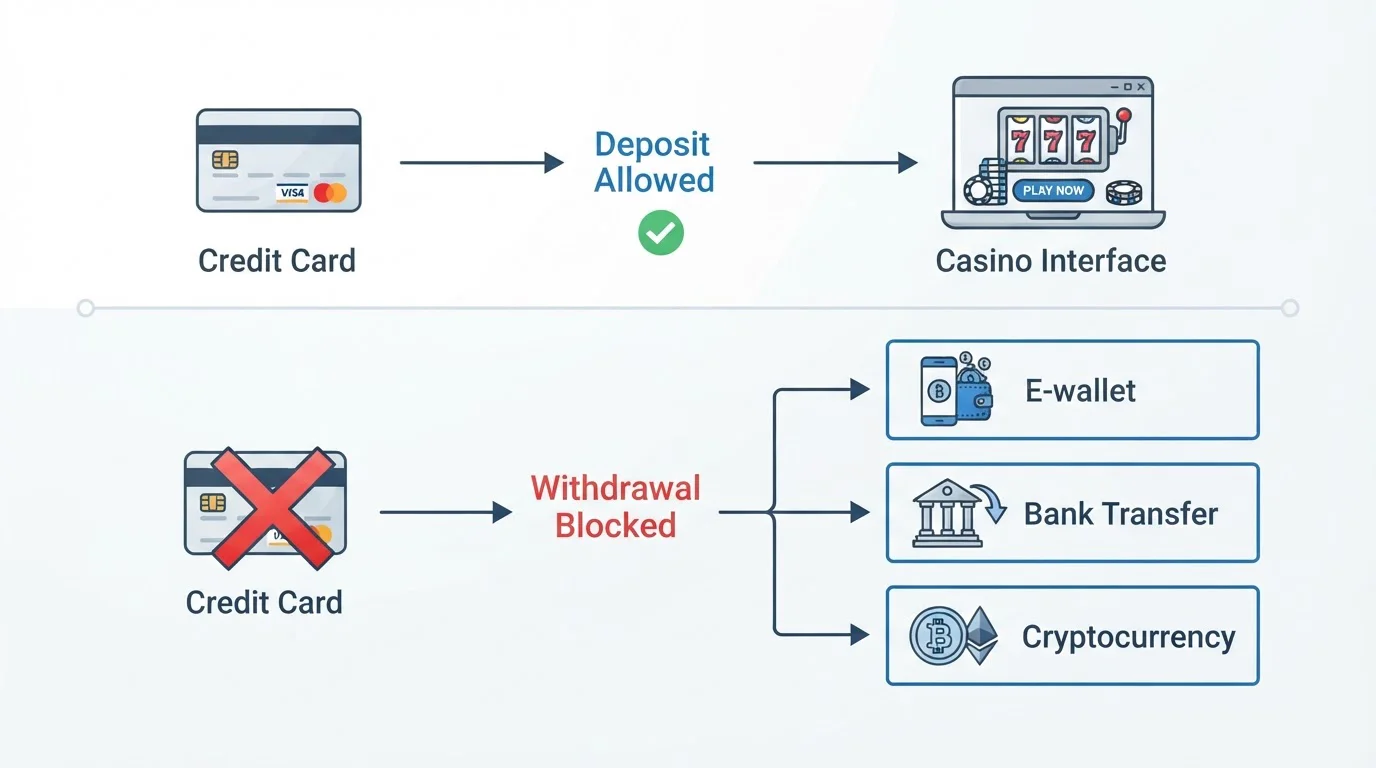
Even where an offshore site accepts a credit card deposit, you should not expect to withdraw to one. Card scheme rules tightly restrict gambling payouts to credit accounts, acquiring banks and processors are reluctant to handle them, and offshore cashiers almost never offer the option, whatever the casino’s licence. The restrictions exist to limit two risks: money laundering and consumer debt spirals.
The money-laundering concern is straightforward. If a casino could pay £5,000 in winnings back to your credit card, that payment would offset your credit card balance, effectively converting gambling proceeds into credit line repayment. Someone with dirty cash could deposit, play minimally, withdraw, and clean funds through their credit card statement. Card networks and processors treat that risk as unacceptable, so the route is effectively closed.
The consumer protection angle is subtler. If you gamble on credit and win, paying winnings back to your card would reduce the balance you owe, which sounds helpful until you lose the next session. The cycle encourages using credit as a gambling float, borrowing to play with the assumption that winnings will pay down the debt. The networks, facing regulatory pressure in multiple jurisdictions over gambling-related harm, narrowed that loop by restricting gambling payouts to credit instruments.
Card Network Rules Explained
Visa and Mastercard publish operating rules that all acquiring banks and payment processors must follow, and those rules put gambling payouts under tight conditions, with extra restrictions on crediting winnings to credit accounts. Processors that breach scheme rules face penalties, so an offshore casino cannot simply “allow” credit card withdrawals by finding a lenient processor. In practice, almost none try.
Debit cards occupy a different category. Because a debit card draws from funds you already hold rather than a line of credit, the consumer-debt concern disappears, and the money-laundering risk is marginally lower. Some offshore casinos allow withdrawals to the same debit card you deposited with, though this option is inconsistent and processor-dependent. If your deposit came from a Visa Debit card and the casino offers debit withdrawal, you might get your winnings back that route in 3 to 5 working days. If your deposit was credit, that door is closed, and the casino will push you towards an alternative method.
Alternative Withdrawal Methods
Most casinos offer at least three non-card withdrawal routes: e-wallets, bank transfer, and cryptocurrency. E-wallets — Skrill, Neteller, MuchBetter — are the most common substitute. You register an e-wallet account, link it to your casino account, request a withdrawal, and the funds land in your e-wallet in 24 to 48 hours after identity verification. From there, you transfer the balance to your UK bank account, which adds another 1 to 3 working days. Total time from withdrawal request to money in your current account: 2 to 5 days.
Bank transfer skips the e-wallet middleman and sends funds directly from the casino to your bank account. Processing time ranges from 3 to 7 working days, sometimes longer if the casino’s banking partner is outside the UK and the transfer crosses multiple correspondent banks. No fees on the casino side in most cases, though your bank may charge a small incoming wire fee if the transfer arrives in a foreign currency.
Cryptocurrency is the fastest option for casinos that support it. Bitcoin, Ethereum, USDT, and other coins process in 0 to 1 hour once the casino approves your withdrawal. You need a crypto wallet to receive the funds, and you will pay network transaction fees — often a few pounds for Bitcoin, less for stablecoins like USDT. Once the crypto hits your wallet, you can leave it there, send it to an exchange and convert to GBP, or transfer it to a crypto-friendly bank account. This route works well if you already operate in crypto; if you have never touched a wallet, the learning curve and network fees make e-wallets simpler.
Trustly, an instant bank payment method, offers a fourth route. Trustly pulls deposits directly from your bank account and can push withdrawals back the same way, processing in under 24 hours. Not every casino supports it, and UK bank compatibility varies, but when it works, Trustly is faster than traditional bank transfer and avoids the e-wallet account setup.
| Method | Speed | Typical Availability | Fees |
|---|---|---|---|
| Credit Card | Almost never offered | Very rare | N/A |
| Trustly | Instant to 24 hours | Medium | Free to 1% |
| E-Wallets (Skrill, Neteller) | 24–48 hours | High | Free to 2% |
| Cryptocurrency (BTC, ETH, USDT) | 0–1 hour | Offshore sites only | Network fees (£1–£5) |
| Bank Transfer | 3–7 days | Universal | Free (casino), possible incoming wire fee (your bank) |
Availability varies by operator. Check the cashier section of each site before depositing if the withdrawal method matters to you.
Withdrawal Times and Limits
UKGC-licensed casinos typically process e-wallet withdrawals within 24 to 48 hours once your account is verified, and they must be clear about any limits in their terms. Offshore sites quote similar headline speeds but often attach daily caps of £500 to £7,500 and weekly caps of around €7,500, which means a large win can be paid out in instalments over several weeks.
Those caps matter more than the headline bonus. A site with a generous welcome offer and tight withdrawal limits is a poor trade if you actually win, and at an offshore site there is no regulator you can ask to speed things up. Read the withdrawal section of the terms before you deposit anywhere.
Can I withdraw to my credit card?
In practice, no. Card scheme rules restrict gambling payouts to credit accounts and processors avoid them, so offshore sites that take credit card deposits pay winnings by e-wallet, bank transfer, cryptocurrency or Trustly instead. Some allow withdrawals to a debit card, but that option is inconsistent and depends on the processor.
Offshore vs UKGC Licensing: What You’re Trading
Sites that still take UK credit cards hold licences from Curaçao, Anjouan, or the Comoros. None hold UK Gambling Commission licences. That jurisdictional split determines what consumer protections you receive, how disputes are resolved, and which regulatory standards the operator must meet. The trade is lopsided: the only thing the offshore site offers is a payment method that UK law withdrew for good reason, while the UKGC site gives you enforceable safeguards.
A UKGC licence requires operators to tell customers how well their balances are protected if the business fails, maintain independent game testing, offer access to ADR services, follow advertising rules, and integrate with GAMSTOP for self-exclusion. Curaçao licences require basic game fairness certification and AML compliance but do not mandate any fund-protection disclosure, third-party dispute resolution, or integration with UK self-exclusion schemes. Anjouan and Comoros licences sit at similar levels — lighter-touch regulation, lower operational cost, less player protection.
The practical difference surfaces when something goes wrong. A payment dispute at a UKGC site can escalate to IBAS or CEDR, independent arbitrators with binding authority. A payment dispute at a Curaçao site escalates to the operator’s internal complaints process, then potentially to the Curaçao Gaming Authority, which has limited enforcement mechanisms and no UK presence. If an offshore operator refuses a withdrawal and you cannot resolve it through their support, your legal recourse is expensive and uncertain.
Consumer Protections at UKGC-Licensed Sites
UKGC licensing requires operators to tell you how protected your balance is if they become insolvent, rated as not protected, medium protection or high protection. The UKGC does not insist on full segregation, and the FSCS does not cover casino balances, but at least you know the position before you deposit. Offshore licences carry no such requirement, so player funds and operating capital can sit in the same account and the insolvency risk falls on you without warning.
UKGC sites must offer access to Alternative Dispute Resolution services — IBAS for most casino disputes, CEDR or ADR Group as alternatives. These are independent arbitrators funded by operator levies, and their decisions are binding. If you lodge a complaint, the ADR service reviews evidence from both sides and issues a resolution. Offshore operators answer to their licensing jurisdiction’s complaints process, which often consists of email exchanges with the licensing authority and no binding enforcement.
UKGC sites integrate with GAMSTOP, the UK’s national self-exclusion scheme. If you self-exclude through GAMSTOP, you are blocked from every UKGC-licensed site for the period you choose — six months, one year, five years. Offshore sites are not enrolled in GAMSTOP, which means self-exclusion requests apply only to that specific site and rely on its internal controls. A self-exclusion at one offshore brand usually does nothing at a sister brand run by the same company.
Advertising standards differ sharply. UKGC-licensed operators must follow ASA guidelines on bonus clarity, responsible gambling messaging, and targeting restrictions. Offshore operators face no such rules, which is why their welcome offers often quote headline figures — 450 percent match, €10,000 bonus — that sound extraordinary until you read the 50x wagering requirement buried in the terms.
What Curaçao and Anjouan Licences Offer
Curaçao licences are the most common offshore credential in the UK credit card casino space. Many older sites still quote sub-licences issued under master licences such as 1668/JAZ or 8048/JAZ, a system Curaçao has been replacing with licences issued directly by its new Gaming Authority. The licensing process requires operators to demonstrate game fairness through RNG certification, implement AML procedures, and maintain responsible gambling resources on their sites. Enforcement is light. Day-to-day supervision has historically been thin, there is no fund-protection disclosure rule, and there is no binding ADR. If you file a complaint with the regulator, it will ask the operator for a response, but they cannot force a payout or impose penalties that meaningfully change operator behaviour.
Anjouan licences follow a similar structure. Operators pay a licensing fee, meet baseline standards, and operate with minimal ongoing oversight. The Anjouan government has no extradition treaty with the UK, no enforcement presence in British courts, and no mechanism to compel an operator to honour a disputed withdrawal. If you win £10,000 at an Anjouan-licensed casino and the operator claims a bonus term violation, your realistic options are limited: escalate through their internal complaints process, post on forums to apply reputational pressure, or hire a lawyer in the Comoros — none of which are appealing.
Comoros licences are rarer and follow the same light-touch model. The jurisdiction markets itself as business-friendly, which in gambling terms translates to low operational costs and minimal regulatory burden. Operators sometimes spread sister brands across Comoros and Anjouan licences, a choice that usually reflects fee structures and incorporation convenience rather than any commitment to higher player protection standards.
| Feature | UKGC Licence | Curaçao Licence | Anjouan Licence |
|---|---|---|---|
| Credit Card Acceptance | No (banned April 2020) | Yes | Yes |
| GAMSTOP Integration | Yes (mandatory) | No | No |
| Dispute Resolution | ADR required (IBAS, CEDR) | Limited (licensing board email) | Limited (licensing board email) |
| Customer Fund Protection | Protection level must be disclosed | No disclosure required | No disclosure required |
| Advertising Standards | ASA rules enforced | None | None |
| Problem Gambling Tools | Mandatory (deposit limits, time-outs, self-exclusion) | Optional (often minimal) | Optional (often minimal) |
The table makes the gap plain. Offshore operators offer a payment method; UKGC operators offer structural protections that apply whether you win, lose or need help. For a UK player, a UKGC-licensed site paid with a debit card, e-wallet or bank transfer is the safer choice.
GAMSTOP and Self-Exclusion
GAMSTOP is a free service funded by UKGC-licensed operators. You register, provide identifying details, choose a self-exclusion period, and the system blocks your access to every participating site. Once active, you cannot reverse the exclusion until the minimum period of six months, one year or five years has passed — and even then it stays in place until you contact GAMSTOP to have it removed. UKGC sites check new registrations against the GAMSTOP database and refuse accounts that match.
Offshore sites are not enrolled in GAMSTOP because they do not hold UKGC licences. If you self-exclude through GAMSTOP, the exclusion covers UK-licensed sites only; offshore sites have no access to the GAMSTOP database.
That gap is why harm-reduction organisations consistently flag sites outside the UK licence as higher-risk. If you have self-excluded, the exclusion exists to protect you, and looking for sites it does not cover defeats its purpose. If you are finding it hard to stay away, talk to GamCare or the National Gambling Helpline on 0808 8020 133, and consider asking your bank to block gambling transactions on all your cards as an extra layer.
Dispute Resolution Differences
A payment dispute at a UKGC site follows a defined escalation path. You raise the issue with customer support. If unresolved, you escalate to the operator’s formal complaints process. If still unresolved, you lodge a complaint with the relevant ADR service — IBAS for most casino matters. IBAS reviews evidence from both sides, applies the operator’s terms and UKGC regulatory standards, and issues a binding decision. The operator must comply or face licence sanctions.
A payment dispute at a Curaçao or Anjouan site stops at the operator’s internal process. If they refuse your withdrawal and cite a bonus term violation, you can email the Curaçao Gaming Authority or the Anjouan licensing body, attach evidence, and wait for a response. The licensing authority will forward your complaint to the operator and ask for their position. The operator replies with their version. The authority may mediate, but they have no power to force a payout, levy a fine, or sanction the operator in ways that affect their ability to keep operating. Most complaints end with the licensing authority stating that the operator acted within their terms and closing the case.
Public reviews sometimes move disputes more than official channels. Posting your case on review platforms or player forums with transaction evidence and correspondence screenshots applies reputational pressure, and operators with brand-management concerns sometimes reverse decisions to stop negative threads spreading. That tactic works inconsistently and is no substitute for the binding ADR route you get at a UKGC-licensed site.
Are credit card casinos part of GAMSTOP?
No. GAMSTOP covers UKGC-licensed sites only, and none of them can take a credit card, so any site accepting one sits outside both. If you have self-excluded, that is a reason to stay away, not a gap to use. GamCare and the National Gambling Helpline (0808 8020 133) offer free support.
Credit Card Sites and Self-Exclusion
Because the UK credit card ban and GAMSTOP both apply to the same group of UKGC-licensed operators, any site still taking UK credit cards also sits outside the national self-exclusion scheme. That overlap is not a coincidence or a feature. It reflects the fact that these sites operate beyond UK regulation altogether, including the rules on affordability checks, deposit limits and self-exclusion.
If you have used GAMSTOP, or you have been thinking about it, take that overlap as a warning. Sites that are not part of the scheme will not recognise your exclusion, will not apply UK affordability checks, and will not be held to account by the Gambling Commission if they let you keep depositing. Some offshore operators run their own site-specific self-exclusion tools, but they cover a single brand at best and are not independently enforced.
The steps that genuinely help are simple: keep your GAMSTOP exclusion in place, switch on your bank’s gambling block, and consider blocking software such as Gamban on your devices. GamCare offers free, confidential support by phone and live chat, and the National Gambling Helpline is open 24 hours on 0808 8020 133.
Credit Card Slots and Table Games
Game availability at credit card casinos is identical to game availability at any other online casino using the same software providers. The payment method you use to deposit does not restrict which games you can play. If a site offers 5,000 slots from 60 studios and accepts credit cards, all 5,000 slots are available to credit card depositors. The same applies to live dealer tables, table games, and any other verticals the site runs.
The misconception that “credit card slots” are a separate category likely stems from players conflating payment method with game type. You are not playing a different version of Starburst or Gonzo’s Quest because you deposited with a Visa instead of Skrill. The RTP, volatility, and mechanics are identical. The only payment-related difference that sometimes affects gameplay is bonus eligibility: offshore casinos frequently exclude certain payment methods from welcome bonus qualifications. Skrill and Neteller are the most common exclusions — deposit with those e-wallets and the bonus does not activate. Credit cards, by contrast, usually qualify for the full welcome package, though you should verify terms at registration before assuming.
Table games follow the same pattern. Credit card depositors access the same blackjack, roulette, baccarat, and poker variants as everyone else. Live dealer tables streamed from Evolution, Pragmatic Play Live, or Ezugi studios are payment-agnostic. The dealer does not know how you funded your account, and the platform does not restrict your betting limits based on deposit method. If a site markets itself as a “credit card casino,” that label describes payment acceptance, not a curated game library tailored to card users.
Alternatives to Credit Cards at UK Casinos

If you want to play at a UK-licensed casino, the credit card ban simply means choosing a different payment method. Four alternatives cover most use cases: debit cards, e-wallets, bank transfers and, at a minority of sites, cryptocurrency. Each has different speed, fee, and availability profiles.
Debit Cards
Debit cards work at both UKGC-licensed sites and offshore operators. Visa Debit and Mastercard Debit draw funds directly from your current account, avoid the cash-advance fee structure that credit cards trigger, and process deposits instantly. UKGC sites accept debit cards without restriction — the April 2020 ban targeted credit cards specifically and left debit untouched. Offshore sites accept debit cards alongside credit cards, often through the same payment processor.
Withdrawal compatibility varies. Some offshore processors allow withdrawals back to the same debit card you deposited with, processing in 3 to 5 working days. Others refuse card withdrawals entirely and push you towards e-wallets or bank transfer regardless of whether your original deposit was debit or credit. UKGC sites generally support debit card withdrawals, though processing times can stretch to 5 to 7 days depending on the operator’s payment team workload.
E-Wallets (PayPal, Skrill, Neteller)
Skrill and Neteller are widely accepted at UK-licensed casinos as well as offshore. You register an account, link a funding source — bank account or debit card — deposit funds into your e-wallet, then transfer from the e-wallet to the casino. UKGC rules also stop licensed casinos accepting e-wallet payments funded by a credit card. Deposits process instantly. Withdrawals land in your e-wallet in 24 to 48 hours, then transfer to your bank account in another 1 to 3 days.
The downside: welcome bonuses frequently exclude Skrill and Neteller. Operators flag e-wallet users as higher-risk for bonus abuse — the theory being that e-wallet accounts are easier to create and harder to track than card deposits — and respond by disqualifying those payment methods from promotional offers. If you deposit £100 via Skrill at a site advertising a 100 percent match, you might receive zero bonus. Always check payment method exclusions in the bonus terms before choosing your deposit route.
PayPal is standard at many UKGC sites and rare offshore. PayPal only processes gambling transactions for licensed operators in permitted markets, so an offshore site advertising PayPal for UK players should be treated with caution — such integrations often run through payment aggregators and can stop working without notice.
Apple Pay is widely available at UKGC sites. Apple Pay transactions are processed as tokenised card payments, so UK-licensed casinos will only accept it when the underlying card is a debit card. In that case, Apple Pay functions as a faster checkout interface for a standard debit deposit.
Cryptocurrency
Bitcoin, Ethereum, USDT, and other cryptocurrencies are mostly found at offshore casinos and rarely at UKGC sites. Deposits process within minutes once the blockchain confirms the transaction — typically one confirmation for USDT, two to six for Bitcoin depending on network congestion. Withdrawals can be fast once approved, but crypto casinos are largely offshore and carry the same lack of UK protection described above.
The friction is upfront. You need a cryptocurrency wallet, which means downloading a wallet app, securing your private keys, and understanding how blockchain transactions work well enough to avoid sending funds to the wrong address. You also need an on-ramp — a way to convert GBP into crypto. FCA-registered exchanges such as Coinbase or Kraken let you deposit GBP via bank transfer and buy crypto, but those exchanges share customer data with HMRC, and your crypto activity becomes part of your tax record. Once you have crypto, sending it to a casino wallet is straightforward, but the setup and learning curve filter out casual players.
Network fees vary by coin. Bitcoin transaction fees ranged from £2 to £5 in 2026 depending on network congestion. Ethereum fees were similar. USDT on the Tron network carried fees under £1, making stablecoins the cheaper option for smaller transfers. Operators that process crypto usually absorb deposit fees and pass withdrawal fees to the player at cost.
Bank Transfers
Bank transfer is the universal fallback. Every operator accepts it, every UK bank supports it, and no payment processor or card network sits in the middle. You initiate a transfer from your online banking, enter the casino’s bank details, and send funds. Domestic Faster Payments usually arrive within minutes, while international transfers to an offshore bank can take 1 to 3 working days; withdrawals take 3 to 7 days. Fees depend on whether the transfer is domestic or international — offshore casinos often bank in Cyprus, Malta, or other EU jurisdictions, which means your UK bank treats the transfer as an international payment and may charge £10 to £25.
Bank transfer is slower than cards but avoids the payment processor and card network entirely, so there is no MCC coding or cash-advance fee. It is not a way around a gambling block, though: some UK banks apply their gambling controls to transfers to known gambling merchants as well as card payments, and if you have set a block, it is there for a reason.
| Method | Speed | UKGC Sites | Offshore Sites | Fees |
|---|---|---|---|---|
| Credit Card | Instant (deposit only) | Banned | Yes | 3–5% cash advance + interest |
| Debit Card | Instant | Yes | Yes | Free |
| PayPal | Instant | Yes | Rare | Free (usually) |
| Skrill | Instant | Limited | Yes | Free to 2% |
| Neteller | Instant | Limited | Yes | Free to 2% |
| Cryptocurrency | Minutes (deposit), 0–1 hour (withdrawal) | Rare | Yes | Network fees (£1–£5) |
| Bank Transfer | Minutes to 3 days (deposit), 3–7 days (withdrawal) | Yes | Yes | £0–£25 depending on bank |
| Apple Pay | Instant | Limited | Rare | Depends on linked card |
| Trustly | Instant to 24 hours | Limited | Medium | Free to 1% |
The table reflects general trends. Individual operator and bank policies vary.
Do I earn rewards or cashback on credit card deposits?
Rarely. Most UK reward programmes exclude cash advances, and gambling deposits coded MCC 7995 are usually treated as cash advances, so a £100 deposit earns no points, miles or cashback. You also pay the 3–5 percent fee and immediate interest, making a rewards card a net loss for gambling.
How to Check a Casino’s Licence Before You Pay
Whatever payment method you choose, a two-minute licence check tells you whether UK protections apply. Scroll to the footer of the casino site and note the operator’s company name and the licence number. A UKGC-licensed site will display a Gambling Commission account number and usually a link to its register entry.
Next, search the Gambling Commission’s public register for that company name or account number. The entry should show an active remote casino licence and list the website you are on as one of the operator’s domains. If the domain is not listed, the licence does not cover that site, even if the company name matches.
If the footer only shows a Curaçao, Anjouan, Comoros or other overseas licence, the site is not licensed for Great Britain. That means no UKGC complaints route, no ADR, no GAMSTOP and no requirement to follow UK rules on credit cards, affordability or advertising. It also means the site should not be targeting UK customers in the first place.
Finally, read the terms before you deposit, particularly the sections on withdrawals, bonus wagering, maximum bets and restricted territories. A UKGC-licensed operator must present those terms clearly and apply them fairly; if it does not, you can complain to the operator and then to its ADR provider.
Responsible Gambling and Credit Card Use
Gambling on borrowed money increases financial harm risk. The UK Gambling Commission banned credit cards at licensed sites specifically because the data showed credit users exhibited higher rates of problem gambling and debt accumulation than debit users. That risk does not disappear because you shift to an offshore operator. If anything, it compounds: offshore sites lack the deposit limits, time-outs, and reality-check tools that UKGC sites are required to offer, and the absence of GAMSTOP integration means no centralised exclusion barrier exists.
If you use credit cards to gamble, the interest and fees start immediately. A £200 deposit at 22 percent APR costs £3.67 per month in interest if you carry the balance, plus a cash-advance fee of £6 upfront at 3 percent. That is £9.67 in costs in the first month alone. If you lose the £200 and deposit another £200 the next week, you are now carrying £400 in gambling debt at 22 percent APR, accruing £7.33 per month. Carry that for three months and you have paid about £22 in interest and £12 in fees on money you borrowed to gamble. That spiral is why credit card gambling bans exist.
Offshore operators have no regulatory mandate to intervene. They will accept your tenth deposit of the week without question, process your fifteenth cash-advance transaction of the month, and keep your account active even if your deposit pattern screams problem gambling. Some operators offer voluntary deposit limits or self-exclusion tools, but enforcement is inconsistent and easy to bypass by registering at a different site operated by a different entity.
If you recognise problem gambling patterns in your own behaviour — chasing losses, depositing more than you planned, gambling money you cannot afford to lose, lying to family about gambling activity — seek help before continuing. BeGambleAware offers free confidential support at begambleaware.org and via phone at 0808 8020 133. GamCare provides live chat support and counselling at gamcare.org.uk. The National Gambling Helpline is 0808 8020 133, available 24 hours.
If you are thinking about gambling at an offshore site because a UK-licensed one will not take your credit card, treat that as a reason to pause rather than a problem to solve. Set hard limits before you start anywhere: a monthly deposit cap, a per-session loss limit, and a rule that winnings are withdrawn rather than replayed. Use a debit card or e-wallet at a UKGC-licensed site instead of borrowing. Check your bank statements weekly. If you notice your gambling spend creeping upward, stop and reassess. No casino game carries a positive expected value over time. The house edge is structural. Betting more does not recover losses; it accelerates them.
Offshore casinos sit outside UK regulation. They answer to foreign regulators with minimal enforcement power and no UK consumer protection mandate, and they are not supposed to target British customers at all. If you lose control, no one will step in. The safeguards that matter — the credit card ban, GAMSTOP, deposit limits, affordability checks, ADR — exist at UKGC-licensed sites, and the first safeguard is recognising when credit card gambling has stopped being entertainment and started becoming harm.
Casino Deposit Methods UK 2026 – Compare Payment Options
Content created by the «Cashier Atlas» team