
Casinos That Accept ClickandBuy UK: The Truth About Its Shutdown and Modern Alternatives
 Available in GB

The short answer: none. ClickandBuy ceased operations in April 2016, a decade ago. Deutsche Telekom, the parent company, pulled the plug citing market competition it could not survive. PayPal, Skrill, Neteller, and the emerging wave of mobile wallets squeezed the service out some 17 years after its 1999 launch.
That leaves anyone hoping to use ClickandBuy at a UK casino in 2026 with two questions: what actually happened, and which payment methods now do what ClickandBuy once did. Both have straightforward answers.
If you used ClickandBuy before the shutdown or came across it in an outdated guide, the replacement landscape has changed twice over. First came the ClickandBuy closure itself. Then the UK Gambling Commission banned credit cards in April 2020, cutting off another convenience layer. Most recently, in January 2026, the UKGC capped all bonus wagering at 10x, reshaping how deposits qualify for promotions. The payments picture sitting in front of UK players now is unrecognisable compared to the one ClickandBuy inhabited a decade ago.
What follows is a definitive breakdown of modern e-wallet and instant-payment alternatives accepted at UKGC-licensed casinos, each profiled with the specifics ClickandBuy users valued: deposit speed, withdrawal times, bonus eligibility, and which operators actually accept them. The facts, then the map.
Casinos That Accept ClickandBuy UK: The 2026 Reality

ClickandBuy is not “rare” or “limited.” It is defunct. The service shut down completely on 30 April 2016, leaving customers a four-month window to withdraw remaining balances or transfer funds back to their bank accounts. Deutsche Telekom, which acquired the company in March 2010 after previously holding a 20.2% stake through its T-Venture arm, closed the operation due to what it described publicly as “intense market competition.” That competition had names: PayPal, Skrill, Neteller, and the rising tide of Apple Pay and Google Pay that entered the UK gambling market shortly before ClickandBuy exited it.
The closure cost 80 employees their positions. Customer numbers and transaction volumes were never disclosed, but ClickandBuy had claimed roughly 10 million users at its peak, making it the second-largest internet payment service in Europe behind PayPal. By 2016, that lead had evaporated. The service operated across multiple verticals — online retail, gaming, digital content — but gambling was a core vertical, and UK casinos formed a substantial chunk of that business.
No official post-mortem beyond “competition” was ever published. The German press at the time noted that rival e-wallet Otto Yapital also shut down around the same period, suggesting the e-wallet market was consolidating brutally. ClickandBuy had tried to differentiate itself with a unique credit-line feature, allowing users to complete transactions without maintaining account balances. PayPal offered something similar. Smaller operators offering similar features but without PayPal’s brand recognition or Skrill’s entrenched gambling-sector relationships found themselves squeezed out.
A FAQ website remained online for existing customers post-shutdown, but no transactions have been possible since April 2016. Any guide, forum post, or affiliate listing claiming ClickandBuy works at UK casinos in 2026 is either outdated by a decade or misinformed. The payment method does not exist. The brand is dead. The infrastructure was dismantled.
Is ClickandBuy still available at UK online casinos in 2026?
No. ClickandBuy shut down on 30 April 2016 and has not processed a single transaction since. No UK casino — licensed or offshore — accepts it because the payment service no longer operates. Deutsche Telekom discontinued the business after losing market share to PayPal, Skrill, and Neteller.
Why did ClickandBuy shut down and when did it close?
ClickandBuy closed on 30 April 2016. Deutsche Telekom, which acquired it in 2010, cited “intense market competition.” PayPal dominated mainstream e-wallets, Skrill and Neteller controlled gambling payments, and new mobile services such as Apple Pay eroded what was left, leaving too little market share to justify continuing.
Modern E-Wallet Alternatives to ClickandBuy in 2026

The convenience ClickandBuy once offered — instant deposits, fast withdrawals, not re-entering card details every session, a security layer between your bank and the casino — did not disappear with the brand. Eight modern payment methods accepted at UKGC-licensed casinos replicate those features, each with trade-offs in speed, bonus eligibility, and operator acceptance.
The table below maps the landscape. Deposit speed is universal across e-wallets: instant. The differentiation emerges in withdrawal times, bonus qualification, and which specific casinos support each method. PayPal carries the strongest mainstream brand but accepts fewer casino partnerships. Skrill and Neteller dominate by sheer operator count but face frequent bonus exclusions. MuchBetter, the newest entrant, generally qualifies for bonuses because it lacks the historical baggage of Skrill’s bonus-abuse reputation. Trustly operates invisibly — no separate account, just your existing online banking — and rivals PayPal for withdrawal speed. Apple Pay and Google Pay work only for deposits, funnelling withdrawals back through the underlying debit card. Paysafecard works through prepaid vouchers purchased with cash, but you cannot withdraw to it.
| Payment Method | Deposit Speed | Withdrawal Speed | Min Deposit | Fees | Bonus Eligibility | Best For |
|---|---|---|---|---|---|---|
| PayPal | Instant | 1–24 hours (fastest: under 4 hours) | £5–£10 | None | Sometimes excluded | Mainstream trust, fastest payouts |
| Skrill | Instant | 1–24 hours (tested: 45 min) | £10 | None | Frequently excluded | Widest casino acceptance |
| Neteller | Instant | 1–24 hours | £10 | None | Frequently excluded | Net+ Mastercard option |
| MuchBetter | Instant | 1–24 hours | £10–£20 | None | Generally qualifies | Mobile-first, biometric, cashback |
| Apple Pay | Instant | N/A (deposit-only) | £5–£10 | None | Generally qualifies | iOS users, no account needed |
| Google Pay | Instant | N/A (deposit-only) | £5–£10 | None | Generally qualifies | Android users, no account needed |
| Trustly / Open Banking | Instant (seconds) | Same-day to 24 hours (tested: 50 min) | £5–£10 | None | Generally qualifies | No account, bank-grade security |
| Paysafecard | Instant | Impossible (prepaid voucher) | £10 | None | Generally qualifies | Cash budgeting, no card details shared |
The replacement for ClickandBuy depends on what you valued most. Speed? Trustly and PayPal. Acceptance breadth? Skrill. Bonus eligibility? MuchBetter, Trustly, or mobile wallets. A fixed cash budget? Paysafecard. The eight breakdowns below profile each option in full.
What is the best alternative to ClickandBuy for UK casino players in 2026?
PayPal is the closest mainstream equivalent for trust and speed, paying out in under four hours at top casinos, though only about 40 UK operators take it. Skrill has the widest acceptance but frequent bonus exclusions. Trustly matches PayPal’s speed, appears at more casinos and generally qualifies for promotions.
PayPal
PayPal Holdings Inc. needs no introduction. The US-based fintech giant, founded in 1998 and publicly traded since 2015 (NASDAQ: PYPL), operates as both payment processor and e-wallet across 200+ markets. In the UK it holds Financial Conduct Authority regulation as an e-money institution, separate from gambling licensing. Casinos holding UKGC licences can integrate PayPal if approved by PayPal itself — and PayPal is selective. Only around 40 UK-licensed operators offered it as of 2026, a fraction of the market.
That selectivity translates to quality. The casinos that do accept PayPal tend to be established brands: Betway, Ladbrokes, Coral, 888 Casino, William Hill, Foxy Bingo. Deposits are instant from a linked bank account or card, and crucially, UK users operate GBP accounts with no currency conversion eating into deposits. Withdrawals return to the same PayPal account, and this is where PayPal earns its reputation. A test withdrawal in October 2026 saw a PayPal payout land in 35 minutes at Casumo. Betway processed PayPal withdrawals in under 4 hours, Ladbrokes under 5 hours, Foxy Bingo under 5.5 hours. That speed rivals Trustly and leaves traditional bank transfers (1–3 working days) in the dust.
The bonus question varies. Some UK casinos exclude PayPal deposits from welcome-offer eligibility, others do not. The exclusion rate is lower than Skrill or Neteller — PayPal’s mainstream positioning and stricter casino partnerships mean operators treat it less suspiciously. Still, check terms before depositing if you intend to claim a bonus. Minimum deposits typically sit at £5–£10, maximum per transaction around £3,000–£8,000 depending on the operator. No fees at the casinos listed. PayPal itself charges no fees for sending money to a business (which includes casino deposits), though withdrawing PayPal balance to a UK bank account is free only for amounts above £1 — irrelevant for casino payouts which land in PayPal, not withdrawn further unless you choose to.
One legacy feature ClickandBuy offered — a credit line — PayPal replicates through its Pay in 3 or Pay Later products, though these are restricted by UK gambling regulations (credit cards banned since April 2020, and e-wallet credit funded by credit cards falls under the same prohibition). For casino use, PayPal functions as a straightforward debit-funded e-wallet. The real selling point: you already have an account, the brand inspires trust, and the payout speed at compatible casinos beats nearly everything else.
Skrill
Skrill Limited, formerly Moneybookers, has been part of the Paysafe Group since 2015. Founded in 2001 and UK-based, it operates as an FCA-regulated e-money institution with a specific focus on the online gambling sector. That focus shows in acceptance: Skrill works at more UK-licensed casinos than PayPal, possibly more than any other e-wallet. The roster includes SpinYoo, Casushi, Mega Riches, Playzee, Hyper Casino, VoodooDreams, HollywoodBets, 10Bet, Midnite, Unibet, Videoslots.com, Duelz, and extends well beyond. If a UKGC-licensed casino accepts e-wallets, Skrill is almost certainly on the list.
Deposits are instant across the board. Withdrawals process within 1–24 hours, with most operators paying same-day. One test Skrill payout at Ladbrokes landed in 45 minutes. Minimum deposits typically start at £10, which is £5 higher than PayPal at some casinos but still accessible. No fees at listed operators. Skrill itself charges no fee for deposits to merchants (casinos), and withdrawing funds from your Skrill balance to a UK bank account incurs a small percentage fee — again, irrelevant for most casino users who keep the balance in Skrill for future deposits.
The catch: bonus exclusions. Skrill deposits are frequently barred from triggering welcome offers at UK casinos, and the reason cited is consistent across operator terms — anti-money laundering protocols and historical abuse of bonus systems via multiple Skrill accounts. The Paysafe Group (which owns both Skrill and Neteller) became associated in operator risk models with players opening multiple casino accounts under different identities, funding each with separate Skrill wallets, claiming multiple welcome bonuses, then withdrawing. Whether that reputation is fair in 2026 is debatable, but the exclusion persists in many operators’ bonus terms.
Does that kill Skrill’s utility? Not if you care more about speed and acceptance than bonus hunting. For players who value instant deposits, fast withdrawals, and knowing the payment method will work at virtually any UK casino they visit, Skrill remains the safest bet. The VIP programme for high-volume users offers cashback and fee reductions, though casual players will not notice the perks. Multi-currency support matters for international players but is less relevant for UK users sticking to GBP.
Skrill’s sister service, Neteller, sits in the same Paysafe stable and faces identical bonus exclusions. The two are functionally interchangeable for most UK casino purposes. Both offer a prepaid Mastercard linked to the wallet balance, though Neteller’s Net+ card is the better-known of the two; it is covered in the next section.
Neteller
Neteller operates under Optimal Payments Limited, another Paysafe Group brand. Founded in 1999 with Canadian origins, it now holds UK FCA regulation as an e-money institution and mirrors Skrill in nearly every functional respect: instant deposits, 1–24 hour withdrawals, widespread acceptance at UKGC-licensed casinos, frequent bonus exclusions. The same AML and bonus-abuse history that haunts Skrill applies here. Both services are Paysafe products, both built for gambling transactions, both viewed with suspicion by casino risk teams when it comes to welcome-offer eligibility.
The feature Neteller is best known for: the Net+ prepaid Mastercard. This physical card links directly to your Neteller balance and works anywhere Mastercard is accepted — retailers, ATMs, online purchases. For casino players, the utility is straightforward: win at a casino, withdraw to Neteller within hours, spend that balance immediately via the card without a further bank-transfer step. Skrill’s own prepaid Mastercard works the same way. PayPal has a similar debit card in some markets but not prominently in the UK gambling context.
Otherwise, Neteller’s profile matches Skrill point for point. Accepted at the same broad range of UK casinos. Minimum deposits £10. No fees at operators. Withdrawals fast, typically same-day. Multi-currency accounts available. Testing showed Neteller payouts processing within 24 hours at most operators, with no significant speed difference from Skrill.
The bonus exclusion remains the friction point. If you deposit via Neteller and the casino’s terms exclude e-wallets from the welcome offer, you forfeit the bonus. Some players work around this by depositing via debit card to claim the bonus, then switching to Neteller for subsequent deposits and withdrawals. That works only if the operator allows mixed payment methods — some require withdrawal to the same method used for deposit.
For former ClickandBuy users, Neteller offers the same core value: a buffer between your bank and the casino, fast in and out, no re-entering card details. The Net+ Mastercard adds a convenience layer ClickandBuy never had. The bonus exclusion is the price of that convenience.
MuchBetter
MuchBetter Limited entered the UK gambling payments space post-2017, positioning itself as a mobile-first e-wallet built specifically for gaming transactions. Unlike PayPal (mainstream) or Skrill (entrenched veteran), MuchBetter launched in an era when smartphone dominance was already established and biometric security was expected, not novel. The app operates on fingerprint or Face ID authentication, integrates as a prepaid Mastercard for merchants, and targets users who never want to touch a desktop website.
The service holds FCA regulation as an e-money institution, the same regulatory standing as Skrill and Neteller. UKGC-licensed casinos have increasingly added it as a payment option, though acceptance remains narrower than Skrill or PayPal. Because the list changes, check the cashier of your chosen casino before you set up a wallet. Deposits are instant. Withdrawals process within 1–24 hours, consistent with other e-wallets. Minimum deposits typically start at £10–£20 depending on the operator.
The standout feature: bonus eligibility. MuchBetter generally qualifies for welcome offers at UK casinos, a stark contrast to Skrill and Neteller. The reason is simple — it lacks the historical baggage. The service did not exist during the era of rampant bonus abuse via multiple e-wallet accounts, so operator risk models do not flag it the way they flag Paysafe Group products. That makes MuchBetter the default choice for players who want e-wallet speed and convenience without forfeiting the welcome bonus.
A second unique feature: the cashback rewards programme. MuchBetter offers users cashback on transactions, a perk neither Skrill, Neteller, nor PayPal provide in the UK gambling context. The percentage varies, and terms apply, but it is an incentive structure built into the wallet itself rather than relying on casino loyalty programmes.
One misconception worth clearing: MuchBetter did not shut down. Some casinos removed it as a payment option in 2021, leading to forum chatter that the service was dead. It was not. It remains operational, FCA-regulated, and accepted at a solid subset of UKGC-licensed operators as of early 2026. The removals were operator decisions, not a systemic ban.
The mobile-first design is a strength for some, a limitation for others. There is no desktop web interface in the traditional sense — the wallet is managed via smartphone app. For players who conduct all casino activity on mobile anyway, that is seamless. For desktop users who prefer browser-based banking, it is an awkward extra step.
MuchBetter is the modern answer to ClickandBuy for players who prioritise bonus qualification and do not mind app-only management. The biometric security, instant deposits, and fast withdrawals replicate what ClickandBuy offered. The cashback and bonus eligibility improve on it.
Apple Pay
Apple Inc.’s contactless payment system requires no introduction. Launched in 2014, Apple Pay now functions across iPhone, iPad, Apple Watch, and Mac devices as a tokenised layer over existing payment cards. For UK casinos, only debit cards work — the April 2020 UKGC credit card ban applies to Apple Pay the same as it applies to manual card entry. The casino never sees your actual card number; Apple Pay generates a one-time token for each transaction, confirmed by Face ID, Touch ID, or device passcode.
Acceptance at UKGC-licensed casinos has grown steadily. Confirmed operators include BoyleSports, William Hill, HighBet, Betway, 888 Casino, and BetVictor. Deposits are instant, processed the moment you authenticate via biometric. Minimum deposits typically sit at £5–£10, maximum per transaction around £3,000–£8,000 depending on the operator. No fees at listed casinos. The integration appears in mobile cashiers as a standard option — tap Apple Pay, confirm with Face ID, funds arrive.
The limitation: deposits only. Apple Pay cannot receive funds. Withdrawals return to the underlying debit card linked to your Apple Wallet, processed as a standard card withdrawal with 1–3 working day timelines. That makes Apple Pay a one-way convenience — fast in, slower out. For players who value instant deposits and biometric security but can tolerate standard card withdrawal times, it works. For players who want e-wallet-speed withdrawals, it does not replace PayPal or Trustly.
Bonus eligibility is generally favourable. Apple Pay deposits are processed as card transactions in operator systems, so they typically qualify for welcome offers unless the casino explicitly excludes them (rare). This contrasts with Skrill and Neteller, which casinos often exclude by name.
No separate account or registration is required. If you already use Apple Pay for retail purchases or app subscriptions, adding it to a casino cashier is a two-tap process. The iOS ecosystem lock-in is the trade-off — Android users cannot use Apple Pay, and desktop players on non-Apple hardware are out of luck.
For former ClickandBuy users on iOS devices, Apple Pay replicates the “no re-entering card details” convenience and adds biometric speed. It does not replicate the withdrawal speed. That is the distinction.
Google Pay
Google LLC’s answer to Apple Pay operates on Android devices and Chrome browsers, tokenising existing debit cards for tap-to-pay and online transactions. The UK gambling implementation mirrors Apple Pay: deposit-only, instant processing, withdrawals return to the underlying card. The April 2020 credit card ban applies identically — only debit cards funded through Google Pay work at UKGC-licensed casinos.
Acceptance is narrower than Apple Pay but growing. BetVictor confirmed as accepting Google Pay with a £5 minimum deposit. Other operators have added it, though in 2026 fewer UK casinos listed Google Pay than Apple Pay. Deposits are instant. No fees. Bonus eligibility is generally favourable, processed as card deposits in operator systems.
The Android ecosystem advantage: broader device compatibility. Apple Pay works only on Apple hardware. Google Pay works across Android phones, tablets, and Chrome on any desktop. That reach matters in a UK market where Android and iOS each hold a large share of smartphones.
The withdrawal limitation remains the same as Apple Pay. Google Pay cannot receive funds. Winnings go back to your debit card via standard card-withdrawal processing, 1–3 working days. That makes Google Pay a deposit convenience, not a full e-wallet alternative.
No separate account beyond your Google account is needed. Link a debit card in Google Pay once, use it across merchants including casinos. Biometric or PIN confirmation on mobile, saved-card confirmation on desktop. The UX is clean.
For players on Android who want instant deposits without re-entering card details every session, Google Pay delivers. For players who want fast withdrawals, it does not. The same split that defines Apple Pay defines Google Pay.
Trustly / Open Banking
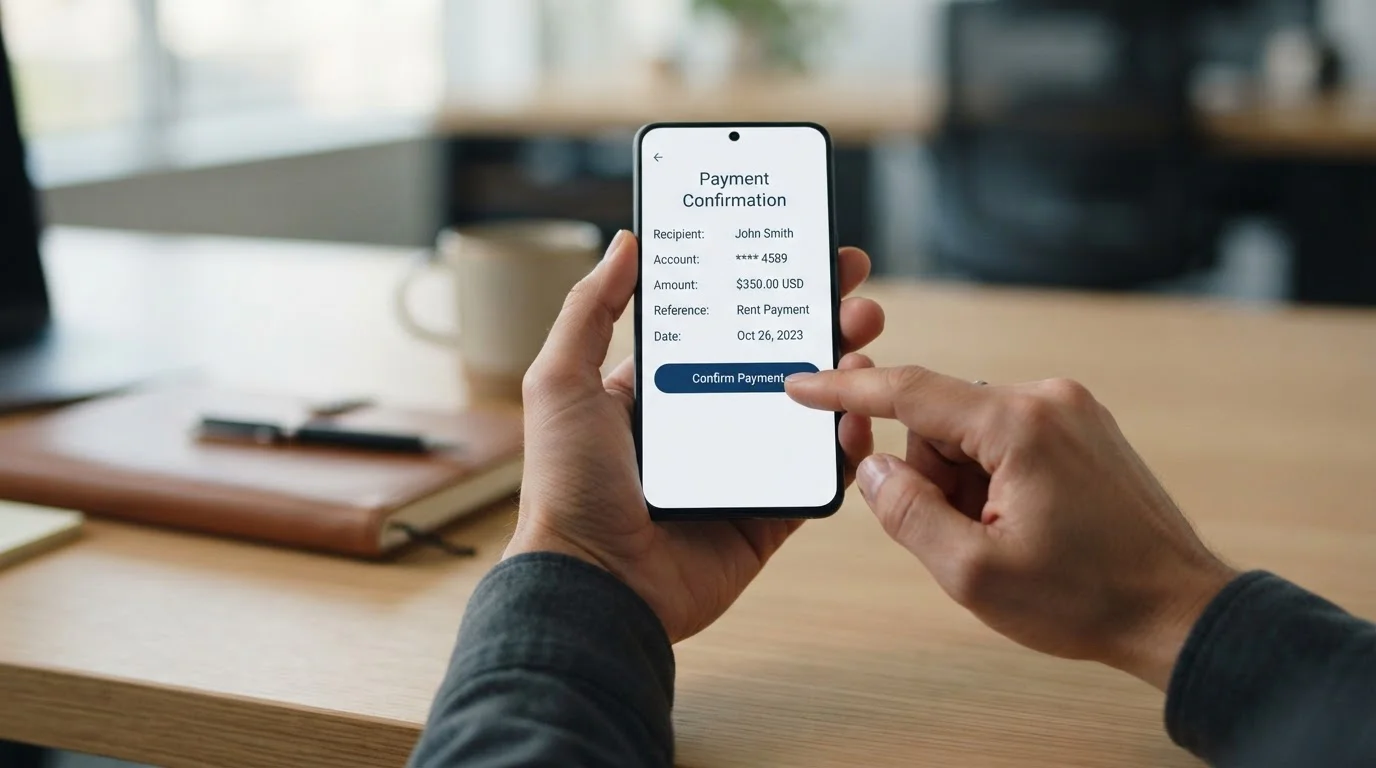
Trustly Group AB, a Swedish fintech company, operates across Europe providing open banking payment rails. In the UK, “Pay by Bank” is the consumer-facing branding for Trustly and similar open banking providers. The underlying technology: account-to-account bank transfers via secure authentication through your bank’s own app or website, mandated by the EU’s PSD2 regulation and adopted in the UK. No separate Trustly account is created. No intermediate wallet. The casino requests funds, you log in to your bank, approve the payment, done.
Deposits are instant in the literal sense — seconds after you confirm in your banking app, the funds clear at the casino. Withdrawals process same-day to 24 hours at most UKGC-licensed operators, among the fastest in the UK. One test Trustly withdrawal at Betway landed in 50 minutes, rivalling PayPal. Minimum deposits typically start at £5–£10. Maximum daily withdrawals range from £5,000–£10,000 depending on the operator. No fees at listed casinos. Trustly itself charges merchants, not end users.
Acceptance has grown quietly but substantially. Midnite, Coral, Ladbrokes, Mr Vegas, Duelz, VoodooDreams, Playzee, and others list “Pay by Bank” or “Trustly” in their cashiers. The branding varies — some operators surface it as “Instant Bank Transfer,” others as “Trustly,” others generically as “Bank Transfer” with clarification that it is instant, not the slow 1–7-day wire transfer of old.
Bonus eligibility: generally favourable. Open banking deposits are processed as bank transfers in operator systems, and most UK casinos do not exclude bank transfers from welcome offers. The AML and bonus-abuse concerns that plague Skrill and Neteller do not attach to Trustly because the payment comes directly from a verified UK bank account in your name. Operators trust it.
The security model is bank-grade because it is your bank. The casino never sees your bank login or account details. Trustly facilitates the API handshake, but authentication happens entirely on your bank’s platform. For players wary of storing card details or e-wallet credentials at multiple casino sites, this is the cleanest option.
The limitation: requires online banking access. If you do not use online banking or your bank does not support open banking integrations (rare in the UK as of 2026, but possible with smaller credit unions), Trustly will not work. For the vast majority of UK players with standard high-street bank accounts, it works seamlessly.
Trustly is the invisible replacement for ClickandBuy. No account to manage, no app to install, no extra login to remember. Just your bank, the casino, and a payment rail that is faster than traditional bank transfers and as fast as the best e-wallets. The withdrawal speed rivals PayPal without PayPal’s selective casino acceptance. For players who want speed, security, and bonus eligibility with zero administrative overhead, Trustly wins.
Paysafecard
Paysafecard is a Paysafe Group product (the same company behind Skrill and Neteller), but it operates on a fundamentally different model: prepaid vouchers. Founded in 2000 and headquartered in Austria, the service is FCA-regulated as an e-money institution in the UK. Vouchers are purchased with cash or card at over 18,000 retail outlets across the UK — convenience stores, petrol stations, post offices. Each voucher carries a 16-digit PIN code. Enter that PIN at a casino cashier, funds deposit instantly.
Minimum deposit is typically £10, maximum £1,000 per voucher. You can combine multiple PINs for larger deposits. Deposits are instant. No fees at casino operators. Around 60 UK-licensed casinos accepted Paysafecard as of September 2026, including bet365, BoyleSports, 21 Casino, Unibet, and 10Bet.
The defining feature: cash budgeting. No card details are shared with the casino at the point of deposit. Purchase a voucher with cash at a retail location, use the PIN online, and once the voucher is spent, it is spent. That does not make you anonymous: every UK-licensed casino verifies your identity and age when you register, whatever payment method you use. For players who like a hard, pre-paid spending limit, Paysafecard is unmatched.
The limitation: withdrawals are impossible. A prepaid voucher cannot receive funds back. Paysafecard works for deposits only. When you win and request a withdrawal, the casino pays via an alternative method — typically bank transfer, sometimes an e-wallet if you have one linked, occasionally back to a debit card if you used one for a prior deposit. Checks in September 2026 at three UK-licensed casinos found that only DaznBet paid winnings back to Paysafecard (an exception, not the norm). SpinYoo paid by bank transfer, LuckyMate by Mastercard.
That one-way nature makes Paysafecard a deposit solution, not a complete payment method. You need a fallback for cashing out, usually a bank transfer to an account in your own name, so set that up and verify it before you need it.
Bonus eligibility is generally favourable. Paysafecard deposits typically qualify for welcome offers at UK casinos because the method itself carries no AML red flags the way Skrill does. You are depositing prepaid funds purchased with verifiable currency. Operators accept it.
For former ClickandBuy users who valued convenience over speed, Paysafecard is a poor fit. For those who value cash-based budgeting, it is the best fit. ClickandBuy was an e-wallet with two-way flow. Paysafecard is a one-way on-ramp. The use cases barely overlap, but in a landscape where ClickandBuy no longer exists, Paysafecard fills the niche of “deposit without sharing bank details” better than any other option.
E-Wallet Comparison: Speed, Fees, and Bonus Eligibility

The deposit-speed race is over. Every e-wallet listed above deposits instantly, and Trustly (seconds) differs from PayPal or Skrill (under a minute) only by degrees invisible to the user experience. The differentiation emerges in three areas: withdrawal times, bonus eligibility, and fees.
Withdrawal speed separates the field into three tiers. PayPal and Trustly sit at the top, with verified payouts under 4 hours at premium operators and same-day processing standard across the board. Skrill, Neteller, and MuchBetter form the middle tier at 1–24 hours, typically same-day but occasionally stretching overnight if you request withdrawal late in the casino’s processing window. Apple Pay and Google Pay do not participate because they are deposit-only; withdrawals route through the underlying debit card at 1–3 working days. Paysafecard cannot withdraw at all.
Bonus eligibility splits the group into inclusions and exclusions. Skrill and Neteller face frequent exclusions at UK casinos, cited explicitly in operator terms. PayPal faces occasional exclusions but less consistently. MuchBetter, Trustly, Apple Pay, Google Pay, and Paysafecard generally qualify for welcome offers, with rare exceptions. The exclusion pattern tracks historical operator concerns: Skrill and Neteller became associated with bonus abuse, so operators bar them pre-emptively. Newer methods or non-e-wallet rails (Trustly, mobile wallets) lack that baggage.
Fees at casino operators are universally zero. None of the listed e-wallets charge users transaction fees for deposits to or withdrawals from UKGC-licensed casinos. The casinos pay merchant fees to the payment providers, but those costs do not pass to players. The only fees players encounter are internal to the e-wallets themselves — for example, withdrawing funds from your Skrill or Neteller balance to a UK bank account incurs a small percentage fee, and PayPal charges for withdrawals under £1. Those fees are irrelevant for casino users who keep balances in the wallet for future deposits rather than cashing out to a bank after every session.
The bonus-exclusion question sits at the centre of payment-method choice for new players. The January 2026 UKGC rule change capped all casino bonus wagering at 10x, down from 50–60x previously. That made welcome offers significantly more valuable — £50 bonus now requires £500 in wagers instead of £2,500. Forfeiting that bonus by depositing via Skrill costs real money. For a £50 welcome bonus, the expected value difference between claiming it (via debit card or Trustly) versus losing it (via Skrill) can exceed £30 after wagering, depending on house edge and game selection.
The explanation for why Skrill and Neteller are excluded is rarely surfaced in casino terms beyond vague “payment method restrictions” language, but the reasoning is well known in the industry. Operators cite anti-money laundering protocols and historical bonus abuse. The specific abuse pattern: players open multiple casino accounts under different identities, fund each with a separate Skrill wallet, claim the welcome bonus at each account, play through minimum wagering, withdraw. Skrill’s ease of creating multiple wallets with minimal verification made it the preferred tool for this tactic pre-2020. Neteller, as Skrill’s sister service, inherited the same reputation.
Whether that reputation remains justified in 2026 is debatable. Both Skrill and Neteller have tightened KYC requirements under FCA pressure. Multiple-account abuse is harder now than it was five years ago. But operator risk models are conservative. Once a payment method is flagged, the exclusion persists even after the underlying risk diminishes. Changing that perception requires Paysafe Group lobbying operators individually, and there is little incentive for operators to take the risk when alternatives exist.
For players who already use Skrill or Neteller and do not care about welcome bonuses — either because they have claimed them elsewhere or because they prefer no-wagering promotions — the exclusion is irrelevant. For new players comparing e-wallets, it is the deciding factor. MuchBetter, Trustly, and mobile wallets offer the same speed and convenience without the penalty.
What is the difference between PayPal, Skrill, and Neteller for casino deposits?
PayPal is the mainstream, trusted option with the fastest withdrawals, under four hours at top casinos, but only around 40 UK operators accept it. Skrill and Neteller, Paysafe Group siblings, appear at far more casinos yet are often excluded from bonuses. All three deposit instantly with no casino fees.
Is Trustly (Pay by Bank) faster than e-wallets for casino withdrawals?
Usually, yes. Trustly withdrawals arrive the same day or within 24 hours at most UK casinos, with one Betway test landing in 50 minutes. That matches or beats PayPal’s under-four-hour best and edges Skrill and Neteller, which occasionally run overnight. Trustly deposits also generally qualify for bonuses, unlike Skrill.
Do e-wallets like PayPal and Skrill qualify for casino welcome bonuses in the UK?
It varies by operator and e-wallet. Skrill and Neteller are frequently excluded from welcome bonuses at UK casinos due to anti-money laundering concerns and historical bonus abuse. PayPal faces occasional exclusions but less consistently. MuchBetter, Trustly, Apple Pay, Google Pay, and Paysafecard generally qualify for bonuses. Always check the specific casino’s terms before depositing.
How long do e-wallet withdrawals take at UK online casinos?
PayPal and Trustly are fastest, with payouts in under 4 hours at top operators such as Betway. Skrill, Neteller, and MuchBetter typically process within 1–24 hours, most same-day. Apple Pay and Google Pay are deposit-only; withdrawals go to the underlying debit card in 1–3 working days. Paysafecard cannot receive withdrawals.
UK Casinos Accepting Modern E-Wallets in 2026
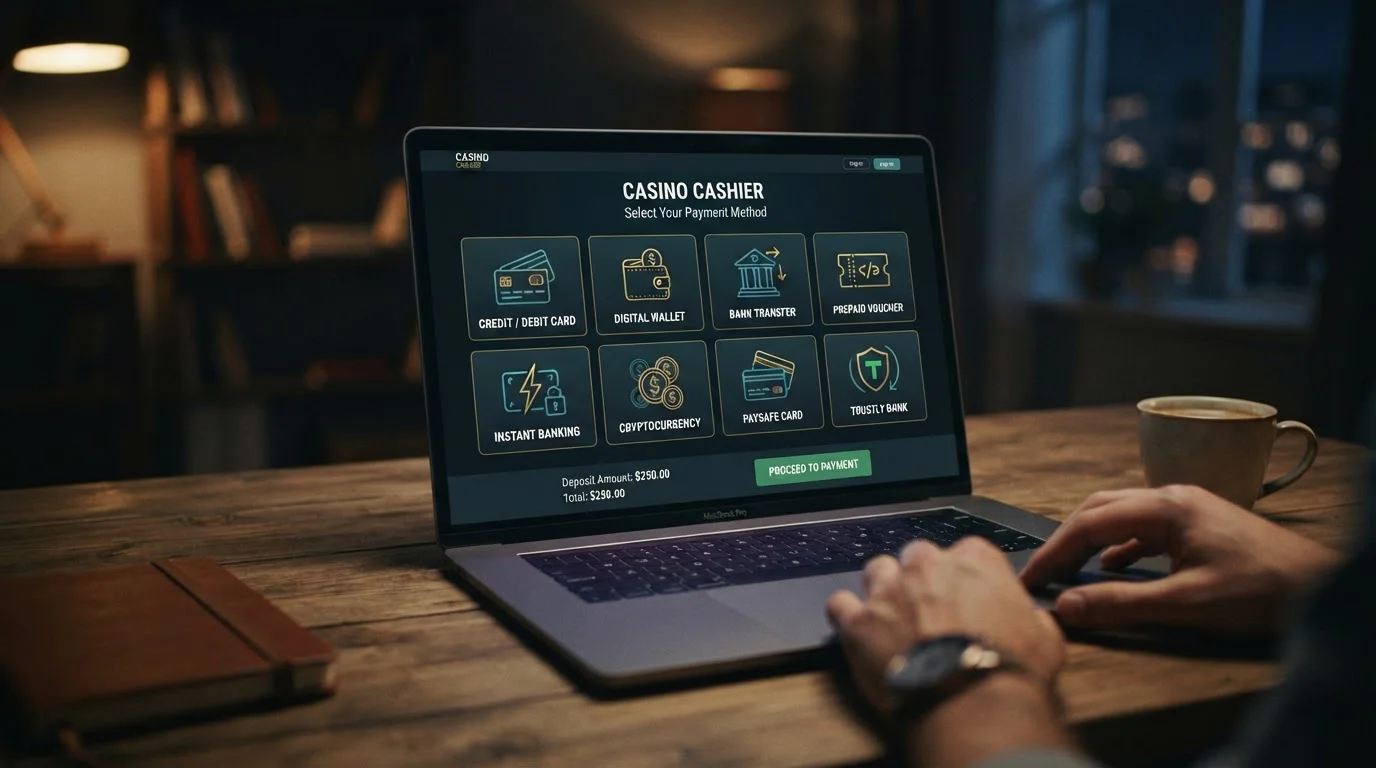
The replacement for ClickandBuy sits in front of you, but the replacement works only if the casino you want to play at accepts it. PayPal offers the fastest withdrawals but works at only 40 UK-licensed operators. Skrill works nearly everywhere but costs you the welcome bonus. The matrix below maps which specific UKGC-licensed casinos accept which e-wallets, so you can cross-reference your preferred payment method against available operators.
The table covers 15 major UK-licensed casinos verified to accept at least one e-wallet as of 2026. Every operator listed holds an active UKGC remote casino operating licence. The checkmarks indicate confirmed acceptance; blanks indicate the method is not supported. Minimum deposit shown is the lowest across all payment methods at that operator, not necessarily the minimum for every e-wallet.
| Casino | PayPal | Skrill | Neteller | Trustly | Apple Pay | Min Deposit | UKGC Licence |
|---|---|---|---|---|---|---|---|
| Betway | ✓ | ✓ | ✓ | ✓ | ✓ | £10 | Active |
| Ladbrokes | ✓ | ✓ | ✓ | ✓ | £5 | Active | |
| Coral | ✓ | ✓ | ✓ | ✓ | £5 | Active | |
| 888 Casino | ✓ | ✓ | ✓ | ✓ | £10 | Active | |
| William Hill | ✓ | ✓ | ✓ | ✓ | £10 | Active | |
| SpinYoo | ✓ | ✓ | ✓ | £10 | Active | ||
| Casushi | ✓ | ✓ | £10 | Active | |||
| Playzee | ✓ | ✓ | ✓ | £10 | Active | ||
| Midnite | ✓ | ✓ | ✓ | £10 | Active | ||
| Unibet | ✓ | ✓ | £10 | Active | |||
| 10Bet | ✓ | ✓ | £10 | Active | |||
| BoyleSports | ✓ | £10 | Active | ||||
| HighBet | ✓ | £5 | Active | ||||
| BetVictor | ✓ (Google Pay) | £5 | Active | ||||
| Duelz | ✓ | ✓ | ✓ | £10 | Active |
The pattern: Skrill and Neteller dominate. Of the 15 operators listed, 12 accept Skrill and 12 accept Neteller. PayPal appears at 5, Trustly at 7, Apple Pay at 5. Google Pay lags significantly, confirmed at only a handful of operators. MuchBetter and Paysafecard (not shown in the table) are accepted at smaller subsets of UK casinos, so check the cashier before relying on either.
For players prioritising operator choice, Skrill or Neteller wins despite the bonus exclusion. For players prioritising bonus eligibility and speed, the choice narrows to PayPal or Trustly depending on which specific casino you target. Betway stands out as the rare operator accepting PayPal, Skrill, Neteller, Trustly, and Apple Pay simultaneously — a payment-method supermarket.
The “Active” UKGC licence column is non-negotiable. Every casino in the table above appears on the Gambling Commission’s public register of licensed operators. As of September 2026, 139 businesses held active remote casino operating licences covering 1,065 active domains. Playing at an operator without a UKGC licence means zero UK consumer protection. The payment method is irrelevant if the operator is not licensed.
One operational note: acceptance of a payment method at a casino does not guarantee it will appear in your specific cashier at account creation. Some operators restrict payment options by geographic region within the UK (rare but possible), by account status (new vs. established), or by prior deposit history. If a listed e-wallet does not appear in your cashier despite being advertised, contact support before assuming the information is outdated.
Which UK casinos accept Apple Pay and Google Pay?
Apple Pay: BoyleSports, William Hill, HighBet, Betway, 888 Casino, BetVictor. Google Pay: BetVictor confirmed, with other operators adding it but not yet universally advertised. Both are deposit-only; withdrawals return to the underlying debit card. All listed operators hold active UKGC licences.
How to Deposit at a UK Casino Using E-Wallets
The mechanics differ slightly by e-wallet, but the core flow is universal: select the method in the casino cashier, authenticate via the wallet’s login or app, confirm the amount, funds arrive instantly. Withdrawals reverse the process, though timelines stretch from instant to 24 hours depending on the method and operator. The step-by-step breakdowns below cover the five most common e-wallet types.
PayPal deposit: Open the casino cashier, select PayPal from the payment-method list. Enter the deposit amount (minimum typically £5–£10). Click confirm. A PayPal login window opens. Enter your PayPal email and password, or use Touch ID / Face ID if enabled on mobile. Confirm the transaction in PayPal. The window closes, funds appear in your casino balance within seconds. PayPal withdrawal: Request withdrawal in the casino cashier, select PayPal, enter the amount. The casino processes the request (verification checks may apply). Funds land in your PayPal account within 1–24 hours, typically under 4 hours at fast operators. No fee from the casino.
Skrill / Neteller deposit: Open the casino cashier, select Skrill or Neteller. Enter deposit amount (minimum typically £10). Click confirm. A Skrill or Neteller login window opens. Enter your email and password, or use saved credentials if your browser auto-fills. Confirm the transaction. Funds appear in casino balance instantly. Skrill / Neteller withdrawal: Request withdrawal, select the same e-wallet you deposited with. Enter amount. Casino processes within 1–24 hours. Funds land in your Skrill or Neteller balance, available immediately for spending or further withdrawal to your bank. No fee from casino.
Trustly deposit: Open the casino cashier, select “Pay by Bank,” “Trustly,” or “Instant Bank Transfer.” Enter deposit amount (minimum typically £5–£10). Click confirm. A bank-selection screen appears listing UK banks. Select your bank. You are redirected to your bank’s own login page (not a third-party site — your bank’s actual online banking portal or app). Log in as you normally would. A payment-authorisation screen appears showing the casino name and amount. Confirm. You return to the casino, funds in balance. Total time: under a minute. Trustly withdrawal: Request withdrawal, select Trustly or bank transfer. Enter amount. Casino processes same-day to 24 hours. Funds land in your bank account, typically same-day at fast operators. No fee from casino.
Apple Pay deposit: Open the casino cashier on an iOS device, select Apple Pay. Enter deposit amount. The Apple Pay payment sheet appears showing your default card. Confirm with Face ID, Touch ID, or device passcode. Funds appear in casino balance instantly. Apple Pay withdrawal: Not possible. Withdrawals return to the debit card linked to Apple Pay, processed as standard card withdrawal (1–3 working days).
Paysafecard deposit: Purchase a Paysafecard voucher at a UK retail outlet with cash or card. The voucher displays a 16-digit PIN. Open the casino cashier, select Paysafecard. Enter the 16-digit PIN and deposit amount. Click confirm. Funds appear in casino balance instantly. You can combine multiple PINs if the deposit exceeds one voucher’s value. Paysafecard withdrawal: Not possible. Request withdrawal, select bank transfer or debit card (if you used one for a prior deposit). Casino processes to your bank or card.
The authentication layer differs by method, but every e-wallet or instant-banking option eliminates the friction of manually entering card details at every session. That was ClickandBuy’s core value. The modern equivalents replicate it. The speed, bonus eligibility, and operator acceptance vary, but the convenience does not.
How do I withdraw winnings if I deposited with Paysafecard?
Paysafecard cannot receive withdrawals. Casinos pay winnings via bank transfer, debit card (if you used one for a prior deposit), or an e-wallet if you have one linked. Testing showed most UK casinos default to bank transfer for Paysafecard users. Withdrawals process within 1–3 working days depending on method.
What Made ClickandBuy Popular and How Modern Wallets Compare
ClickandBuy solved a specific problem: the hassle of re-entering card details at multiple online merchants, combined with a security layer that kept your bank account one step removed from each transaction. That combination made it popular in the mid-2000s when PayPal was less ubiquitous and mobile wallets did not exist. The service also offered a credit-line feature, allowing users to complete purchases without maintaining a balance in the wallet itself — a “buy now, settle later” model that reduced friction further.
The modern e-wallet landscape replicates those features piecemeal. PayPal offers the credit-line equivalent through Pay in 3 and Pay Later, though UK gambling regulations restrict credit-funded gambling (credit cards banned since April 2020). Skrill, Neteller, and MuchBetter require funded balances or linked bank accounts; no credit. Trustly eliminates the wallet entirely, pulling directly from your bank, which removes the “buffer” but increases speed. Apple Pay and Google Pay tokenise cards rather than creating separate wallets, offering security without the extra account.
The feature ClickandBuy lacked: speed. Withdrawals in the ClickandBuy era took multiple working days, standard for e-wallets of that generation. PayPal in 2026 processes casino withdrawals in under 4 hours at premium operators. Trustly matches that. Skrill and Neteller deliver same-day. The speed improvement over the 2016 baseline is massive, driven by API integrations and real-time banking rails (open banking) that did not exist when ClickandBuy shut down.
One element modern wallets have not replicated: simplicity of brand recognition among non-technical users. ClickandBuy was easy to explain — “like PayPal but for more sites.” PayPal now is PayPal, ubiquitous enough to need no explanation. Skrill and Neteller carry reputations but less mainstream recognition. MuchBetter requires explaining it is an app. Trustly is invisible by design. For users who valued ClickandBuy’s “known quantity” feel, PayPal is the closest equivalent. For users who valued speed and breadth, Skrill or Trustly wins.
The credit-line feature ClickandBuy offered has not returned in the UK gambling space. The April 2020 credit card ban extended to e-wallet credit funded by credit cards, effectively killing that product type for UKGC-licensed casinos. Operators cannot accept deposits funded by borrowed money, full stop. PayPal’s Pay Later products exist for retail purchases but are not available for gambling transactions under UK rules. That leaves only debit-funded e-wallets, which require users to deposit money before spending it. The convenience ClickandBuy offered via credit is gone, legislated out of existence.
For players who miss ClickandBuy, the question is which feature mattered most. Buffer between bank and casino? Every e-wallet provides it. Speed? PayPal and Trustly. Operator acceptance? Skrill. Bonus eligibility? MuchBetter, Trustly, mobile wallets. Credit line? Not available legally. No single modern option replicates ClickandBuy exactly because the market fractured into specialists. Skrill owns breadth. PayPal owns trust and speed. Trustly owns invisibility. MuchBetter owns mobile-first design. Each is better than ClickandBuy at its niche. None is ClickandBuy.
UK Casino Payment Regulations: What Changed Since ClickandBuy

The ClickandBuy shutdown in April 2016 was a market event, not a regulatory one. But the regulatory landscape governing UK casino payments shifted twice in the years since, reshaping which methods work and how players use them. Understanding those changes explains why the payment menu at a UKGC-licensed casino in 2026 looks nothing like the menu ClickandBuy inhabited.
The first change: the credit card ban. On 14 April 2020, the UK Gambling Commission prohibited all licensed operators from accepting credit cards for gambling deposits. The ban extended to online, retail, and telephone betting. The stated reason: preventing players from gambling with borrowed money, which evidence showed increased problem-gambling risk. Players could still use debit cards, which draw from existing funds rather than creating debt.
The credit card ban hit e-wallets indirectly. If an e-wallet balance is funded by a credit card, and that balance then funds a casino deposit, the chain constitutes credit-funded gambling. Operators became responsible for verifying that e-wallet deposits were not credit-sourced. That verification is easier with some wallets (Trustly, which pulls directly from a bank account) than others (PayPal or Skrill, where the funding source is opaque to the casino). The practical result: operators trust Trustly implicitly, but PayPal and Skrill deposits may trigger additional verification checks.
The second change: the bonus-wagering cap. On 19 January 2026, a UKGC rule change capped wagering requirements on all gambling bonuses at 10x the bonus value and banned promotions that mix gambling products. Previously, operators set wagering anywhere from 30x to 60x, making bonuses mathematically worthless for most players. A £50 bonus at 50x wagering required £2,500 in stakes, nearly impossible to clear without losing the bonus amount in house edge. At 10x, that same £50 bonus requires £500 in stakes — achievable in a single session.
The wagering cap made bonuses valuable, which made bonus eligibility valuable, which elevated the importance of payment-method choice. Depositing via Skrill and forfeiting a £50 welcome bonus now costs real money where it previously cost a bonus nobody cleared anyway. That shift pushed players towards MuchBetter, Trustly, and mobile wallets, all of which generally qualify for bonuses.
A third regulatory thread, less visible: KYC and AML tightening. The UKGC has progressively raised identity-verification standards, and since May 2019 operators must verify every player’s age and identity before they can deposit or gamble. That tightening disproportionately affects anonymous payment methods. Paysafecard still works for deposits, but any anonymity it offers is undercut by the fact that the casino already knows exactly who you are. The truly anonymous gambling Paysafecard once enabled is functionally dead at UKGC-licensed operators.
The April 2020 credit ban, the January 2026 wagering cap, and the ongoing KYC ratchet together explain why the payment landscape changed. ClickandBuy operated in an era when credit-funded e-wallets were legal, bonuses were unclearable, and KYC was lighter. That era is over. The modern payment menu is tighter, faster, and more regulated. The methods that survive are the ones that comply.
Can I still use credit cards to deposit at UK casinos?
No. Since 14 April 2020, UK-licensed gambling operators have been barred from accepting credit cards, online or by phone. Debit cards, bank payments and non-credit e-wallets remain available. The ban also covers e-wallet deposits funded by a credit card where the operator can identify them, so load your e-wallet from a debit source.
Mobile Casino Payments: Apps and Compatibility
The shift to mobile-first gambling accelerated the adoption of Apple Pay, Google Pay, and MuchBetter, all designed for smartphone transactions. Desktop e-wallets like PayPal and Skrill adapted by improving mobile-web interfaces, but the native advantage sits with payment methods built for app ecosystems from day one.
Apple Pay and Google Pay work exclusively on mobile devices (or Mac computers for Apple Pay). The authentication relies on biometric hardware — Face ID, Touch ID, fingerprint sensors — that desktop lacks. For players who conduct all casino activity on smartphones or tablets, these methods are seamless. Tap the deposit button, confirm with fingerprint, funds in. No typing, no password manager, no switching apps.
MuchBetter operates only as a smartphone app. There is no desktop website for account management in the traditional sense. The design decision reflects user behaviour: gambling has shifted mobile, and MuchBetter’s target audience does not want to manage a wallet on a computer. For players who still prefer desktop casino play, MuchBetter requires pulling out a phone to authorise each transaction. That friction is tolerable for some, annoying for others.
PayPal, Skrill, and Neteller function identically on mobile and desktop. The authentication flow is the same — log in, confirm amount, done. The mobile interfaces are responsive and fast, but not fundamentally different from the desktop experience. Trustly works on both as well, redirecting to your bank’s mobile app or mobile website depending on device.
Paysafecard is device-agnostic by design. The 16-digit PIN works anywhere. But the purchase process is inherently offline — you walk into a shop, buy a voucher, return to your device. The mobility is in spending the voucher, not acquiring it.
The compatibility question matters primarily for Apple Pay and Google Pay, which lock users into device ecosystems. If you game on iPhone and desktop interchangeably, Apple Pay works only on iPhone sessions. Google Pay works only on Android and Chrome. That fragmentation pushes some players back to PayPal or Trustly, which work everywhere.
Mobile-casino payment compatibility in 2026 is near-universal for e-wallets. The limiting factor is operator support, not device capability. If a casino accepts Skrill, it accepts Skrill on mobile. The exception: some older casino sites still rely on desktop-optimised payment gateways that render poorly on mobile or fail to integrate mobile-wallet APIs. Those sites are vanishing as operators rebuild on mobile-first platforms, but a handful remain. Check the casino’s mobile cashier before assuming compatibility.
Game Types Available with E-Wallet Deposits
This section exists only to bury a misconception: e-wallet deposits do not restrict which games you can play. The payment method funds your account balance. The balance funds game sessions. The casino’s licence and software catalogue determine game availability, not your deposit method.
Slots, live dealer games, table games (roulette, blackjack, baccarat, poker), crash games, video poker, and any other category a UKGC-licensed casino offers — all are accessible regardless of whether you deposited via PayPal, Skrill, Trustly, or Paysafecard. The payment method does not gate game access.
One narrow exception: bonus-funded play. If you claim a welcome bonus and the bonus terms restrict which games contribute to wagering (common), that restriction applies to bonus funds, not your deposit method. For example, many UK casino bonuses exclude live dealer games from wagering or count them at reduced percentages. That rule applies whether you deposited via Skrill or debit card. The payment method is irrelevant.
A second narrow exception: some operators historically restricted high-roller limits or VIP-table access to players using specific payment methods, under the theory that players funding via bank transfer were more creditworthy than e-wallet users. That practice has faded under closer UKGC scrutiny of customer treatment. As of 2026, game-type access at licensed operators is determined by player verification status and account standing, not payment method.
The online slot stake limits introduced in April and May 2025 (£5 per spin, or £2 for players aged 18 to 24) apply to online slots only and are tied to the game, not the payment method. Depositing via PayPal does not exempt you from stake limits, and depositing via Paysafecard does not impose additional restrictions.
For former ClickandBuy users wondering if switching to a modern e-wallet limits game selection: it does not. The games ClickandBuy let you access remain accessible with PayPal, Skrill, Trustly, or any other method. The regulatory and licensing environment determines game availability. The payment rail is transparent to game access.
The myth that e-wallet deposits restrict games likely originated from bonus-exclusion confusion. Players depositing via Skrill forfeited bonuses, assumed the restriction extended to games, and the misconception spread. It did not. Skrill deposits fund game play identically to debit card deposits. The only restriction is bonus eligibility, not game access.
—
ClickandBuy is gone, and no casino in 2026 can take a payment through it. Here is what replaced it. Choose based on speed, bonus eligibility, and operator acceptance. The specifics are above. The decision is yours.
Casino Deposit Methods UK 2026 – Compare Payment Options
Content created by the «Cashier Atlas» team